


Turkish exporter Alanar focuses marketing on own production
14 Mar 2025
The decision was motivated by the desire to have more control over product quality and to reduce financial risks. "We will no longer buy fruit as in the past," said Gökyigit.


High-density planting systems in sweet cherry have gained increasing attention in recent years as a promising strategy to improve production efficiency and enhance sustainability.
Reducing planting distances allows for earlier bearing, improved light distribution within the canopy, and easier management of key practices such as pruning, harvesting, and plant protection.
However, the success of an intensive orchard system largely depends on the choice of the rootstock–cultivar combination, which directly affects tree vigor, precocity, yield, and fruit quality.
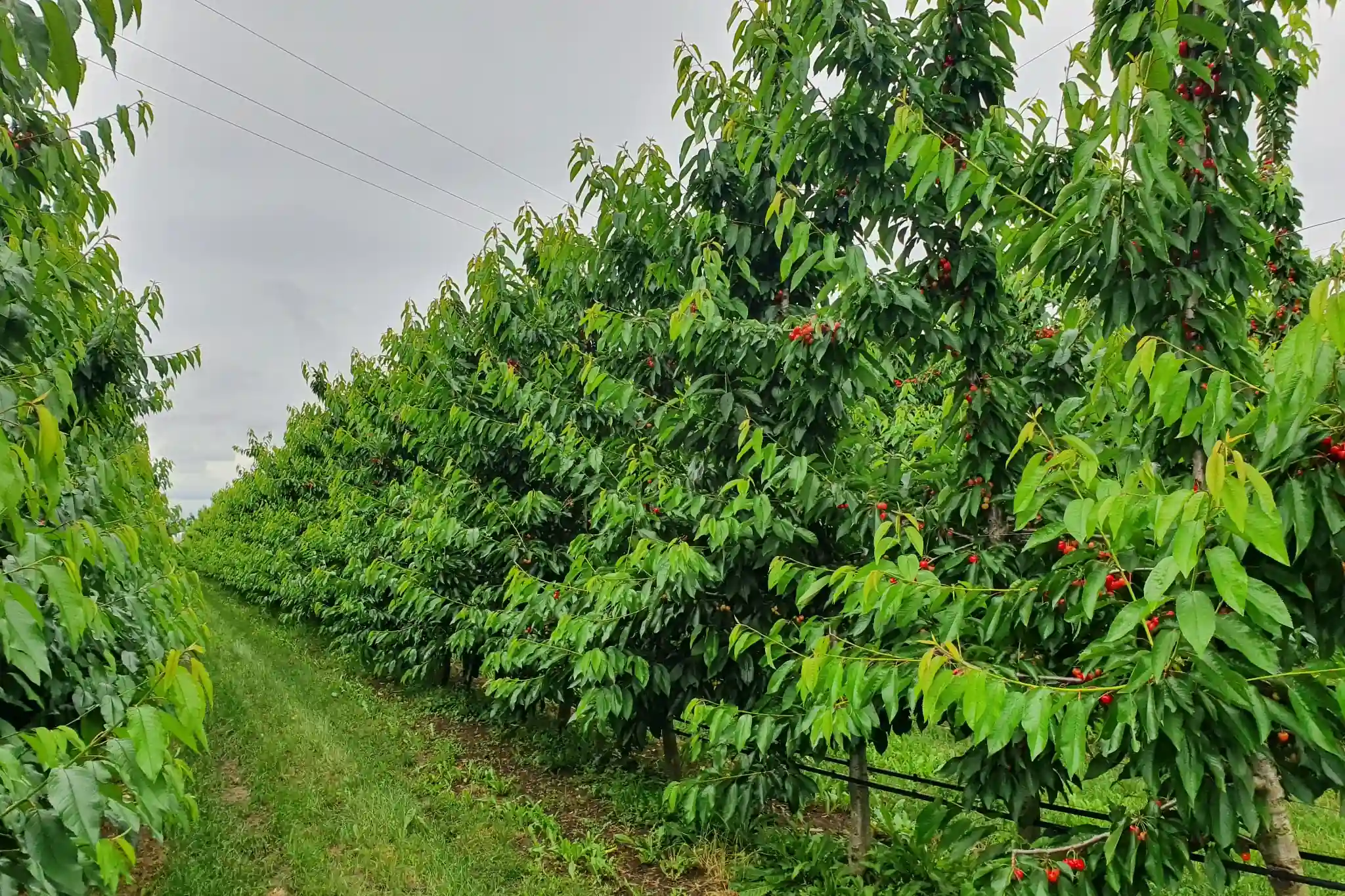
In this context, a recent study evaluated the performance of a high-density sweet cherry orchard (1,250 trees/ha) over a 13-year period in Čačak, Serbia, on heavy, shallow, and acidic soil under non-irrigated conditions.
The trial compared two widely used rootstocks, Mazzard and Colt, combined with eight commercial cultivars.
The aim was to quantify the long-term effects of rootstock on vegetative growth, precocity, productivity, yield efficiency, and the main fruit quality parameters, including an economic evaluation.
The results highlighted clear differences between the two rootstocks: Mazzard induced higher TCSA values (trunk cross-sectional area), confirming its greater vigor, but most importantly it resulted in higher yields compared with Colt.
On average, trees grafted on Mazzard showed increases in yield, cumulative yield, and yield efficiency of 15.9%, 14.5%, and 9.1%, respectively, compared with Colt.
This finding is particularly relevant, as it demonstrates that under difficult soil and climatic conditions and absence of irrigation, a more vigorous rootstock can provide greater long-term stability and productivity.
All rootstock–cultivar combinations began producing fruit in the second or third year after planting, confirming that even vigorous rootstocks can adapt well to intensive orchard systems if properly managed.
Nevertheless, cultivar response varied.
On Mazzard, the most productive cultivar was ‘Summit’, whereas ‘Stark Hardy Giant’ (SHG) and ‘June Early’ exhibited the lowest yields.
On Colt, in contrast, ‘SHG’ achieved the highest production levels, while ‘June Early’ and ‘New Star’ performed poorly.
An economic analysis was carried out using the average sweet cherry market price in Serbia during 2010–2020 (1.67 €/kg) to estimate cumulative gross profit per hectare.
On Mazzard, the highest gross profit was obtained with ‘Sunburst’ (over €120,000), while on Colt the greatest profit was recorded for ‘SHG’ (over €128,000).
Overall, Mazzard provided a higher average profit than Colt.
Regarding fruit quality, the influence of rootstock on soluble solids content and titratable acidity was generally not significant, confirming that these traits are mainly determined by cultivar genetics.
Fruit size, which is a key factor for commercial value, was affected: ‘Summit’ and ‘New Star’ produced larger fruits, and Colt tended to slightly reduce fruit size compared with Mazzard.
The conclusions indicate that under challenging conditions such as heavy, acidic soils and lack of irrigation, like those in Čačak, Mazzard represents a reliable choice to ensure productivity and profitability, whereas Colt may be suitable only when combined with highly performing cultivars.
The researchers discourage combinations such as ‘June Early’ and ‘New Star’ on Colt and ‘SHG’, ‘June Early’, and ‘Germersdorfer’ on Mazzard, due to low yields and inconsistent fruit quality.
In contrast, combinations such as ‘Sunburst’, ‘New Star’, and ‘Summit’ on Mazzard, as well as ‘Sunburst’ on Colt, appear particularly promising.
In conclusion, the choice of rootstock should not be evaluated solely for vigor control, but rather based on its adaptability to the growing environment and its ability to ensure stable long-term productivity.
Source: Milošević, T., Milošević, N., & Ilić, R. (2025). Sweet Cherries: High-Density Planting Grafted onto Invigorating and Semi-dwarfing Rootstocks. A 13-Year Field Study. Applied Fruit Science, 67(5), 343. https://doi.org/10.1007/s10341-025-01563-9
Image source: Stefano Lugli
Andrea Giovannini
Dottore di Ricerca in Scienze e Tecnologie Agrarie, Ambientali e Alimentari - Arboricoltura Generale e Coltivazioni Arboree, Università di Bologna, IT

14 Mar 2025
The decision was motivated by the desire to have more control over product quality and to reduce financial risks. "We will no longer buy fruit as in the past," said Gökyigit.
24 Sep 2024
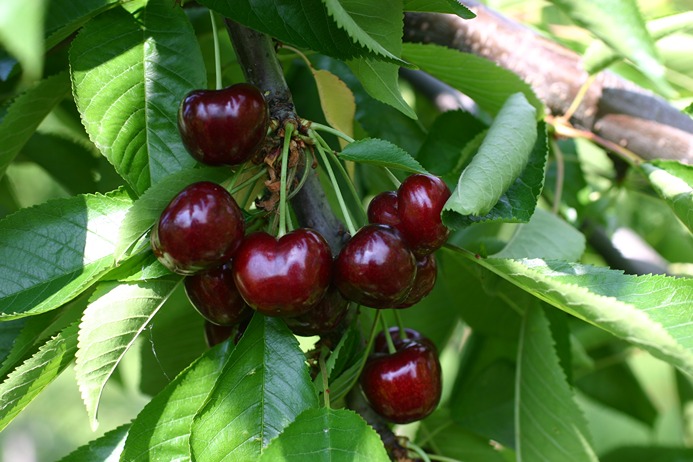
‘The fruits are in formation and are taking on a reddish colour in some early varieties,’ said Aníbal Caminiti, ‘We have had a significant accumulation of cold hours. The Patagonia area exceeds the cold accumulation of the last six years by 15%'.





20 Oct 2026
MSC Invernaderos’ Megatúnel protects cherries and berries from rain and hail. According to the company and Frutotech, it brings early cherry harvests forward by about 15 days, using Gothic arches and ventilation to manage growing conditions without energy-heavy heating.

20 Oct 2026
A dynamic predictive model estimates fungal growth in sweet cherries as temperatures change. Validated using experimental temperature profiles, it could support cold chain management and shelf life estimation, although further testing in commercial conditions is needed.