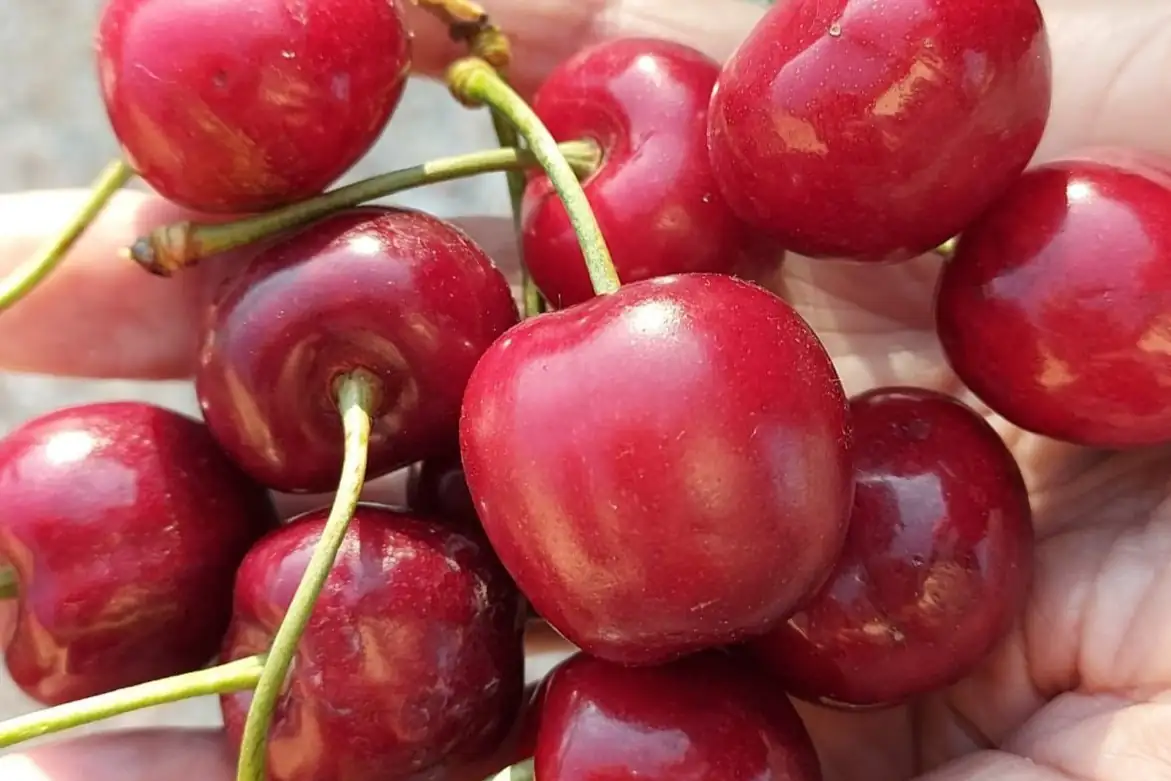
Faced with a national oversupply of carambola, specialists say that no short-term turnaround is expected for shipments of this fruit. A period of adjustment is now emerging. Experts analyzing the poor export season for cherries agree that a recovery in fruit shipments is unlikely in the near future.
Among the experts who share this view is Juan Pablo Subercaseaux, professor at the Faculty of Agronomy of the University of California.
 IMAGE 1 Juan Pablo Subercaseaux. Source: Smartcherry
Market analysis
“On the eve of the Chinese New Year, the first conclusions from the Chilean cherry market season indicate that the ‘boom’ period for the country’s carambola has come to an end. Although shipped volumes will be lower than those recorded in the 2024-2025 season, industry operators say that prices have been lower than those paid in previous seasons. As a result, many producers will record negative figures in their balance sheets.”
Some argue that the historical prices paid in China, the main destination for this fruit, will not return due to the oversupply of Chilean cherries. In this scenario, industry experts indicate that the Chilean market will enter a period of adjustment in cultivated areas that could last several years. This is similar to what happened with other crops such as blueberries and grapes after the rapid growth of recent years.
“The supercycle is over and those historical prices will not return. With tighter margins, we must start seriously assessing whether it will still be profitable for producers who harvest less than 10,000 or 12,000 kilograms per hectare,” says Patricio Bravo, general director of Agrícola Don Fortunato.
Price dynamics
Bravo argues that the oversupply of Chilean cherries in China has ultimately weakened the novelty of gifting this fruit in that country, especially before the Chinese New Year, when it is most commonly given as a present. This, in turn, has influenced the price dynamics of recent years.
“The past five years have been very good and, against all expectations, as supply increased, prices rose faster than supply itself. However, we are now facing a scenario in which supply has exceeded demand, so the drop in prices has been much more drastic.”
Juan Pablo Subercaseaux, professor at the Faculty of Agronomy of the Catholic University, shares this view.
“We can conclude that we have an oversupply and that, having gone from 85 million boxes to 125 million boxes, this has hit us hard in terms of price,” he says. Subercaseaux adds that although this scenario could be aggravated by China’s economic situation and many other factors, everything ultimately comes down to supply and demand. “When you put more cherries on the market than demand, the market collapses.”
Competition and production
The scholar notes that this period of lower fruit returns has also occurred with other fruit species such as blueberries, grapes and kiwifruit, among others, particularly when Chile had to face strong international competition from emerging producing countries. However, he clarifies that the case of cherries is different.
“Chile produces 95% of off-season cherries. No other country has entered the market with a significant volume that has disrupted it. This has been an own goal for the sector.”
Declining market values
Market sources indicate that several producers saw a business opportunity when revenues were around 3–4.5 dollars per kilo (€2.76–4.14 per kilo). Others entered the market when prices were approaching 6 dollars per kilo (€5.52 per kilo).
However, industry operators say that these prices have now dropped drastically. “We must get used to the new price reality, which will hover around 1.50–2.50 dollars per kilo (€1.38–2.30 per kilo). Producers who cannot sustain these costs are destined to disappear,” says Bravo.
Economic impact
For Isabel Widmer, general director of Abud & Cía, this second season of low prices has represented an “economic blow” for the sector.
“We are concerned that, despite the excellent quality and size of the production, prices are failing to keep pace.”
 IMAGE 2 Isabel Widmer. Source: Diario Frutícola
Widmer emphasized that one of the sector’s problems was the belief that Chinese demand was unlimited. This led to the planting of too many hectares to meet that expectation. According to data from the Office of Agricultural Studies and Policies (ODEPA), 77,765 hectares of cherry orchards are planted nationwide.
This corresponds to 16.4% of the total fruit-growing area. Ten years ago, the national area stood at 24,498 cultivated hectares. The executive now estimates that the cherry boom is over. She argues that the market must adapt and that the crop will likely become profitable again in about five years, though to a lesser extent.
Under these circumstances, industry sources say that average producer returns have collapsed. Those familiar with the sector note that profitability reached 40,000 dollars per hectare (€36,800 per hectare) in the country’s central region during the peak of cherry exports.
Currently, those returns have fallen to 8,000 dollars per hectare (€7,360 per hectare). From the Chilean Fruit Cherry Committee, executive director Claudia Soler notes that cherries are entering a more mature phase.
They are no longer an exceptional business for the sector and are becoming a stable and competitive industry. Profitability will increasingly depend on quality, differentiation and production efficiency, as well as coordinated work among the various actors involved.
 IMAGE 3 Claudia Soler. Source: Agenda Logística
New reality for the sector
In the sector’s assessment, Soler noted that China remains the main destination, with 98.9 million boxes. Although its share has fallen from 92% to 87%, this reflects progress in market diversification.
Experts say that an improvement in prospects for Chilean cherries is not expected in the short term. Projections indicate that production will reach 145 million boxes next season. Juan Pablo Subercaseaux believes the market must adopt strong measures to address this scenario of low returns.
“What we need to do is return to 85 million boxes. That means we must remove more than 30,000 hectares of cherry orchards.” He stresses: “We must accept that there are excess hectares and that not everyone has the competitive advantages to withstand this storm.”
Nicolas Birchmeier
El Mercurio
Cherry Times - All rights reserved