In the heart of the Spanish region of Extremadura, the famous cherry trees of the Jerte Valley are starting to bloom again. This was announced by the Regulatory Council of the Protected Designation of Origin (P.D.O.) Cereza del Jerte, stating that over two million trees have begun their spectacular blooming process.
According to forecasts, the first cherries will arrive in 35 to 40 days, while the prized Jerte picotas will be ready for the market starting in June.
A promising season
The president of the P.D.O., José Antonio Tierno, expressed optimism about the 2025 season: "The outlook is good," he said, emphasizing how climatic conditions played a decisive role.
Abundant rainfall and cooler temperatures compared to previous years caused a slight delay in blooming, but in a positive way: "It is a natural phenomenon that promotes optimal fruit development and can result in a higher quality harvest," he added.
This year, the Designation aims to certify between two and three million kilos of both cherries and picotas, for a total potential of four to six million kilos. A significant production, which will also depend on the weather in the coming weeks.
New varieties in the field
An important novelty for the 2025 campaign is the introduction of three new certified varieties under the Cereza del Jerte label: Van, Lapins, and Burlat. With these, the P.D.O. expects a substantial increase in supply, potentially reaching 10–12 million kilos of certified cherries.
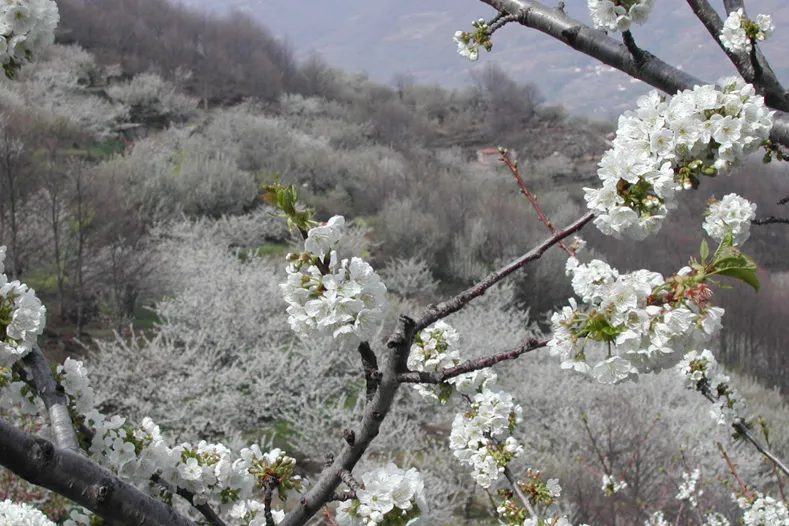 Source: Consejo Regulador de la Denominación de Origen Protegida Cereza del Jerte
This will make it possible to extend the commercial season from April through August, well beyond the usual period from mid-May to mid-June.
"These varieties enrich our offer, but the Jerte picota will always remain our symbol, as it is a native and unique variety in the world," commented Tierno.
Tradition and territory
The Jerte Valley, located in northern Extremadura, is a mountainous area distinguished by terraced cultivation. Here, family farming traditions are preserved through generations, and harvesting is still done manually, ensuring the highest quality standards.
The microclimate and unique orography of the area give the cherries their unmistakable organoleptic qualities.
Jerte cherries, in fact, reach the market at the perfect time for consumption, thanks to a unique balance between traditional techniques, respect for nature, and rigorous quality control.
A winning combination that makes this product a flagship of European agrifood and a benchmark for all cherry-growing regions, including Italy.
Source: portalfruticola.com
Cherry Times - All rights reserved