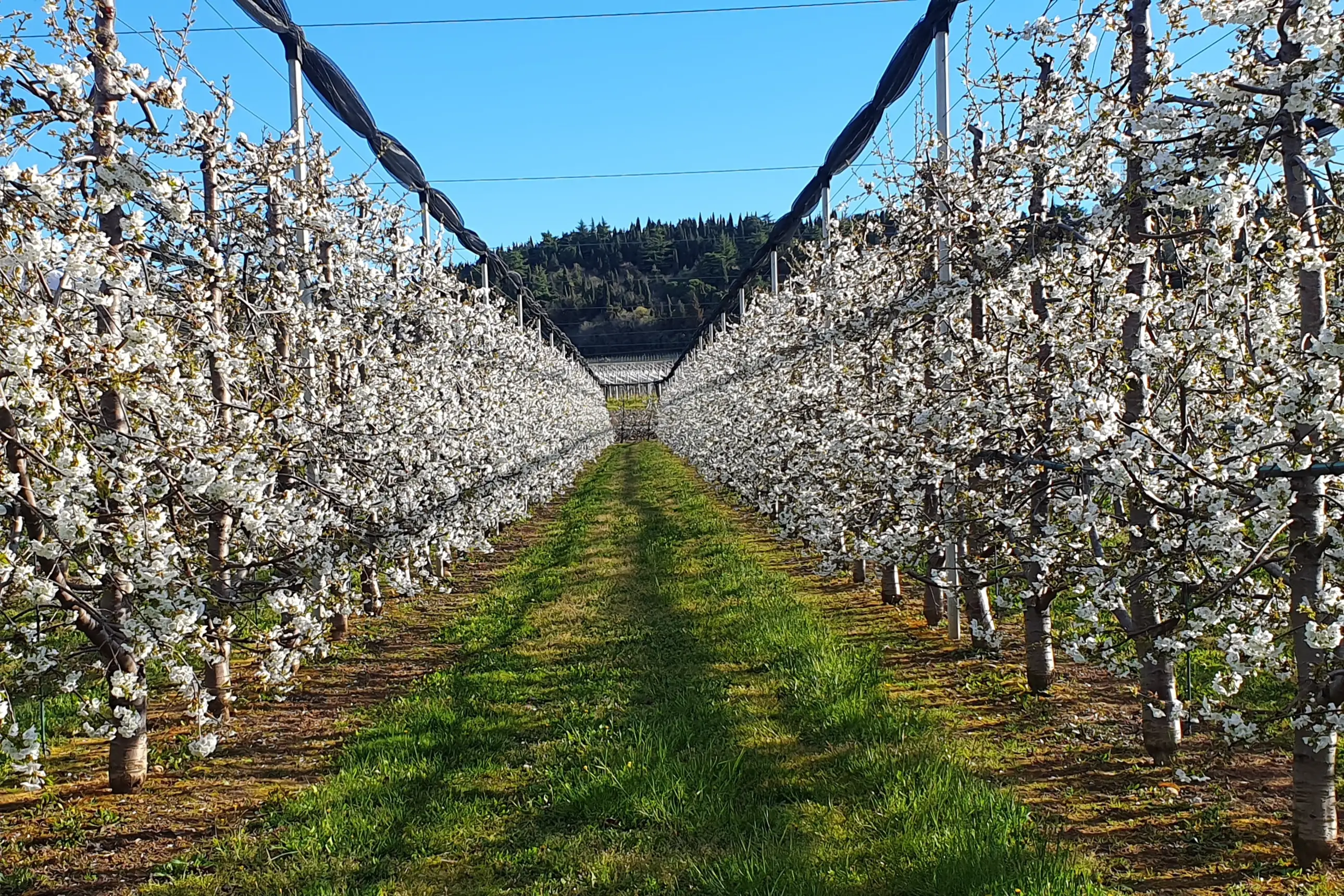
Due to climate change, fruit trees are flowering increasingly earlier, making them more vulnerable to late frosts.
A new study conducted by the research team led by Dr. Wiebke Kämper from the Department of Agroecology and Functional Agrobiodiversity shows that flowering in some sweet cherry cultivars can be deliberately delayed.
The treatment had a particularly clear effect on the 'Kordia' cultivar: although a large proportion of the untreated flowers had already opened, many more treated flowers were still at an earlier stage of development.
At the same time, the results show that the effect strongly depends on the plant species, cultivar, timing and dosage. Further trials over several years and in different regions are needed before recommendations for agricultural practice can be made.
Research summary
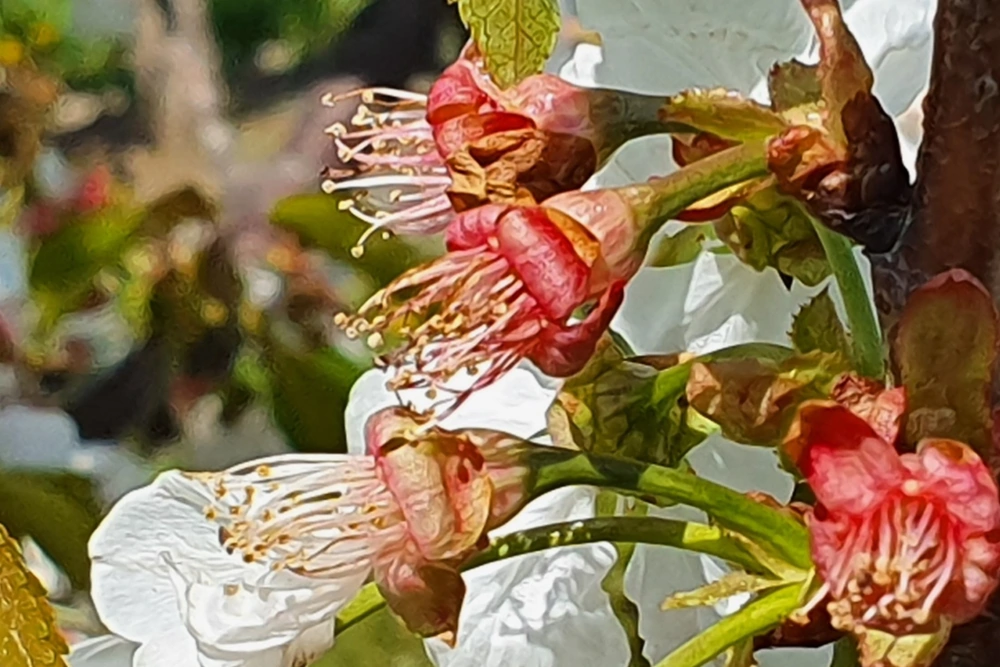
Climate change increases the risk of late spring frosts, which damage flowers and developing fruit in tree crops. Ethephon, a plant growth regulator, can delay flowering and potentially reduce frost damage.
We investigated the effects of ethephon on flowering and fruit set in two sweet cherry cultivars (Bellise and Kordia) and two apple cultivars (Elstar and Kanzi). Treatments involved two ethephon concentrations (500 and 750 ppm) applied in early or late autumn.
Results
Ethephon significantly delayed flowering in the Kordia sweet cherry cultivar, but not in the Bellise cultivar, with a lower percentage of Kordia flower buds in bloom in two of the four treatments compared with the controls.
Specifically, on April 9, 88% of the flower buds on the control trees were in bloom, compared with 56% and 63% on trees treated with high concentrations of ethephon in early autumn and low concentrations of ethephon in late autumn, respectively.
No significant delay in flowering was observed in the apple cultivars. Initial and final fruit set were generally unaffected, although Kordia showed a reduction in final fruit set from 16% to 6% following the late high-concentration treatment.
Conclusions
Our results indicate that ethephon can effectively delay flowering without causing significant yield losses, providing a practical tool to mitigate spring frost damage in the context of climate change.
However, its effectiveness was found to depend on the crop and cultivar.
Read the full article at: https://lnkd.in/eQVhZ2my
Image source: Stefano Lugli
Cherry Times - All rights reserved