In fruit growing, grafting is a fundamental practice used to combine environmental adaptability with high fruit quality;
however, while the effect of the rootstock on the scion is well established, the reverse influence remains far less investigated.
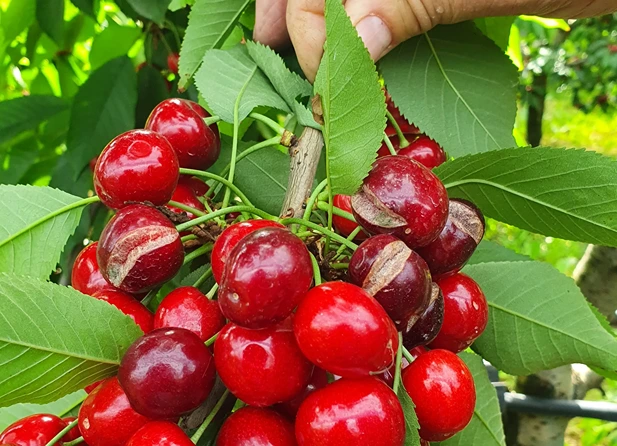
A recent study conducted on Prunus mahaleb L., a species widely used as a rootstock for sweet cherry in Mediterranean areas, addresses precisely this aspect by analyzing the metabolic profile of fruits produced directly by the rootstock when present in grafted trees.
Analisi e contesto
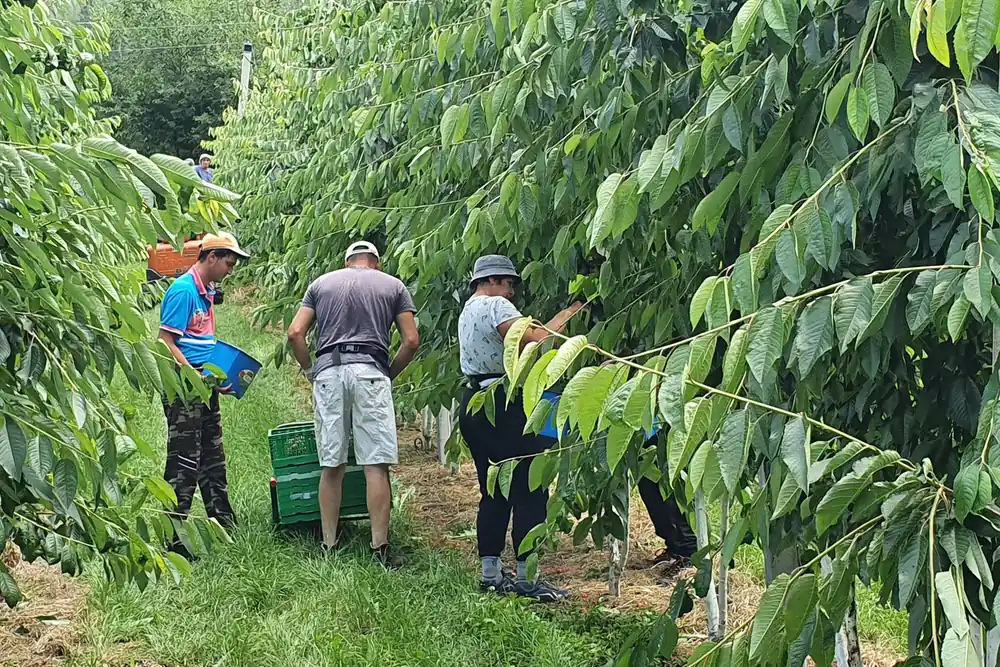
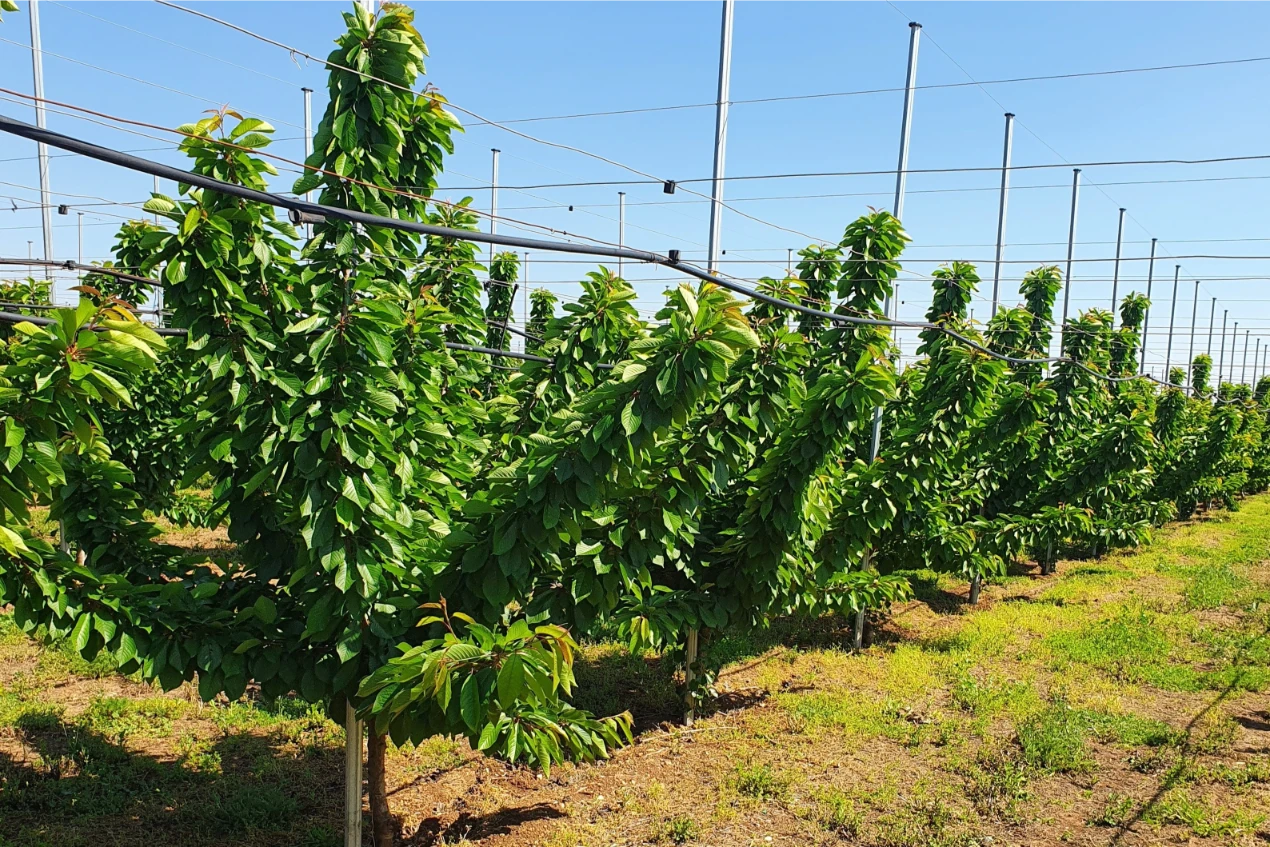
The study was carried out in a cherry orchard in Apulia (southern Italy) with ‘Ferrovia’ cultivar, where some P. mahaleb individuals developed fruiting branches below the graft union, allowing a direct comparison with fruits from non-grafted mahaleb trees grown under the same conditions.
Analyses were performed using metabolomic techniques, specifically HPLC-DAD for anthocyanin characterization and 1H-NMR spectroscopy for global metabolite profiling.
In both sample types, key compounds such as anthocyanins, reducing sugars, organic acids, and coumarin derivatives were identified.
Fruits from non-grafted mahaleb trees showed relatively higher levels of malic acid, fructose, dihydro-coumaric acid derivatives, and anthocyanins, whereas fruits from grafted rootstocks were richer in glucose (particularly β-glucose) and sorbitol.
Risultati metabolici
These differences were also confirmed by preliminary analyses conducted over two previous growing seasons, supporting the hypothesis of a stable and reproducible effect of grafting on rootstock metabolism.
Sorbitol is the main sugar alcohol in sweet cherry and plays both energetic and regulatory roles, being involved in stress response mechanisms and fruit development.
Similarly, glucose is one of the predominant sugars, and its increase in fruits from grafted rootstocks may reflect changes in assimilate partitioning or enhanced photosynthetic activity induced by interaction with the scion.
Conversely, the higher levels of fructose, malic acid, and phenolic compounds in non-grafted fruits suggest a metabolism more oriented toward the synthesis of molecules associated with organoleptic quality and nutraceutical value.
Composti bioattivi
The behavior of coumarin compounds and anthocyanins is also noteworthy.
Coumarin derivatives, responsible for the characteristic aroma of mahaleb, are known for their biological activities, including antioxidant, antimicrobial, and anti-inflammatory effects, while anthocyanins contribute both to fruit coloration and potential health benefits.
Although total anthocyanin content did not show statistically significant differences between the two groups, the tendency toward higher values in non-grafted fruits indicates a possible modulation of phenolic biosynthesis linked to the plant’s physiological status.
Interpretazioni e prospettive
The interpretation of these findings leads to viewing grafting as a dynamic, bidirectional communication system.
The data suggest that the scion may influence the rootstock through complex molecular “crosstalk” mechanisms, including the transport of hormones, metabolites, proteins, and RNA molecules across the graft union.
This interaction may generate metabolic competition or cooperation between the two genotypes, affecting not only vegetative growth but also flower differentiation and the quality of fruits produced by the rootstock.
The possibility of modulating the metabolic profile of rootstock-derived fruits could open new perspectives for the valorization of species such as mahaleb, for example in the production of traditional liqueurs or high-value functional ingredients.
Conclusioni
In conclusion, this work expands the classical paradigm of grafting, highlighting how the scion–rootstock relationship is an integrated and complex system capable of profoundly influencing the physiological and metabolic processes of the whole plant.
Source: Girelli, C. R., Blando, F., Bartolini, S., & Fanizzi, F. P. (2025). Metabolic Differences Between Fruits from Grafted and Non-Grafted P. mahaleb L. Agriculture, 15(24), 2539. https://doi.org/10.3390/agriculture15242539
Image source: Stefano Lugli
Andrea Giovannini
PhD in Agricultural, Environmental and Food Science and Technology - Arboriculture and Fruitculture, University of Bologna, IT
Cherry Times - All rights reserved