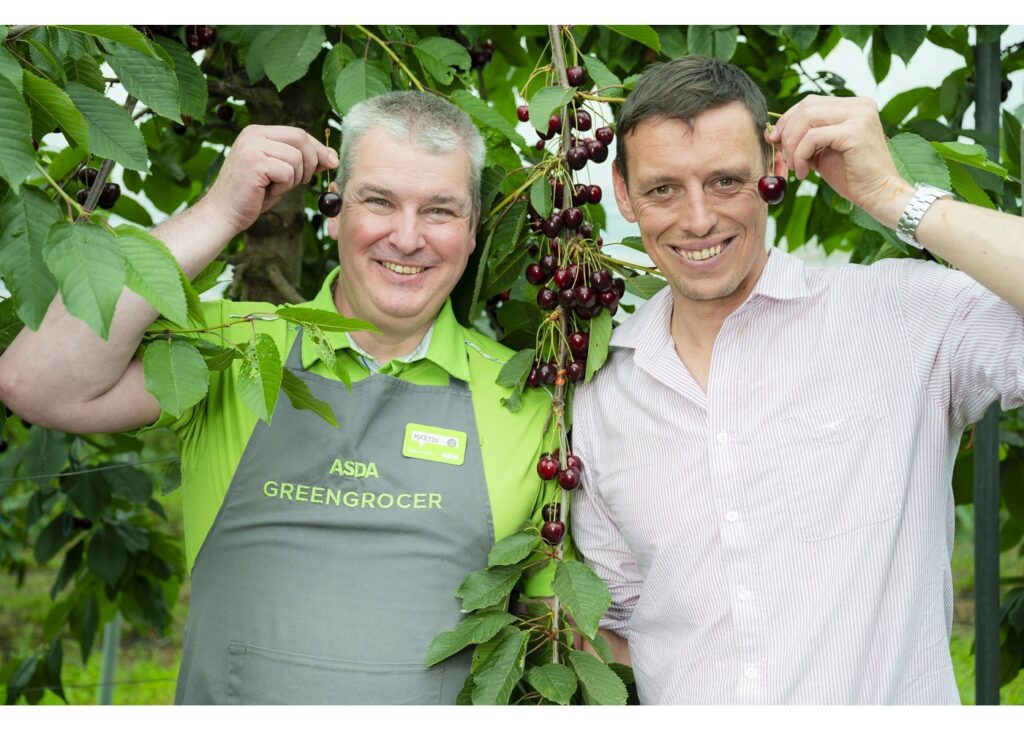
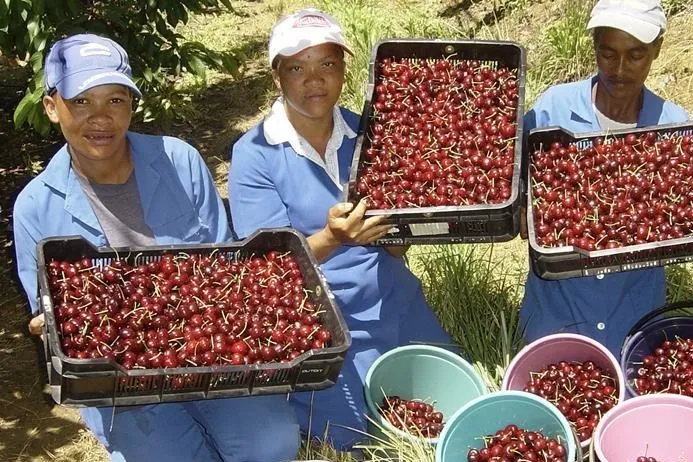
From Val di Non to Val Venosta, a strategic alliance is born to enhance the value of cherries grown at high altitude. The goal: quality, a united supply chain, and greater market strength starting in 2026.
Two leading cooperatives from Trentino and South Tyrol are preparing to write a new chapter in the history of mountain fruit production. The Melinda Consortium and Vip – the Association of Fruit and Vegetable Cooperatives of Val Venosta – have signed a historic supply chain agreement that will take effect in 2026, combining expertise, territories, and visions around an increasingly sought-after fruit: the mountain cherry.
The agreement aims to strengthen the economic growth prospects of member producers, leveraging the superior quality of cherries cultivated at high altitude and the ability to aggregate significant volumes in response to market demands.
Two consortia, one shared vision
The project brings together two well-established players in the Italian fruit sector. On one side, Melinda, a second-level consortium representing 16 cooperatives and about 4,000 growers; on the other, Vip, which unites 7 cooperatives and 1,500 farmers from Val Venosta, working over a total area of 5,500 hectares, mostly dedicated to apples but also to cherries.
Despite their territorial differences, the two consortia share the same cooperative philosophy and a concrete commitment to quality. The heart of the agreement lies in the complementarity of their respective cherry productions, which will be enhanced throughout the entire supply chain: from cultivation under shared quality standards to marketing, which will be managed entirely by Melinda.
A concrete response to new market demands
In recent years, mountain cherries have attracted growing attention from consumers, drawn by their unique organoleptic qualities. The Melinda-Vip agreement seeks to harness this trend in a structured way, creating the conditions for an integrated management of larger volumes and greater efficiency in meeting the demands of retail and international markets.
"This collaboration represents a virtuous example of aggregation between different yet aligned entities, joining forces to protect the value of agricultural work," commented Ernesto Seppi, President of Melinda. "Now more than ever," he added, "cooperation between consortia is essential to ensure economic stability for our members in an increasingly concentrated and competitive market."
Thomas Oberhofer, President of Vip, shared this view: "The alliance with Melinda stems from shared values and the desire to strengthen an excellent crop like the mountain cherry. Cooperation today is a concrete necessity to face the challenges of the sector."
Towards a new model for the Alpine cherry supply chain
The agreement between Melinda and Vip marks an important step towards a model of integrated supply chain that combines quality, territory, and commercial strength. A forward-looking project that, starting in 2026, could become a benchmark for the entire Alpine cherry sector. Its goal is clear: to give future and value to mountain cherries.
Source: www.myfruit.it
Image source: Melinda – VIP
Cherry Times – All rights reserved