Whether you are harvesting cherries in Australia, or planning for the next season in North America, you know your cherries need precise irrigation management. If irrigation is off, both your crop and your bottom line can suffer.
Effective irrigation scheduling ensures trees receive enough water to support yield and fruit size, while avoiding the sudden moisture shifts that increase cracking risk or lead to nutrient loss. Scheduling is complex, but with SWAN Systems optimising your irrigation plans, you don’t have to manage it alone.
SWAN helps you use water more efficiently while producing fruit of consistent, high quality. Over time, precise scheduling strengthens orchard health and improves operational efficiency.
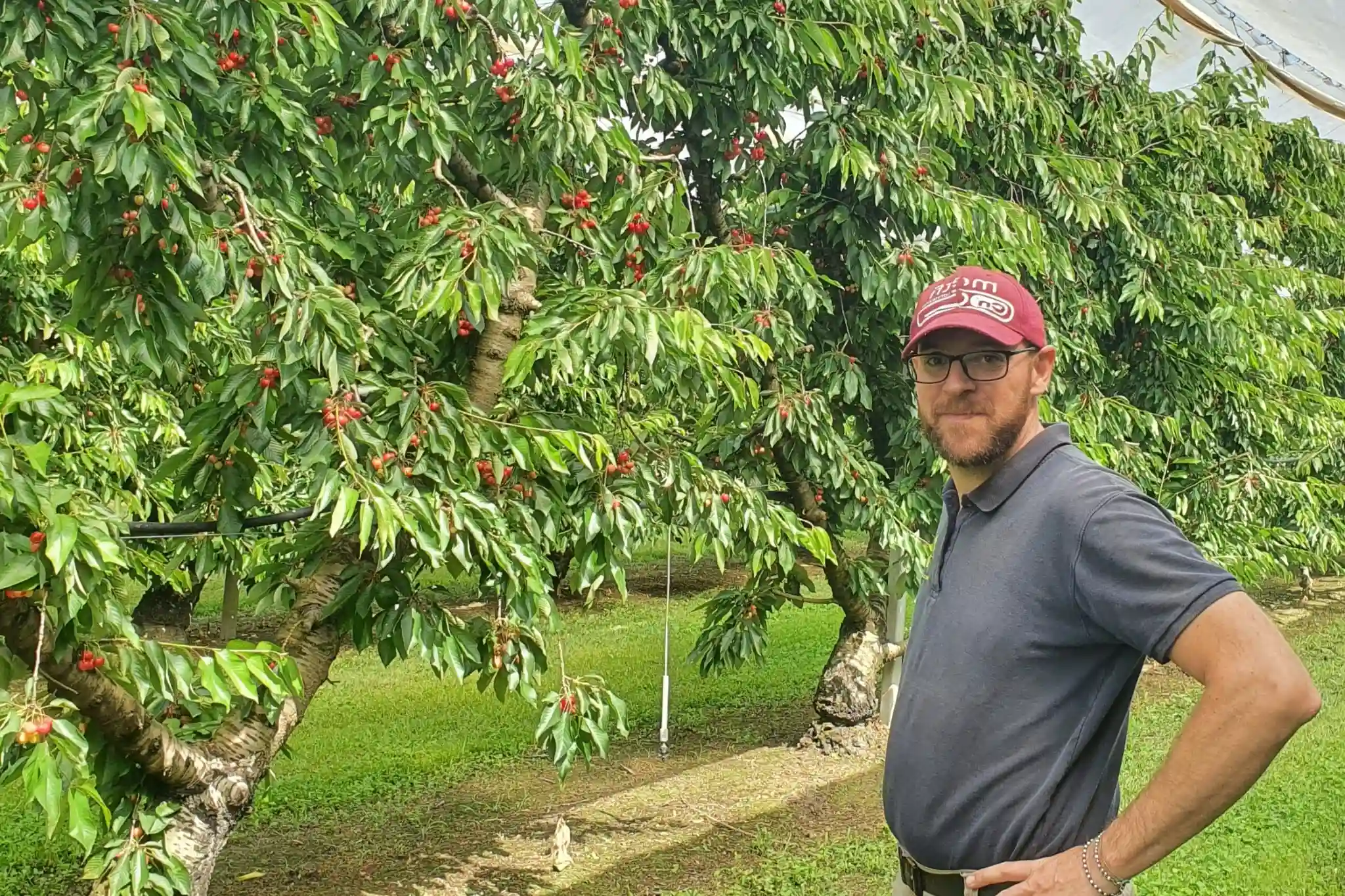 Source: SL Fruit Service
Why Irrigation Matters in Cherries
Anyone who has worked in irrigation – especially with fruit trees – knows how critical scheduling is. Irrigation matters for many crops, but cherries are particularly sensitive to poor water management.
Fruit size and value
Cherry fruit quality relies on steady turgor during key fruit-growth stages. Their thin skins and high skin-to-flesh ratio mean water stress can reduce fruit size and shift fruit into smaller, lower-value grades.
Fruit size is the major driver of profitability in cherries, and growers aiming for export markets typically target a high packout of 32 mm+ fruit, because for cherries, bigger is better in any market!
Sensitivity to sudden water changes
Cherries react strongly to rapid shifts in water availability, which is one of the main causes of fruit cracking. Where other fruits mostly see flavour dilution after excess water, cherries often crack due to high internal pressure when water uptake suddenly spikes, most commonly after rainfall or after rewetting following a dry spell.
Maintaining stable soil moisture through irrigation is one of the most effective ways growers reduce the risk of a sudden jump in water potential inside the fruit. Cracking reduces marketability and increases decay risk.
Calcium and fruit structure
Calcium supports firm fruit and strong cell walls. Because it moves with the transpiration stream, steady water availability is needed during early development.
Too much or too little irrigation disrupts uptake, leading to softer, more damage-prone fruit later in the season.
Photosynthesis and fruit development
With shallow roots and low drought tolerance, even mild water stress reduces photosynthesis. This limits energy for fruit growth and ripening, slowing colour development and sugar accumulation.
In short: cherries respond less to total water applied and more to sudden changes, which is why steady, consistent scheduling matters so much.
Managing Water Variability
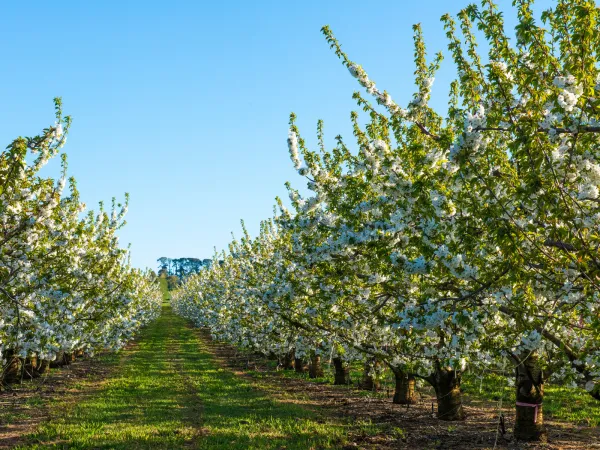
Irrigation is only part of the picture. Growers must also deal with variable rainfall, especially during sensitive stages. While rainfall can’t be controlled, its effects can be managed by keeping soil moisture within a stable range.
Avoiding sharp swings from dry to wet is one of the most effective ways to protect fruit size and reduce cracking.
Water delivery varies across orchards, and maintaining stable soil moisture is central to minimising risk. Drip and sprinkler (including micro-sprinkler) systems are most common, with choices shaped by water supply, soil type, block layout, and frost-protection needs.
Regardless of the system, cherries perform best when water availability is steady.
Put simply: stability protects fruit; instability increases risk.
Profitability and Impact
Irrigation directly influences profitability in cherry orchard management. Because cherries are high-value, even small improvements in yield or fruit grade can make a noticeable difference to returns.
Based on Australian industry averages of around AUD $90,000 (circa EUR 54.000) per hectare, a 2% lift in yield and a 5-point increase in premium-grade fruit can add roughly AUD $5,000 (circa EUR 3.000) per hectare.
You can explore how similar changes could play out on your own orchard using our Crop Value Estimator.
For growers comparing scenarios, even small shifts in size or grade can translate directly into meaningful financial outcomes.
Where do these numbers come from?
Figures are based on recent Australian cherry industry statistics (Cherry Growers Australia / Australian Horticulture Statistics Handbook 2023–24) and Hort Innovation export price data. They represent a typical, well-run orchard.
Understanding Crop Water Demand
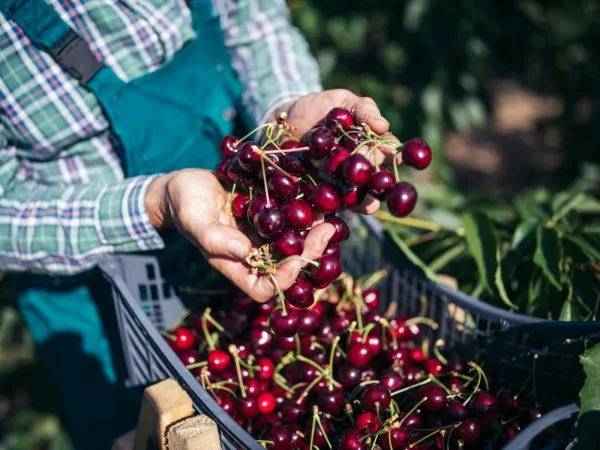
Cherry trees don’t need the same amount of water throughout the season. Demand shifts from early development to pit hardening and into final swell, when fruit size increases rapidly.
These changes happen quickly as harvest approaches, making timing just as important as total water applied.
Growers don’t just manage volume, they manage timing.
Crop water demand is driven by evapotranspiration (ET), soil moisture, and canopy size. As fruit load and temperatures rise, trees can move from moderate to high demand within days.
Understanding these changes helps growers avoid both under-watering, which limits growth, and over-watering, which increases cracking risk.
Most growers estimate water demand using experience, visual cues, and a sense of how the season is unfolding.
Platforms like SWAN refine this by combining ET, weather forecasts, soil moisture trends, and seasonal canopy development into a clearer picture of actual crop needs.
The result: irrigating based on need and the ability to control, not habit or convenience.
Balancing Precision and Practicality
Understanding water demand is one thing; applying it in a working orchard is quite another. Most growers know what “ideal” irrigation looks like, but day-to-day constraints often get in the way.
Labour is limited, blocks mature at different times, weather shifts quickly, and water allocations or pumping capacity can restrict irrigation timing.
Precision sounds good in theory, but day-to-day irrigation decisions are shaped by labour, system limits, changing weather, and the practical realities of a working cherry orchard.
This is where clear guidance becomes valuable. When multiple blocks are competing for irrigation, knowing which areas need water first prevents both over- and under-watering.
SWAN supports this by integrating demand, soil moisture, and forecasts so growers can prioritise blocks and plan irrigation windows with confidence, even when circumstances change, which they inevitably do.
In the end, precision doesn’t need to feel complicated. With fewer decisions made by guesswork – and fewer re-irrigations because timing was off! – it becomes easier to keep the orchard on track without adding more work.
Precision is simply about making the right decision at the right moment, not about creating extra complexity.
The goal is confidence: knowing which block needs water first, and which can wait.
Managing Nutrients and Water Quality
Irrigation does more than supply water to the tree. Every irrigation event also moves nutrients through the root zone, whether applied through fertigation, present in recycled water, or contained in groundwater.
In cherries, where fertiliser inputs are significant and water sources often vary, managing this movement is essential for fruit quality and long-term soil health.
When water and nutrients are out of balance, problems can quickly creep in. Too much water after fertigation can leach nutrients below the root zone, wasting inputs and increasing the risk of loss to groundwater or surface runoff.
Too little water keeps nutrients concentrated near the surface, limiting uptake and, in some cases, increasing the risk of salt build-up or localised root damage.
The result is often uneven growth, variable fruit size, and pockets of poorer-performing trees within the same block.
Uneven water means uneven nutrient movement, and the trees will show it.
SWAN brings this information together by recording irrigation volumes, fertigation events, and water-quality metrics such as EC or nutrient test results.
This gives growers a clearer view of how water and nutrients interact, making it easier to adjust programs before issues become visible.
For growers using recycled/reclaimed water or operating under environmental rules, having these records in one place also supports reporting and broader stewardship goals.
Audit-Ready Reporting and Continuous Improvement
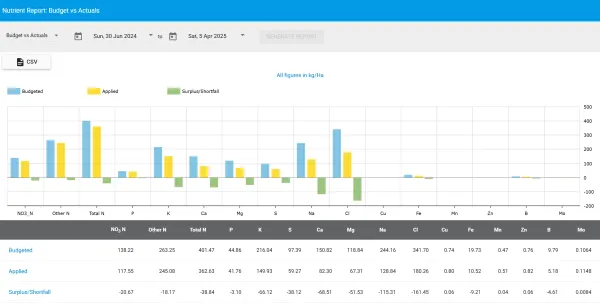
Irrigation data is valuable beyond daily decisions. Many growers need clear records of water use, rainfall, and efficiency for internal reviews, certifications, or audits.
Accurate information on what was applied, when, and why makes these processes far easier.
SWAN simplifies this by automatically logging irrigation volumes, rainfall, water quality, and the crop coefficients used to guide each schedule.
Reports can be exported in consistent formats, making it simple to share information without relying on manual notes or spreadsheets.
Over time, these records also help growers compare seasons, understand what worked well, and set more confident targets for the year ahead.
Good records turn a single season’s observations into long-term insight.
Supported Globally, Backed Locally
SWAN Systems is used in Australia, New Zealand, North America, and the Mediterranean, regions that share the challenge of producing high-quality fruit under variable water conditions.
Each area brings its own mix of soils, climates, and irrigation systems, and this diversity has shaped a platform that works across many orchard environments.
Even with this broad footprint, support remains grounded in local realities. Cherries respond differently to heat, rainfall, and water quality depending on where they are grown, so guidance that reflects local conditions matters.
SWAN is designed to adapt to those differences, helping growers apply consistent irrigation principles in ways that suit their orchards and water resources.
Growers get practical, region-appropriate guidance without sacrificing control of their own data.
Conclusion
Managing irrigation in cherries is never just about supplying water. It’s about maintaining the steady conditions that support fruit size, firmness, colour, and sweetness – and avoiding the swings that lead to cracking or uneven performance.
When irrigation, nutrients, rainfall, and timing align, the orchard becomes more resilient, fruit quality improves, and profitability follows.
SWAN Systems helps bring those decisions into clearer focus. By uniting weather data, soil moisture trends, irrigation history, and water quality information, it provides a practical, grounded view of what trees need and when they need it.
The aim is not complexity, but confidence: fewer guesses, fewer re-irrigations, and more consistent outcomes.
The strongest irrigation systems are those that support good decisions, not just good data.
If you’re considering software to support your irrigation decisions, we’d be happy to walk you through how SWAN Systems fits into a cherry orchard.
Shannon Rinkenberger
Water & Nutrient Management in Agriculture | Business Development | Key Account Manager at SWAN Systems
Cherry Times - Tutti i diritti riservati