The 2025 marks a historic turning point for the sour cherry supply chain in Moldova: for the first time, exports have exceeded domestic consumption. Despite production being affected by frost, producers benefited from high prices on both foreign and domestic markets, generating significant margins.
According to the analysis of economic expert Veaceslav Ioniță, the sector has demonstrated remarkable adaptability, turning a difficult season into an economic opportunity.
Production down, but prices sharply up
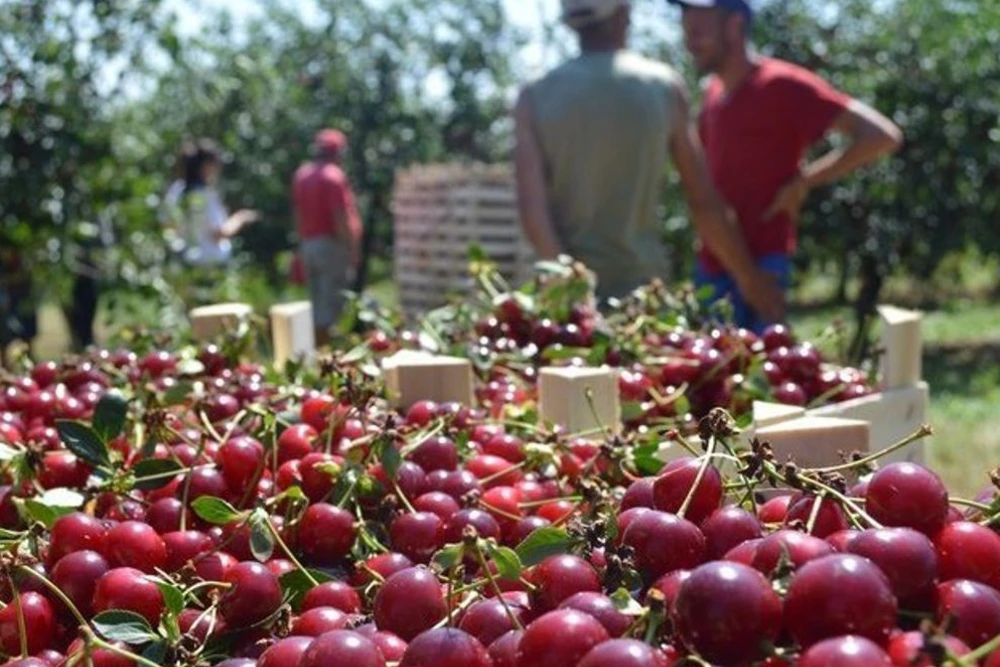
The spring frosts negatively impacted yields, making 2025 the lowest-yielding year of the past five years. However, large producers still managed to obtain around 6,600 tons of sour cherries.
Prices made the difference:
- The average export price reached 29.65 lei/kg, nearly double compared to 15.2 lei/kg in 2024.
- On the domestic market, the average price rose to 9.86 lei/kg, compared to just 1.95 lei/kg the previous year.
The Polish market proved particularly profitable, where Moldovan producers obtained up to 2 dollars/kg, a sharp increase compared to 50 cents in 2021 and 80–90 cents recorded between 2022 and 2024.
“The high level of export prices has inevitably influenced the domestic market as well, creating a sort of local deficit, albeit compensated by very favorable prices for farmers,” Ioniță emphasized.
Exports surpass domestic consumption: a paradigm shift
Traditionally, around 75% of Moldovan sour cherry production was destined for the domestic market, with only 25% exported. In 2025, this balance reversed.
Out of a total production of 8,700 tons:
- 4,700 tons were exported
- 4,000 tons were consumed domestically
This means that 55% of production was destined for foreign markets, surpassing national consumption for the first time. A result that could reshape future strategies in the sector.
Key challenges: irrigation and competitiveness
Despite positive economic results, significant structural issues remain. Among them, the lack of irrigation systems stands out, particularly in southern areas such as the Cahul district.
Farmer Emil Rotaru, who manages a 20-hectare orchard, highlights how the lack of access to water, especially from artesian wells, limits product quality and competitiveness on international markets.
In 2025, his farm harvested around 140 tons of sour cherries, a figure lower than the 2021–2023 period but still significant. However, without adequate water resources, the ability to compete with other countries remains compromised.
Growing acreage and future outlook
Despite the challenges, the sector continues to expand. In 2025 there are:
- 1,900 sour cherry orchards
- 4,800 hectares under cultivation
An increase compared to 1,800 orchards and 4,500 hectares in 2024.
The expansion of acreage and the growing export orientation indicate a sector in transformation, increasingly integrated into international markets but still facing structural challenges.
The 2025 could represent a turning point for the Moldovan sour cherry sector. While high prices and export growth open new opportunities, investments in infrastructure, particularly irrigation, will be essential to ensure consistent quality and global competitiveness.
Source text and image: moldova1
Cherry Times - All rights reserved