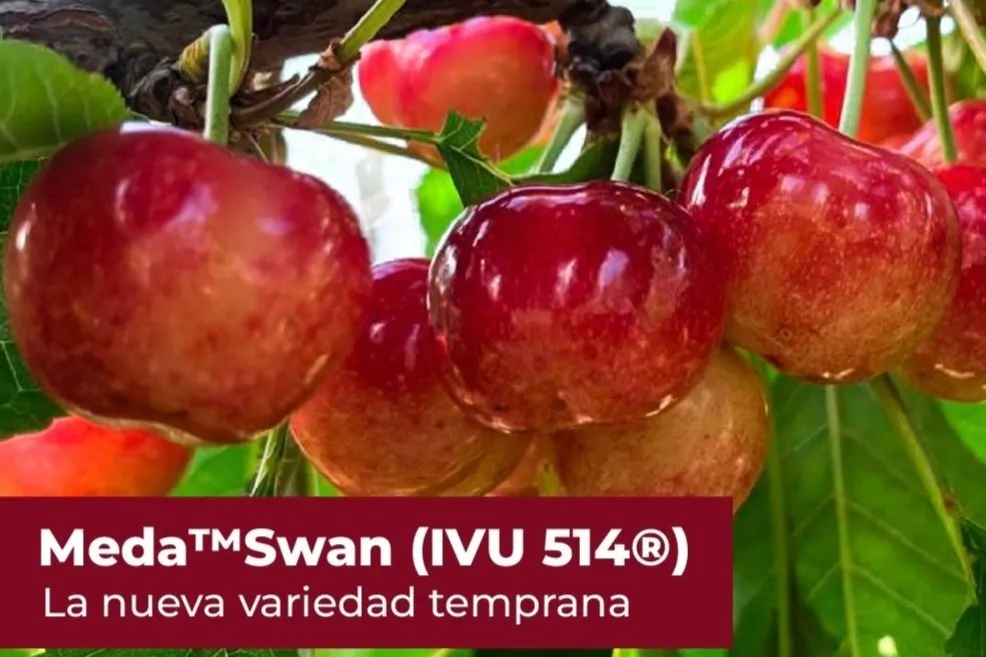
The Washington State University sweet cherry breeding program, led by Dr. Per McCord in Prosser, Washington, is launching a new sweet cherry variety.
Currently known as R19, this new early-season variety will be the first sweet cherry released by WSU since 2007.
The program hopes that this new variety will provide a stronger start to the Pacific Northwest cherry season and continues to develop additional sweet cherry cultivars that will benefit the Pacific Northwest industry.
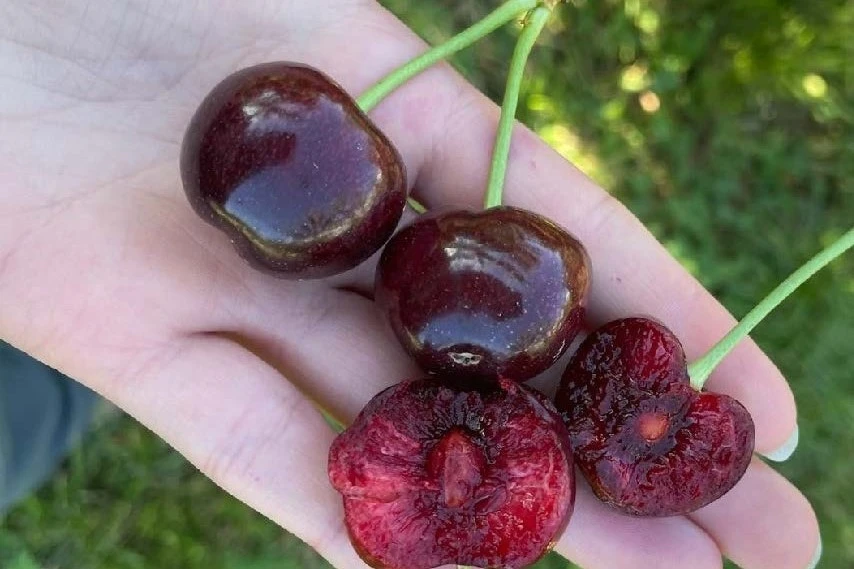 Opening photo source: WSU
R19, a new sweet cherry variety
R19 exhibits excellent qualities, valued by both growers and consumers.
It has an early harvest window comparable to that of ‘Chelan’, but consistently outperforms its early-maturing competitors with higher BRIX levels, larger fruit size, and better firmness.
Its flavour and texture are outstanding.
Due to the sweetness of R19, protection from bird predation may be necessary.
R19 performs best in sites with moderate winter temperatures that are not excessively cold or wet. The breeding program has secured funding that will allow Dr. McCord’s team to evaluate rootstocks and training systems, providing growers with better guidance on R19’s growth and fruiting characteristics.
 Fig. 1. R19 fruit during the 2024 harvest.
Availability and future developments
R19 is expected to be available in limited quantities for pre-order in spring 2026, and several other outstanding varieties currently under development within the WSU cherry breeding program are eagerly anticipated in the coming years.
Selection phases
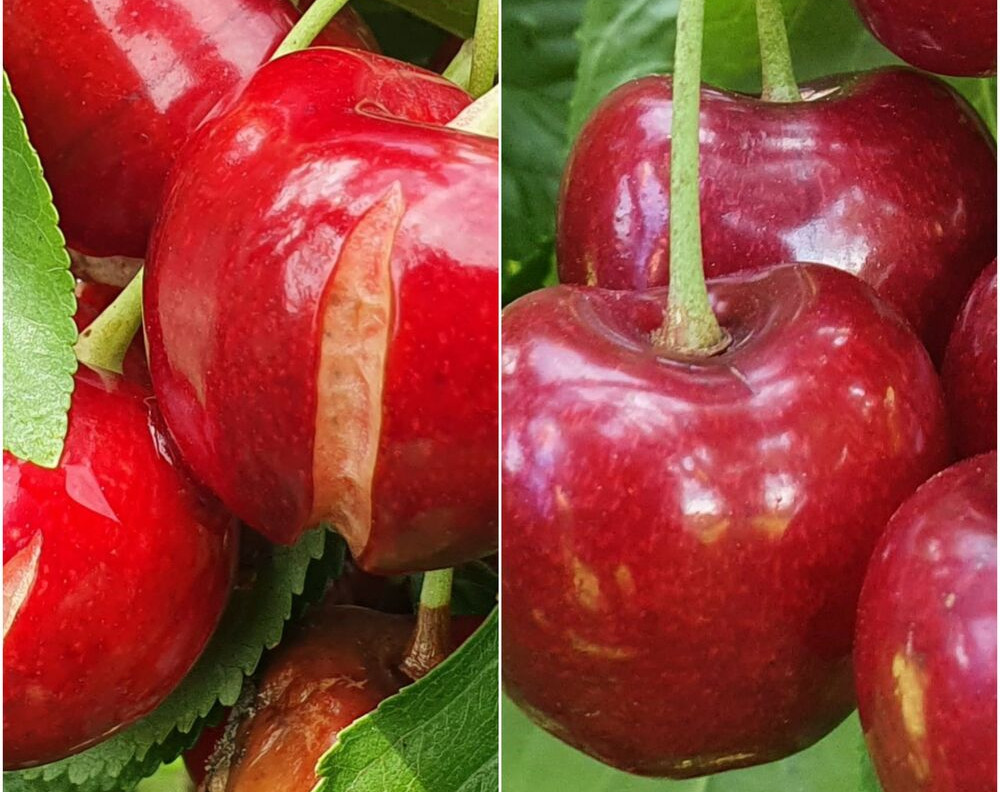
Dr. McCord crosses cherries to optimise early or late ripening timing, resistance to powdery mildew, self-fertility, fruit size, firmness, and resistance to cracking.
The program uses a three-phase approach to evaluate resulting new seedlings.
In Phase 1, the program employs genetic testing to streamline the seedling selection process.
Seedlings displaying molecular markers associated with the program’s target traits are planted, while the remaining seedlings are discarded.
Once the trees begin producing fruit, the best cherries are selected and carefully evaluated for fruit quality attributes such as size, flavour, firmness, defects, and cracking.
If a variety consistently meets commercial standards for 2–3 years, it may be promoted to the next phase.
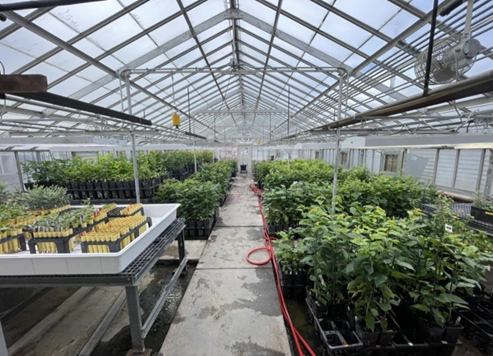 Fig. 2. Approximately 3,000 Phase 1 seedlings awaiting molecular testing (yellow pots) or field planting.
From selection to market
When a variety advances to Phase 2, it is grafted onto a rootstock and planted in replicated trials across multiple sites.
It continues to be evaluated for the same fruit quality traits assessed in Phase 1, with the addition of further parameters such as sugar and acid content, stem pull force, and post-storage fruit quality.
If the variety advances to the third and final phase, sufficient trees are planted to allow each field trial to be run through a commercial packing line, and samples are taken to the horticulture laboratory for ongoing evaluation.
New varieties on the way
The WSU cherry breeding program currently includes three varieties in Phase 3, 13 varieties in Phase 2, and thousands of seedlings in Phase 1.
Among those in the final phase are R3, a large and sweet variety ripening a few days after ‘Chelan’; R29, a very large, mid-season, self-fertile cherry with good vigour; and R35B, a very large, blushed cherry, self-fertile, ripening approximately nine days after ‘Rainier’.
The new R19 variety will not be the last to emerge from the WSU cherry breeding program.
Annie Wall and Per McCord
Washington State University Irrigated Agriculture Research and Extension Center, USA
Source: published by Washington State Tree Fruit Extension, Fruit Matters, on treefruit.wsu.edu
Cherry Times – All rights reserved