Fruit cracking remains one of the main challenges facing Chilean cherry production, especially when rainfall occurs during fruit development. However, damage depends not only on rainfall intensity but also on the physiological and structural conditions that determine the cherry’s ability to withstand water uptake.
This was explained by Cristian Balbontín, a specialist in fruit crop science at the Instituto de Investigaciones Agropecuarias (INIA) Quilamapu, who stressed the importance of preventing this problem through management strategies implemented from the earliest stages of fruit development.
According to the researcher, factors such as variety, developmental stage, growth rate, and skin and cuticle characteristics directly influence cherries’ susceptibility to cracking.
“The risk is determined before rainfall occurs,” Balbontín stated, explaining that the cuticle, composed mainly of cutin and waxes, plays a protective role by regulating water exchange between the fruit and its environment.
As the cherry grows, however, this barrier can develop microcracks that subsequently facilitate water uptake and increase the risk of skin rupture.
Nutrition and calcium in cherry trees
In this context, the specialist stressed that preventive measures should not focus solely on the days preceding rainfall but should be an integral part of orchard management throughout fruit development.
During this stage, adequate mineral nutrition and sufficient calcium availability are essential to support plant tissue strength. This element helps maintain cohesion between cells and can improve fruit firmness when supplied through treatments during fruit development.
Furthermore, calcium applications before or during rainfall could help reduce the osmotic gradient and consequently limit water uptake into the fruit, one of the processes associated with cracking.
However, Balbontín clarified that the effectiveness of this strategy does not depend on a single application. Instead, he highlighted the importance of distributing treatments throughout plant development, according to crop requirements and production conditions.
Following rainfall, another important measure is to quickly remove water remaining on the fruit, reducing the time its surface is exposed to conditions conducive to cracking.
Research into strengthening the cuticle
Alongside nutritional management practices, research is exploring ways to proactively strengthen plants’ natural defence mechanisms against environmental stress.
Cuticle damage.
In this area, Balbontín highlighted results obtained with his collaborators using jasmonic acid derivatives, a plant hormone involved in signalling plant defence responses. Applications during fruit set have shown changes in the cuticle formation process.
The researcher also indicated that applications of jasmonate and abscisic acid have reduced susceptibility to cracking under certain experimental conditions and improved fruit quality.
These results open up new prospects for developing tools that allow growers to intervene before rainfall, strengthening the cherry’s ability to withstand contact with water.
Preparing for rainfall
The evidence reinforces the importance of viewing cracking as a multifactorial phenomenon, rather than solely as a direct consequence of rainfall. Variety, fruit growth, cuticle integrity and nutritional management interact to determine the level of risk in each orchard.
In this context, early prevention, appropriate calcium management and the development of new strategies to strengthen the fruit surface are emerging as important tools for reducing the losses in quality and commercial value associated with cracking.
As Balbontín concluded, there is “an early window during fruit development when it may be possible to intervene to strengthen the fruit surface against water.” This reinforces the need to develop preventive strategies that help growers better manage rainfall events during the cherry season.
According to Alper Kerim, owner of Demir Fresh Fruits, the focus this year will be on the European market: ‘We are able to send large volumes to Europe and transit times are very good for cherries. However, Asian countries remain the biggest buyers.’
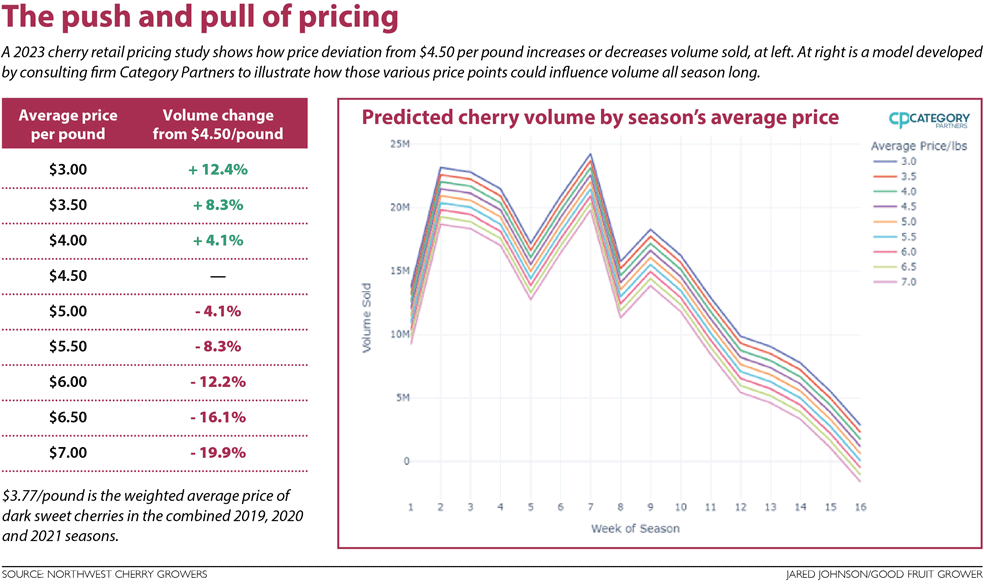
A 2023 consumer study that surveyed over 2,000 consumers found that the key factors continue to be quality and flavour. However, once the retail price reaches $4.50 per pound, sales begin to decline.
A Washington State University study of sweet cherry bacterial canker examines weather during pruning, sanitation-cut distances, and trials with lime sulfur and clove essential oil, offering clear guidance to limit infection and support an integrated prevention strategy.
ENEA research in Lazio shows that dry conditions can produce firmer cherries that are less vulnerable to Drosophila suzukii. Comparing the 2024 and 2025 seasons highlights how climate, sugar content and flesh firmness affect variety resistance and orchard management.