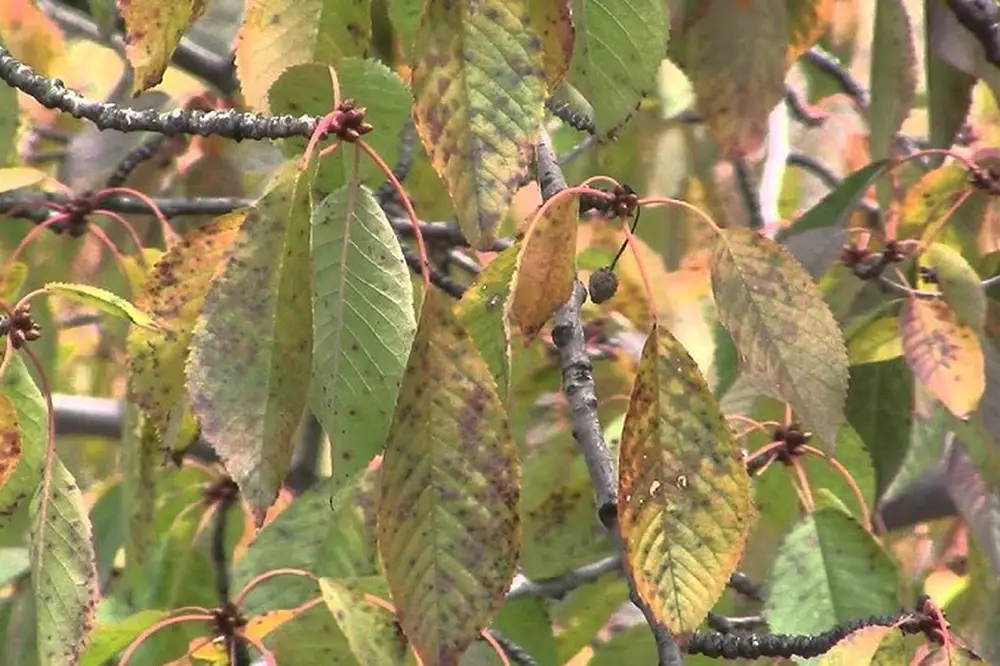
The integration of precise diagnostics, regenerative practices and innovative technologies positions MIN as a pillar for the sustainability and profitability of Chilean fruit growing, particularly in the case of cherries.
Chilean fruit production faces increasing challenges associated with climate change, soil degradation, biodiversity loss and the need to produce high–quality fruit according to sustainability criteria.
In this context, Manejo Integrado de la Nutrición (MIN) is a key component of Regenerative Agriculture (AR), integrating diagnostic tools, amendments, biostimulants and site–specific practices, among others, to improve productivity and fruit quality, especially in cherries, in a sustainable way.

Technical challenges in fruit growing
Fruit growing faces numerous challenges, some of which originate from factors that cannot be directly managed. Among these:
- Climate change: increase in extreme events and associated biotic and abiotic stress. Therefore, there is a need to adapt to climate change and minimize the effects of biotic and abiotic stress caused by, for example, heat waves, intense rainfall or out–of–season frost.
- Degraded soils: loss of organic matter, acidification and compaction. For example, it is estimated that almost half of the fruit growing area is acidified, requiring liming.
- Soil and water contamination: accumulation of heavy metals such as copper; it is estimated that 45% of the area dedicated to fruit production has high Cu–DTPA levels (>10 ppm), while 7% presents toxic levels (>50 ppm Cu–DTPA). In addition, irrigation water shows high nitrate and phosphate concentrations, indicating significant nutrient losses in different basins.
- Profitability: the need to balance yield and quality to maximize benefits. This is particularly relevant in a context of overproduction and lower selling prices, especially in China.
 Image 1. María Mercedes Martínez
Improving soil quality
Improving soil quality is a universal tool for climate change adaptation and for achieving good yields and quality, generating a virtuous circle because better cultivation leads to better soil in the medium–to–long term (Figure 1).
At the same time, it helps mitigate greenhouse gas emissions by sequestering carbon in the soil and reducing carbon dioxide (CO₂) and nitrous oxide (N₂O) in the atmosphere.
Determinant edaphic factors
Root growth and nutrient uptake are conditioned by numerous factors, including:
- Soil compaction and aeration.
- Texture, structure and porosity.
- Availability of water and nutrients.
- Metal toxicity (e.g., excess Cu and Mn).
- Biological activity and microbial diversity.
Two of the main problems in soils dedicated to cherry production in Chile are copper toxicity and lack of oxygen due to compaction and issues in soil texture and structure.
Regarding compaction, soils with pressure values (measured with a penetrometer) above 1,000 kPa (~150 PSI) limit root penetration, compromising soil exploration and nutrient uptake.
 Image 2. Rodrigo Ortega Blu
Regenerative agriculture and MIN
Regenerative Agriculture not only seeks to increase or maintain productivity, but to generate positive externalities such as greater biodiversity, carbon sequestration and resilience of the agroecosystem in the face of climate change.
Manejo Integrado de la Nutrición (MIN), an essential component of regenerative agriculture, is a strategy that combines the best of science and agricultural practice to use nutrients efficiently, sustainably and profitably.
MIN incorporates the following elements:
- Site–specific diagnosis: soil, tissue and water analysis, ideally at a site–specific level. The use of proximal sensors allows the generation of detailed maps of spatial variability of soil properties (Figure 2).
- Organic and inorganic amendments: liming, gypsum applications, compost, phosphorus, potassium and magnesium.
- Biostimulants/soil improvers: microbial (PGPR, mycorrhizae) and non–microbial (seaweed extracts, plant extracts, amino acids, humic substances).
- Modern technologies: nitrification inhibitors, foliar fertilization and site–specific management.
- Final objective: produce more fruit, of higher quality and with a lower environmental impact.
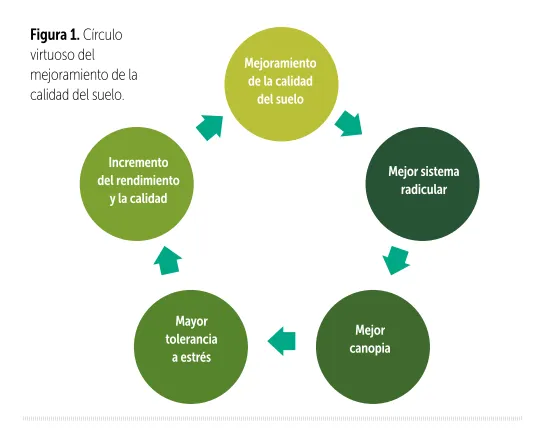 Figure 1. Virtuous cycle of soil quality improvement
Nutritional requirements of cherries
Nutrient demand in cherries is relatively low and estimated as follows:
- Nitrogen: 6 kg/ton of fruit
- Phosphorus (P₂O₅): 1.5 kg/ton
- Potassium (K₂O): 8 kg/ton
For a yield of 15 tons/ha, total demand is 90 kg N/ha, 23 kg P₂O₅/ha and 120 kg K₂O/ha. However, fruit extraction represents only a fraction of this demand, about half.
In the case of calcium, considering that high–quality fruit extracts about 120 mg Ca/kg of fresh fruit and that this value represents between 1 and 2% of the Ca required by the whole tree, total demand varies between 90 and 180 kg Ca/ha.
Since calcium moves through transpiration flow, a minimum of 5 cmol(+)/kg of exchangeable Ca in the soil is needed to meet requirements instantly.
However, in soils with good buffering capacity (CEC) it is recommended to maintain Ca levels above 10 cmol(+)/kg to be protected under low transpiration conditions.
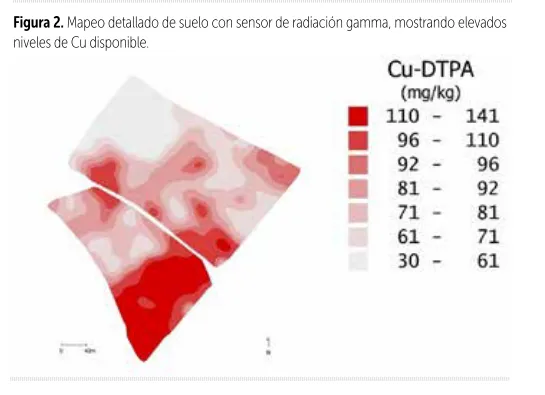 Figure 2. Detailed soil mapping with a gamma–ray sensor showing high available copper (Cu).
Nutritional management strategies
Nutritional management strategies in cherries must include the following elements:
- Nitrogen balance (N) and nitrification inhibitor: to estimate N supply, add residual N, mineralization and input through irrigation water. Subtract these from total demand. If supply exceeds demand, application is unnecessary. Recommended use of nitrification inhibitor to slow ammonium conversion to nitrate and improve efficiency. Typical dose: 1 kg a.i./100 kg N–NH₄.
- Phosphorus, potassium and magnesium: build–up and maintenance programs according to critical soil levels. Recommended critical levels: 30, 250 and 240 mg/kg for P, K and Mg respectively. Above these levels, apply only what is extracted by the fruit. For example, for a production of 15 tons/ha, it would be necessary to replenish 11 kg P₂O₅/ha, 60 kg K₂O/ha and 2 kg Mg/ha.
- Calcium: essential for firmness and fruit quality; requires monitoring of exchangeable and soluble fractions. Maintain >10 cmol(+)/kg (2000 mg/kg) in soil, with gypsum or lime in acidic soils. Soluble sources: calcium nitrate (Ca(NO₃)₂), calcium chloride (CaCl₂), alone or with organic compounds. Low solubility sources: calcium hydroxide (Ca(OH)₂) and calcium carbonate (CaCO₃). Soluble sources supply Ca immediately; low–solubility sources regulate pH and reduce Cu and Mn toxicity.
- Biostimulants/soil improvers: the use of compost, seaweed extracts, humic substances and PGPR has shown yield increases of 10–30% and improvements in firmness and fruit uniformity. Organic materials that supply carbon promote aggregation, degradation of toxic compounds, pathogen suppression, production of biostimulant substances and nutrient mineralization (Figure 3).
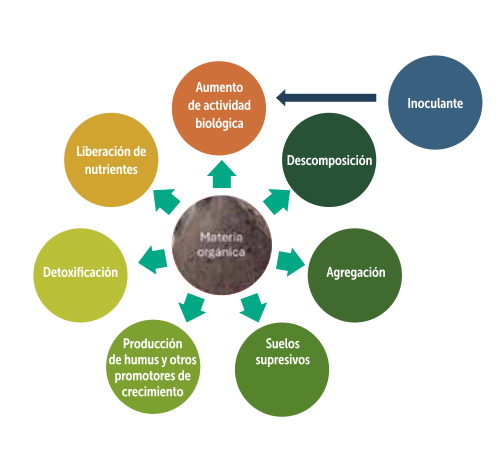 Figure 3. Effects of applying organic matter (carbon) and PGPR inoculant to soil.
Sources of organic matter
All organic products influence soil and crop bio–stimulation, but it is essential to understand the lability (or recalcitrance) of available materials to choose the most suitable product for each plot.
More labile products have a short residence time in soil (requiring frequent applications) and are suitable where no other limitations exist, such as heavy soils or those with high Cu levels.
In the latter case, the use of more recalcitrant materials such as humic substances from leonardite is recommended, which also accumulate in the soil improving its buffering capacity.
Expected results of a MIN program
The expected results of a MIN program in cherries are:
- Increased cation exchange capacity (CEC).
- Improved soil structure and water retention.
- Greater biological and enzymatic activity (e.g., β–glucosidase).
- Increased root volume.
- Reduced leaching losses and improved nutrient use efficiency.
- Greater tolerance to biotic and abiotic stress.
- Improved yield and fruit quality (firmness, size, uniformity).
A pillar for sustainability and profitability
Manejo Integrado de la Nutrición is an essential strategy to address the challenges of modern fruit growing in Chile.
Its implementation in cherries allows:
- Optimization of nutrient use efficiency.
- Reduction of contamination and toxicity risks.
- Improved resilience in the face of climate change and its effects.
- Ensuring high–quality fruit, a key condition for competitiveness in international markets.
The integration of precise diagnostics, regenerative practices and innovative technologies positions MIN as a pillar of sustainability and profitability in Chilean fruit growing.
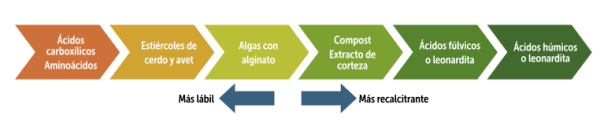 Figure 4. Lability or recalcitrance of different organic materials applied to soil.
Source text and internal images: Redagricola
Opening image: SL Fruit Service
Rodrigo Ortega Blu and María Mercedes Martínez
Cherry Times - All rights reserved