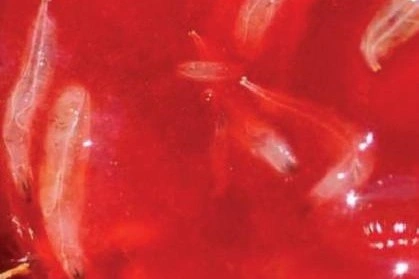
The future of cherry crop protection may also depend on varietal selection. Research conducted by ENEA, released on the occasion of the International Day for Biological Diversity on 22 May, has shown that some cultivars are naturally less exposed to attacks by the spotted wing drosophila, Drosophila suzukii, one of the most feared pests in sweet cherry production.
Firm flesh and dry climate: two allies against Drosophila suzukii
According to the study, dry weather helps make the flesh of some cherry varieties firmer. This characteristic, combined with increased sugar content, can strengthen the fruit’s ability to withstand attacks by the spotted wing drosophila.
The issue is particularly relevant for production areas such as Sabina, in Lazio, where the arrival of the insect from China has caused very severe damage, with losses in some cases exceeding 50% of production.
The work was carried out by researchers from the ENEA Agriculture 4.0 Laboratory, who developed a screening system under controlled conditions. To assess the response of different varieties, the team used an artificial rearing system for the fly, observing the insect’s behaviour on the fruit.
These trials led to the development of a susceptibility scale, based on several parameters: percentage of affected fruit, number of punctures, and development of larvae and pupae.
As Sergio Musmeci, entomologist at the ENEA Agriculture 4.0 Laboratory, explains, the combined analysis of biochemical, olfactory, visual and tactile factors made it possible to understand which elements make a variety more vulnerable or more resistant. Cultivars with firmer flesh generally showed fewer punctures and lower larval survival, resulting in a more limited level of damage.
The role of the season: dry 2024, more critical 2025
The research also confirmed the decisive role of seasonal conditions. In drier, less rainy years, such as 2024, cherries tend to accumulate more sugars and develop firmer flesh. Together, these two factors can improve the fruit’s resistance.
High sweetness, in some varieties, can increase the number of punctures. However, the same sugar content appears to strongly hinder the subsequent development of larvae, especially when the fruit has very firm flesh.
Musmeci points out that the climate acts on two fronts: on the one hand, it can directly reduce insect populations, for example through dehydration under drier conditions; on the other, it indirectly modifies the level of resistance of the varieties. This helps explain the difference between 2024, which was characterised by low levels of damage in the field, and 2025, which was wetter and rainier, with high infestations and more vulnerable fruit.
Towards an integrated system for sweet cherry production
The cultivar susceptibility scale could become a useful tool for building an integrated monitoring system in Sabina and in other Italian areas suited to cherry cultivation.
The aim is to connect three levels of information: climate trends, population dynamics of Drosophila suzukii, and the characteristics of the cultivated varieties. In this way, operators will have more precise indications for orchard management and, when renewing plantings, will be able to make more informed varietal choices.
A path that began with the SIMODROFILA project
Unlike the common fruit fly, Drosophila melanogaster, the spotted wing drosophila is able to attack healthy fruit that has not yet been affected by rot. Following requests from growers in Sabina, a working group was established in 2016 under the coordination of ARSIAL, the Regional Agency for Innovation and Development of Agriculture in Lazio.
This collaboration led to the SIMODROFILA project, funded by the Lazio Region with the scientific contribution of ENEA and CREA. The project provided growers with low-impact solutions to contain the spread of the pest, reduce pesticide use, limit economic losses, and increase the healthiness and added value of the product.
Conclusion
The ENEA research opens up a concrete perspective for sweet cherry production: integrating varietal knowledge, climate data and insect monitoring to build more effective and sustainable crop protection strategies. In a context in which climate has an increasing impact on pest pressure, choosing the right variety could become a decisive lever for protecting the quality, yields and profitability of Italian cherries.
Source: www.media.enea.it
Image source: Stefano Lugli
Cherry Times - All rights reserved