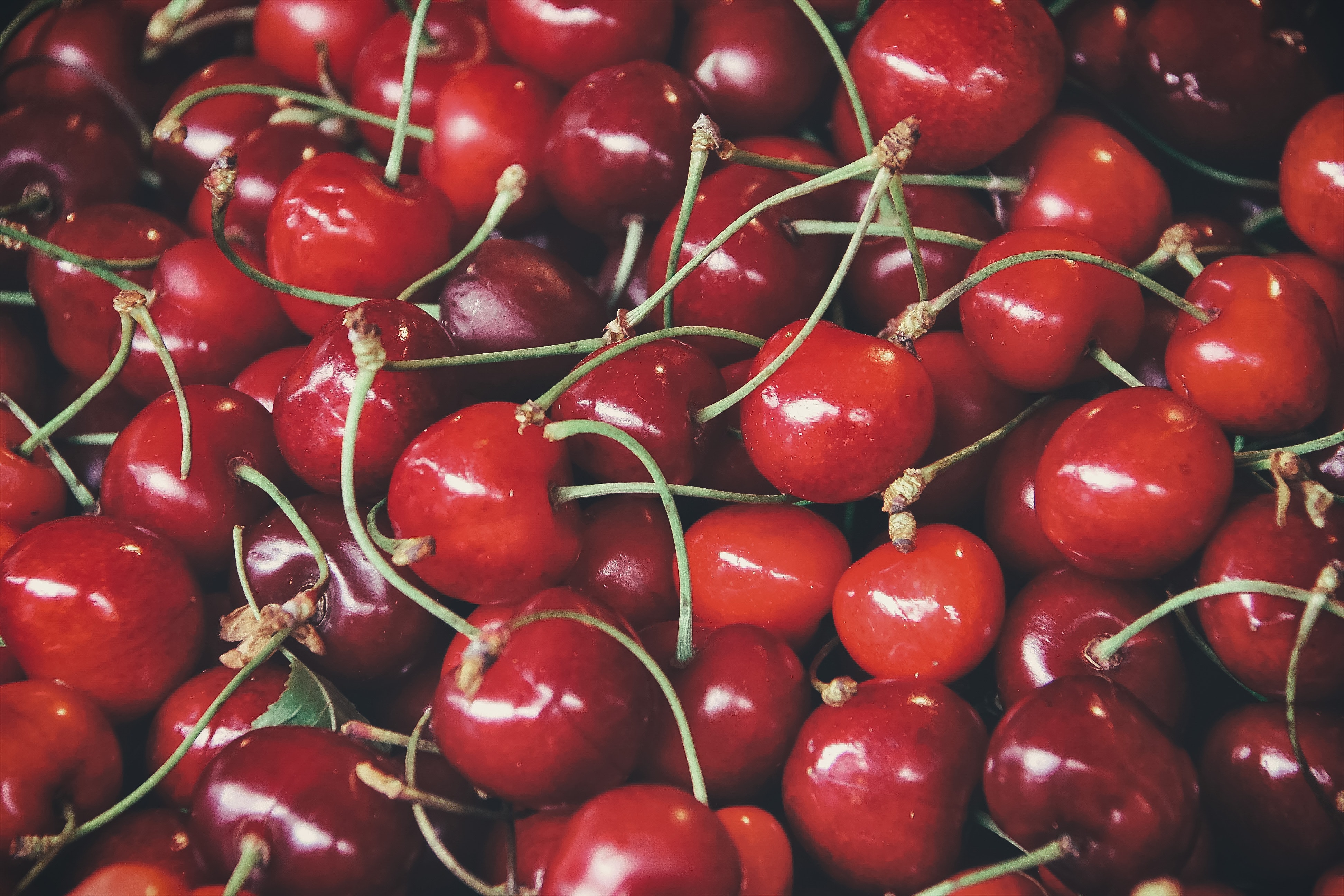
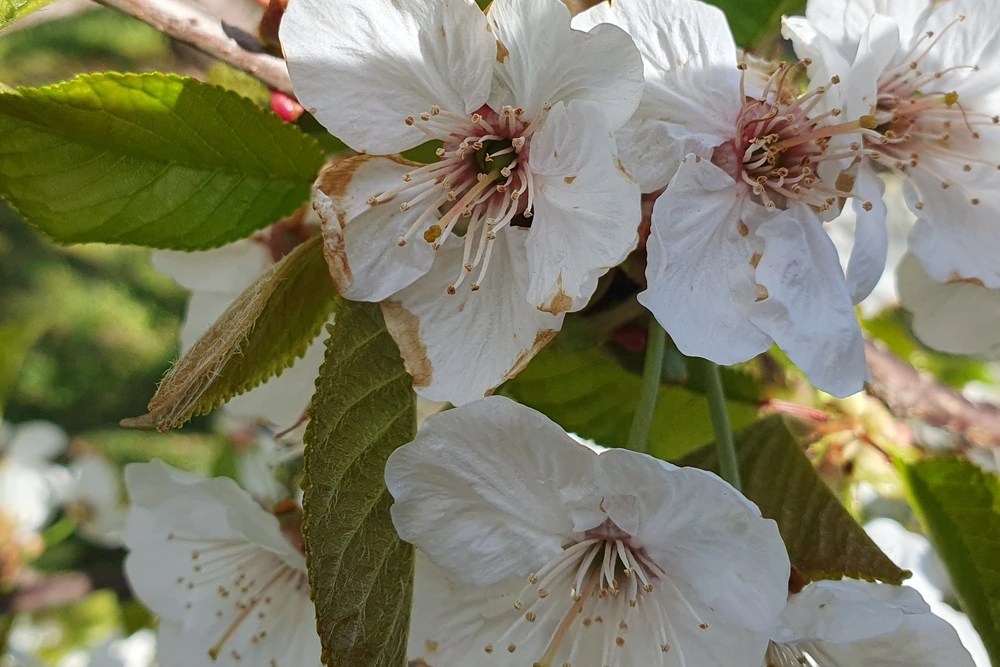
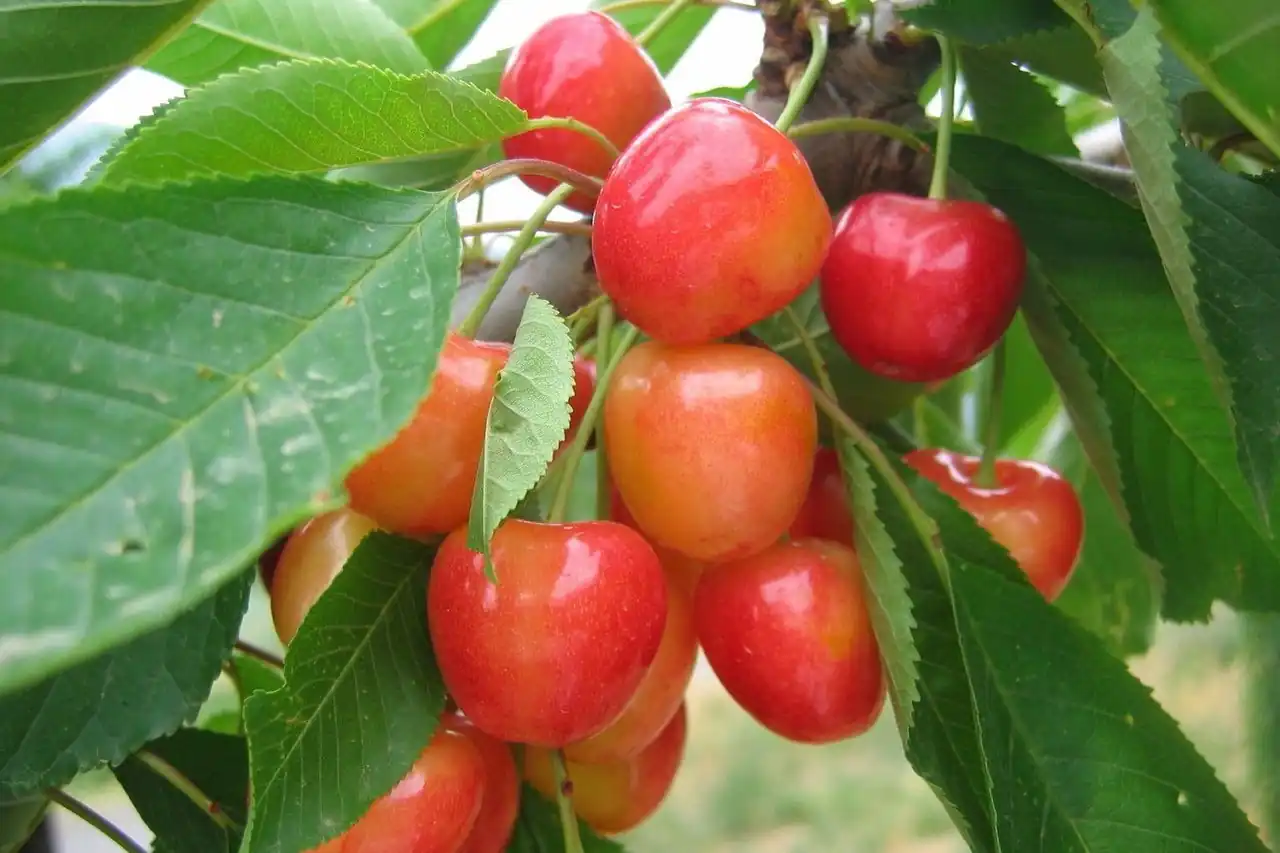
In the middle of his property, Tim Hudson of Mosier Creek Orchards has one block of Royal Anns reserved for processing, a shady 20-acre oasis of low-maintenance predictability amid the turbulence of the fresh cherry market.
“It’s guaranteed money,” said Hudson, a third-generation fruit grower in Oregon’s Columbia Gorge. “They get picked first and they’re gone. I don’t worry about them.”
Hudson is one of just a few Oregon growers still growing the blush Royal Anns purely for brining into maraschino, glacé or ingredient cherries, something for which the state was once known.
As recently as 10 years ago, Oregon produced about 65 percent of the nation’s maraschino cherries.
Shifting toward fresh market
Over the past 20 years or so, cherry growers seeking higher returns have shifted toward the fresh market. Processors now source most of their fruit from the cull bins of packing warehouses, said Robb Loop, national cherry sales manager for Pacific Coast Producers.
“That is a way we’ve had to pivot as an industry,” said Loop, also a former employee at Oregon Cherry Growers, a processing facility started decades ago in The Dalles by a few cherry farming families.
Pacific Coast Producers, based in Lodi, California, purchased the plant in 2017. Today, all its cherries make a stop in The Dalles for brining.
Ingredient cherries used in ice cream and yogurt are shipped to customers from there. Maraschino and glacé cherries head to a Salem, Oregon, plant for finishing.
Processing market and players
Overall, the processed cherry market is worth between $100 million and $150 million (circa €91–€137 milioni), Loop said. Pacific Coast Producers is probably the largest player, followed by New York-based Seneca Foods, which processes cherries in Michigan, then Johnson Foods of Sunnyside, Washington, and Dell’s Maraschino Cherries Co. of New York City.
Mosier Fruit Growers Wade Root, a fourth-generation grower in the Columbia Gorge, also maintains an old block of Royal Anns, which he favors for its low cost and risk.
Its early picking window attracts workers, too. His block is planted in a 27-foot (circa 8,2 metri) triangle spacing, an older style intended to improve spray coverage.
When Root was a kid, about half his family’s orchard went to processing. This year, it was about 10 percent, but it was the most profitable 10 percent — given the fresh crop struggles.
Royal Anns as a stable income
“This year, there was no question that the briners were our best returner,” he said. Root, the Hudsons and a few other growers collectively operate a small receiving and shipping warehouse under the banner of Mosier Fruit Growers, from which Pacific Coast Producers picks up the briner Royal Anns.
Johnson Foods also sometimes visits to collect cherries for their ingredient business, Root said. For Mosier Fruit Growers, the processing effort focuses on Royal Anns, which need a unique horticultural approach.
Hudson has 60 acres of other varieties. Only once has he diverted any of those to processing; it was just this year, after a hot weekend left his Sweethearts too soft for packing.
Growers find Royal Anns low-risk and low-maintenance for several reasons. For one, Hudson picks them early, because processors prefer firmer cherries to protect the fruit surface and stem.
Technical choices and costs
Field representatives ask him to aim for between 13 and 20 Brix. Anything over that and he is docked as much as one-third the price.
Also, processors have room for small fruit that keeps costs per serving down for the end user, such as an ice cream vendor topping a sundae.
Hudson prunes his Royal Anns less than his fresh blocks — just enough to prevent limb rub, allow sunlight and spray penetration and keep the trees short enough for pickers to reach with 12-foot (circa 3,6 metri) ladders.
“For a fresh fruit tree, you’d be cutting a whole lot more out of here, because you just don’t want that many cherries in a tree,” he said.
He also applies fewer foliar nutrients, fungicides and insecticides. The Royal Anns on Mazzard rootstocks at 30- by 40-foot (circa 9,1 x 12,2 metri) spacing receive the same dry fertilizers and irrigation as the rest of his cherries.
His crews pick roughly the same way, too. Processors allow up to 5 percent culls before they start to reduce pricing.
His block has empty spaces where he has had to rogue trees due to disease. A nursery order of Royal Ann often requires minimums that are more than he needs or can afford.
Hudson’s 100 tons (circa 90.700 kg) of Royal Anns produce nowhere near the returns of fresh cherries in a boom year, but those come around only so often, he said.
Philosophy and consistency
Hudson worked in law enforcement before returning to farm with his father about 12 years ago. They have talked about removing Royal Anns but like the consistent money and lower input costs, an ethos they try to use in their fresh blocks.
“Where do you draw that line of trying to fine-tune, spending a whole bunch of money to get there, or pruning them all kind of a certain way and hoping for the best?” he said. •
Image source: TJ Mullinax
Ross Courtney
Good FRUIT Growers
Cherry Times - All rights reserved