The evidence obtained in both crops confirms that seaweed extract-based biostimulants have become a modern and sustainable tool in agronomic management, capable of strengthening plant physiology and providing resilience to climatic stress.
Biostimulants in cherry and kiwi
The evidence obtained in both crops confirms that seaweed extract-based biostimulants have become a modern and sustainable tool in agronomic management, capable of strengthening plant physiology and providing resilience to climatic stress.
Chilean fruit growing is undergoing one of the most profound transformations in its history. Shorter winters, irregular springs, and summers characterized by extreme temperatures, combined with water deficit, are forcing growers to rethink orchard management and integrate strategies capable of strengthening crop resilience in the face of climate change.
In this context, biostimulants have emerged as a key tool to improve plant physiological efficiency and their ability to adapt to abiotic stress conditions.
Unlike fertilizers or plant protection products, biostimulants do not act directly on nutrition or pest and disease control, but instead optimize plants’ internal metabolic processes, allowing for more efficient nutrient use and a more balanced physiological response to adverse factors.
 Image 1. Raimundo Cuevas, Technical Director at Abud & Cía.
Seaweed extracts and fruit crop management
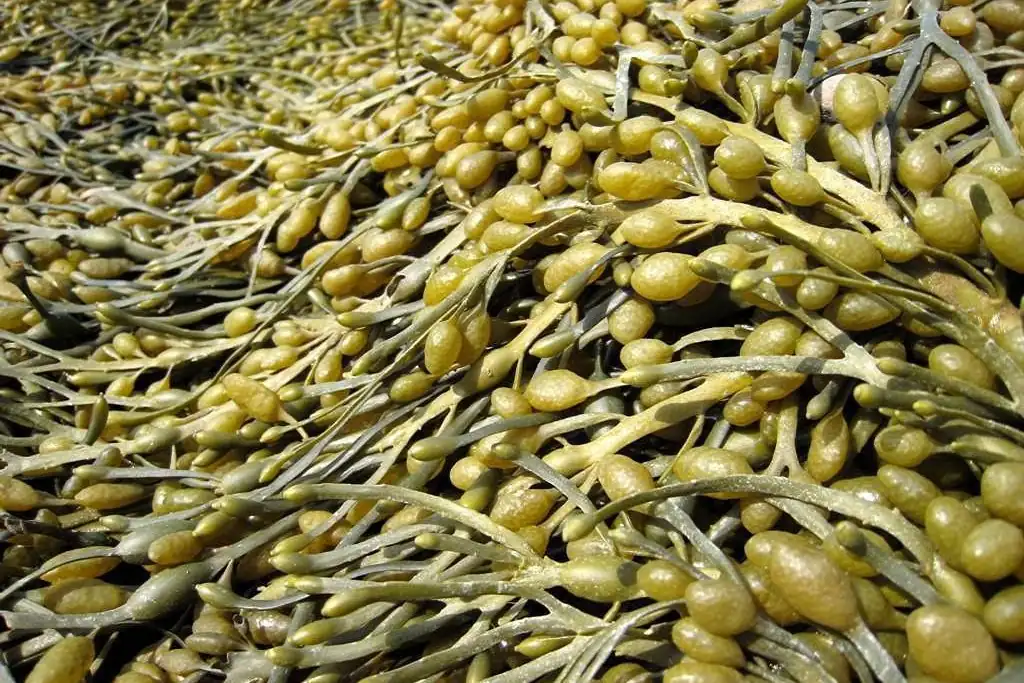
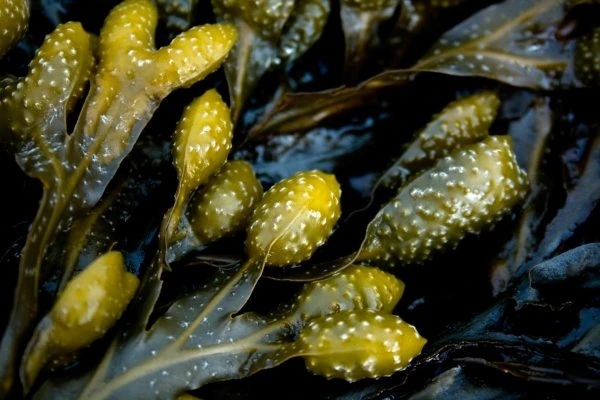
Among the most studied and widely used compounds in fruit growing are marine seaweed extracts, such as Ascophyllum nodosum, native to the North Atlantic, and Ecklonia maxima, known as “sea bamboo,” which grows along the southern Atlantic coast of Africa, from the southern tip of South Africa to northern Namibia.
In the case of Ascophyllum, this seaweed contains a high concentration of bioactive molecules linked to stress management, such as laminarin, alginates, and fucoidans, as well as polysaccharides, amino acids, vitamins, and antioxidants.
Its unique composition directly influences cell division, hormonal balance, and antioxidant activity in plant tissues, allowing fruit trees to maintain active and stable metabolism even under stress conditions.
 Image 2. Luis Ahumada, Innovation and Sustainability Manager at Abud & Cía.
Extracts of Ecklonia maxima have instead established themselves as high-value agricultural biostimulants thanks to their exclusive content of bioactive compounds.
These include cytokinins, auxins, gibberellins, and polysaccharides, which promote plant growth and development by enhancing key physiological and metabolic processes, improving vigor and stress response.
Applications in cherry and kiwi
In cherries, one of the most relevant species for Chilean fruit growing, trials conducted by the Centro de Innovación Montefrutal (CIM) have identified key physiological stages in which biostimulation is most effective. During flowering, for example, the use of Ecklonia contributes to improved fertilization, fruit set, and fruit retention, as well as enhanced pollen germination and pollen tube elongation.
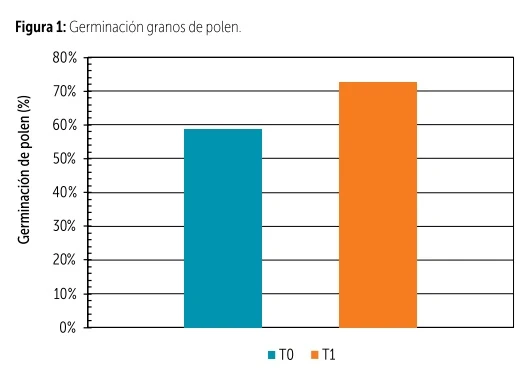 Figure 1. Pollen grain germination
Subsequently, during the fruit growth phase, biostimulation with Ascophyllum promotes cell expansion, resulting in larger fruit size and improved fruit quality, as well as greater tolerance to abiotic stress conditions.
In post-harvest, biostimulants contribute to tissue regeneration, strengthen the root system, and promote the accumulation of carbon and mineral reserves, which are essential for vigorous and balanced vegetative recovery in the following season.
In kiwi, applications of Ecklonia extract promote better fertilization and, consequently, a higher productive potential, since there is a close relationship between seed number and fruit size. In addition, CIM evaluated the effect of Ecklonia applications on pollen, observing a significant increase in germination (Figure 1) and pollen tube elongation (Figure 2).
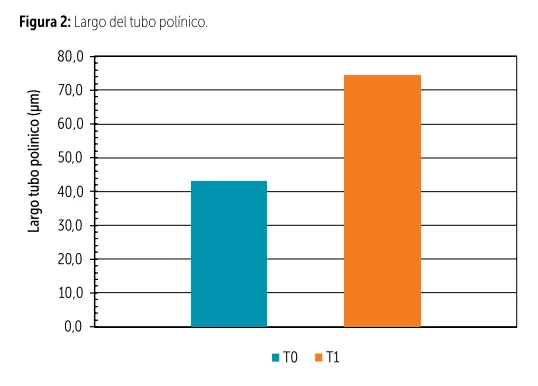 Figure 2. Pollen tube length
New application methods
Kiwi, particularly the Hayward variety, is characterized by high sensitivity to abiotic stress, especially during the summer months, when high temperatures, intense radiation, and water deficit occur simultaneously. These conditions directly affect growth, physiology, and fruit quality, making it a priority to incorporate tools capable of improving physiological efficiency and reducing stress impact.
Although Ascophyllum nodosum extract has been widely used in various fruit crops through foliar applications, kiwi characteristics—high leaf density and operational limitations of the pergola system during summer—make this type of application complex.
Faced with this challenge, it becomes necessary to explore new application methods for seaweed extracts, such as drone application or fertigation, which represent the most suitable alternatives during the summer period. In particular, application via irrigation improves root uptake, and the technical team at Abud & Cía. has reported positive results in orchards where this strategy has been adopted.
However, further results still need to be evaluated and validated before large-scale adoption. In this direction, the Centro de Innovación Montefrutal (CIM) is validating Ascophyllum application via irrigation and, as a preliminary result, has observed an increase in stomatal conductance, enabling plants to avoid stress conditions.
Overall, it is suggested that seaweed extracts strengthen fertilization mechanisms and stress tolerance, allowing productivity and crop quality to be maintained. In addition, fertigation application in kiwi emerges as an efficient alternative during periods of higher abiotic stress, when pergola conditions limit foliar applications.
The evidence obtained in both crops confirms that seaweed extract-based biostimulants have become firmly established as a modern and sustainable tool in agronomic management, capable of strengthening plant physiology and providing resilience to climatic stress.
Recent studies also suggest that their compounds may stimulate the activity of beneficial soil microorganisms and improve some of its physico-chemical properties, creating a healthier environment for root development.
Although these effects are still under investigation, they open new opportunities for the future of natural biostimulants and their contribution to more efficient and sustainable fruit growing.
Text and internal image source: redagricola.com
Cover image source: Michael Rosenstein, iNaturalist
Rimundo Cuevas
Technical Manager at Abud & Cía
Luis Ahumada
Innovation and Sustainability Manager at Abud & Cía
Cherry Times - All rights reserved