By the time the air begins to carry the scent of stone fruit, something older than brewing science begins to awaken, something that does not belong to laboratories or controlled environments but to orchards, seasons, and the invisible life that surrounds us. It is a quiet shift, almost imperceptible, yet deeply consequential.
The warmth in the air, the ripening of fruit, the subtle increase in microbial activity all signal a return to a form of fermentation that predates modern understanding. Long before thermometers, stainless steel tanks, and isolated yeast strains, fermentation existed as a natural process guided by environment rather than instruction. In this moment, brewing ceases to be an act of control and becomes an act of observation, shaped by natural process guided and invisible life surrounding.
In the quiet margins of modern brewing, far removed from the precision and predictability of industrial systems, there exists a practice that resists standardization at every level. Spontaneous fermentation does not rely on selected yeast strains cultivated in laboratories. It does not follow strict timelines or guarantee repeatable outcomes.
Instead, it invites the surrounding environment to take part in the process. When freshly prepared wort is exposed to open air, it becomes a living medium, vulnerable and receptive. Wild yeasts drifting invisibly through the atmosphere begin to settle on its surface, initiating spontaneous fermentation process and wild yeasts drifting.
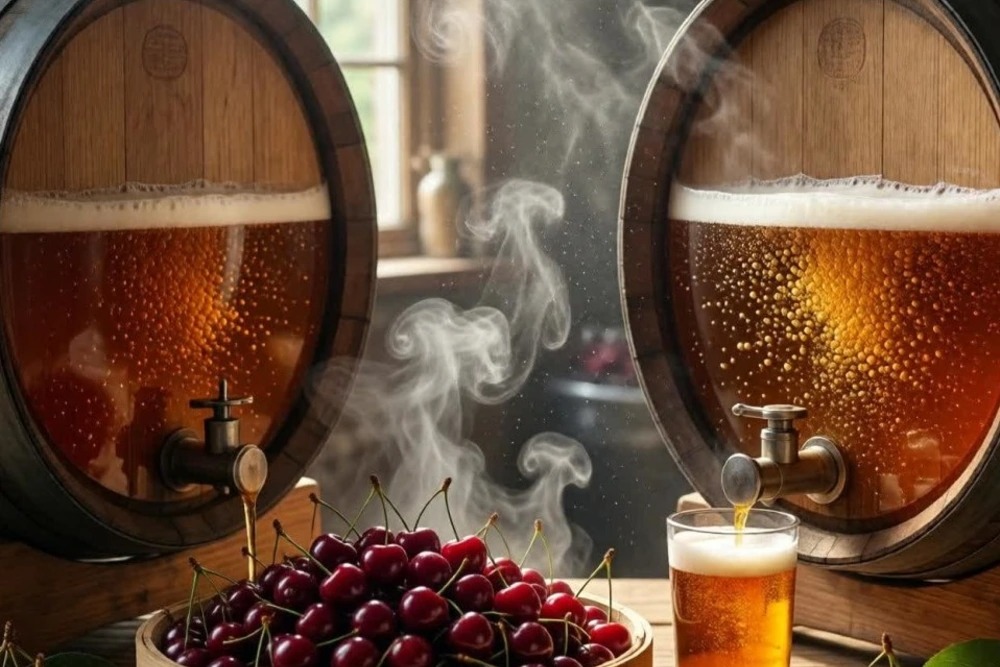
Bacteria residing in wooden beams, in the pores of barrels, and even in the dust of the space find their way into the liquid. This is not contamination in the conventional sense; it is participation. It is the beginning of a complex biological conversation that unfolds over time. Multiple organisms interact, compete, and cooperate, creating complex biological conversation and microbial interaction over time that defines the evolution of the beer.
To understand spontaneous fermentation is to accept that brewing can function as an ecological system rather than a controlled procedure. Multiple microorganisms interact simultaneously, each influencing the development of flavor in ways that cannot be fully predicted. Some yeasts begin fermentation quickly, converting sugars into alcohol and carbon dioxide, while others act more slowly, producing aromatic compounds that build complexity. This dynamic system reflects ecological fermentation system and multiple microorganisms interact in layered and evolving ways.
When cherries are introduced into this already complex environment, the nature of the fermentation changes profoundly. The fruit is not a passive ingredient. It carries its own chemical composition and its own microbial life. The sugars within the cherries provide additional fuel for fermentation, often reigniting microbial activity even after the initial stages have slowed. The acids contribute to the overall balance, sometimes sharpening the profile, sometimes integrating with existing acidity to create something deeper and more layered. The skins of the cherries introduce wild yeasts and bacteria that may differ from those already present in the wort, expanding microbial ecosystem diversity and enhancing complex fermentation dynamics.
This is where the process becomes something more than brewing. It becomes an interaction between multiple forms of life, each influencing the outcome in ways that cannot be fully controlled. The cherries do not simply add flavor. They alter the trajectory of fermentation itself. They shift the balance between organisms, change the rate of biochemical reactions, and introduce new aromatic possibilities. In doing so, they transform the beer into something that reflects not only the brewer’s intent but also the environment, the fruit, and the passage of time, creating multi-layered fermentation process and evolving aromatic complexity.
What emerges from this process cannot be reduced to a simple description of taste. It is shaped by variables that extend beyond the brewery. The climate in which the cherries were grown affects their sugar levels, acidity, and aromatic compounds. The specific microorganisms present on their skins vary depending on location, agricultural practices, and even the timing of the harvest. The conditions within the fermentation space, including temperature fluctuations and exposure to oxygen, further influence how these elements interact, resulting in environment-driven flavor development and unique batch variability.
In this context, the role of the brewer shifts significantly. Rather than directing every stage of the process, the brewer becomes a facilitator, creating conditions in which fermentation can occur while accepting that the outcome cannot be fully predetermined. Decisions still matter, of course. The choice of base wort, the timing of fruit addition, the type of vessel used for aging, and the duration of maturation all influence the final result. However, these decisions function more as guidance than control, shaping fermentation conditions management and enabling natural process expression.
The introduction of cherries intensifies this sense of uncertainty and possibility. Each variety of cherry carries a distinct composition that influences fermentation in different ways. Some bring higher levels of acidity, encouraging the development of lauc character. Others contribute more sugar, leading to increased alcohol production and a fuller body. Certain varieties contain compounds that develop into complex aromatic notes over time, while others emphasize freshness and brightness. These differences are not merely additive. They interact with the existing microbial environment, sometimes amplifying certain characteristics, sometimes suppressing others, creating distinct cherry composition and variable fermentation outcomes.
Time plays a critical role in allowing these interactions to fully develop. In the early stages, the influence of the cherries may appear straightforward, with fresh fruit flavors and active fermentation dominating the profile. As months pass, these initial impressions begin to evolve. Sugars are consumed, acids integrate, and new compounds form through slow biochemical processes. The bright character of fresh cherries may deepen into something more reminiscent of dried fruit, while subtle oxidative notes can emerge, adding complexity and depth. What begins as a vibrant and immediate expression gradually transforms into slow biochemical processes and layered flavor evolution.
This transformation cannot be rushed. Attempts to accelerate the process often result in incomplete development, where the elements remain disjointed rather than integrated. True spontaneous cherry fermentation requires patience, not as a romantic ideal but as a practical necessity. The microorganisms involved operate on timescales that do not align with modern production demands. They require stability, time, and space to interact fully. Only through this extended period can the beer reach a state where its components feel cohesive, achieving integrated flavor development and microbial balance over time.
The final result is not a product that can be easily replicated. Even when the same methods are followed, variations in environment, fruit, and microbial populations ensure that each batch will differ. This lack of repeatability is not a flaw but a defining characteristic. It is what allows spontaneous cherry beer to capture something authentic and unrepeatable. Each version becomes a unique expression, shaped by factors that extend beyond human control, reflecting authentic unrepeatable character and batch-specific expression.
Beyond control and design
At its core, this process challenges conventional assumptions about brewing. It suggests that precision and consistency, while valuable, are not the only paths to quality. It proposes that complexity can arise from interaction rather than design, and that flavor can emerge from systems that are not fully understood. In doing so, it redefines the relationship between brewer, ingredient, and environment through complexity from interaction and flavor beyond control.
When we ask what each cherry knows, we are not speaking metaphorically. Each fruit carries within it a set of conditions, both chemical and biological, that influence fermentation in specific ways. These conditions are the result of growth, climate, soil, and time. When introduced into spontaneous fermentation, they do not remain static. They interact, adapt, and transform, contributing to chemical and biological conditions and continuous fermentation evolution.
To let the cherries speak is to allow these influences to unfold without forcing them into predetermined outcomes. It requires a willingness to observe rather than dictate, to respond rather than control. It is an approach that values emergence over precision, complexity over simplicity, and variation over uniformity, embracing emergence over precision and variation over uniformity.
In the end, spontaneous cherry fermentation is not simply a method of making beer. It is a way of engaging with natural processes, of recognizing that flavor can be the result of interaction rather than intention. It invites us to reconsider what it means to create, suggesting that sometimes the most meaningful results come not from imposing order, but from allowing systems to reveal themselves over time, expressing natural process engagement and interaction rather than intention.
The philosophy of letting go
To fully understand spontaneous cherry beer, one must first dismantle one of the most deeply rooted assumptions in modern brewing: the belief that quality is achieved through control. Contemporary brewing culture is built on precision, repeatability, and the careful elimination of uncertainty. Temperature is regulated to the degree, yeast strains are selected for predictable outcomes, and every stage of the process is monitored to ensure consistency. This approach has led to remarkable technical achievements, but it has also narrowed the definition of what brewing can be. Spontaneous fermentation, especially when combined with cherries, exists outside this framework, redefining quality beyond control and brewing as observation.
In conventional brewing, yeast is carefully selected and introduced with precision. Each strain is known for its behavior, flavor profile, alcohol tolerance, and fermentation speed. The brewer can predict the outcome with a high degree of certainty. In spontaneous fermentation, this predictability is replaced by exposure. Freshly prepared wort is transferred into open vessels, often shallow and wide, where it is left to cool naturally. During this time, it is exposed to the surrounding environment, allowing an influx of wild microorganisms to initiate environment-driven fermentation and wild microbial inoculation.
These microorganisms include various species of yeast and bacteria, each originating from sources such as air, wooden structures, brewing equipment, and ambient dust. At the beginning, no single organism dominates. Instead, a diverse and shifting population begins to interact with the wort in complex ways. The result is not a single linear fermentation process, but a sequence of overlapping biological events, forming diverse microbial population and overlapping fermentation stages.
Some organisms begin metabolizing sugars immediately, producing alcohol and carbon dioxide, while others act more slowly, generating organic acids, esters, and phenolic compounds over extended periods. The balance between these organisms is not fixed. It shifts as environmental conditions change, nutrients are consumed, and byproducts accumulate. This ongoing transformation creates dynamic microbial balance and evolving biochemical environment that define the character of the beer.
When fruit enters the system
When cherries are introduced into this already complex system, fermentation becomes even more intricate. The fruit does not simply contribute flavor like a spice or extract. It becomes part of the fermentation environment itself. The skins of the cherries carry populations of wild yeasts and bacteria that may differ significantly from those already present in the wort. These microorganisms integrate into the system, interacting with the existing community and creating expanded microbial ecosystem and fruit-driven fermentation changes.
The pulp of the cherries provides fermentable sugars that can reactivate or extend fermentation activity, even after the primary phase has slowed. This secondary fermentation is often vigorous, producing additional alcohol, carbon dioxide, and a wide range of aromatic compounds. At the same time, the fruit introduces organic acids, tannins, and phenolic compounds that shape structure and complexity, contributing to secondary fermentation activity and enhanced structural complexity.
Cherry pits add another dimension to the process. If left intact during fermentation, they can release benzaldehyde, a compound associated with almond-like aromas. This characteristic develops gradually over time, often becoming more pronounced as the beer ages. In combination with acidity, fruit character, and microbial complexity, it contributes to almond-like aromatic notes and long-term flavor development.
Each cherry variety brings a unique composition and therefore a different influence on fermentation. Variations in sugar content affect the degree of additional fermentation, while differences in acidity shape the balance between sharpness and softness. Tannins influence structure, and aromatic compounds determine how the fruit expresses itself over time. Even the microbial populations on the fruit skins vary by region and cultivation method, creating variety-specific fermentation impact and region-dependent microbial diversity.
An ecosystem, not a recipe
What emerges from this process cannot be reduced to a fixed formula. It is not a recipe in the traditional sense, where inputs predictably lead to outputs. Instead, it is an ecosystem, a network of interactions between microorganisms, chemical compounds, environmental conditions, and time. Each component influences the others, and the final result is shaped by these relationships rather than by a single controlling factor, creating interconnected fermentation system and dynamic ecological balance.
The role of the brewer, in this context, is not to impose outcomes but to create the conditions in which these interactions can unfold in a meaningful way. This requires a shift in mindset. Letting go of control does not mean abandoning precision or responsibility. It means recognizing the limits of control and working within them, allowing the system to develop naturally while maintaining awareness of its evolution, embracing controlled unpredictability approach and process-oriented brewing mindset.
This approach demands patience, observation, and the ability to respond rather than dictate. The brewer must taste, evaluate, and adjust over time, rather than relying on predetermined steps. Some batches may develop unexpected characteristics, requiring blending or extended aging to reach balance. Others may evolve smoothly, revealing complexity without intervention, demonstrating adaptive decision making and long-term sensory evaluation.
Over time, this philosophy reveals a different form of mastery. It is not about eliminating variability, but about understanding and guiding it. It involves recognizing patterns within complexity and making decisions that support balance without suppressing diversity. This creates mastery through variability and guided complexity development within the brewing process.
The role of cherries in uncertainty
The introduction of cherries intensifies both uncertainty and possibility. Each variety carries a unique composition that influences fermentation in distinct ways. Some varieties contribute higher acidity, encouraging the development of lactic character, while others provide more sugars, increasing alcohol production and body. These differences interact with the microbial environment, shaping fruit-driven variability and microbial interaction shifts.
These variations are not simply additive. They alter the trajectory of fermentation itself. The balance between microorganisms changes, reaction speeds shift, and new aromatic pathways emerge. As a result, the same base beer can evolve in dramatically different directions depending on the fruit used, creating divergent fermentation pathways and variety-dependent outcomes.
Time plays a crucial role in revealing these differences. Early stages may highlight fresh fruit and active fermentation, but over months or years, deeper transformations occur. Acids integrate, sugars are consumed, and complex compounds develop. The bright character of the fruit may evolve into darker, more layered expressions, showing long-term flavor transformation and aging-driven complexity.
Ultimately, spontaneous cherry fermentation becomes an exploration rather than a controlled process. Each batch represents a unique convergence of variables, shaped by fruit, environment, and time. The result is not repeatable, but expressive, capturing a moment that cannot be recreated, embodying non-repeatable batch identity and time and place expression.
Six cherries, six philosophies of flavor
To seriously approach spontaneous cherry beer is to recognize that cherries are not interchangeable fruits, but distinct biological systems with their own internal logic. Each variety represents a unique convergence of chemistry, microbiology, and agricultural context, and when introduced into fermentation, these differences manifest in measurable and deeply sensory ways. It is easy to reduce cherries to categories such as sweet or sour, dark or light, but such simplifications fail to capture their true influence. In spontaneous fermentation, the character of the fruit does not simply overlay the beer; it penetrates the process itself, shaping flavor development pathways and fruit-driven fermentation identity.
At a chemical level, cherries differ significantly in their composition of sugars, acids, tannins, and aromatic precursors. These components do not act independently but interact with microbial metabolism, creating complex chains of transformation. A cherry with higher sugar content provides more fermentable material, extending yeast activity and influencing the production of secondary metabolites such as esters and higher alcohols. A more acidic cherry alters the fermentation environment itself, favoring certain bacteria over others. This results in chemical composition variability and metabolic interaction complexity that define the final profile.
Beyond chemistry, each cherry carries a distinct microbial population. The skin hosts wild yeasts and bacteria shaped by climate, soil, and farming practices. When introduced into spontaneous fermentation, these microorganisms become active participants, interacting with the existing microbial community. Some dominate early stages, while others emerge later, contributing to long-term development. This creates microbial diversity influence and ecosystem-driven fermentation that extend far beyond flavor alone.
Structural differences also play a crucial role. Skin thickness, pulp consistency, and pit composition influence how compounds are extracted during fermentation. Thicker skins may slow the release of tannins and pigments, while softer pulp accelerates sugar release and fermentation activity. Pits, if included, contribute additional compounds over time, especially as alcohol levels rise. These physical characteristics shape extraction dynamics over time and structure development in beer.
Evolution over time
As fermentation progresses, the initial differences between cherry varieties become more pronounced rather than diminishing. Early on, fruit influence may seem straightforward, with recognizable cherry aromas and active fermentation. Over time, microbial activity transforms these characteristics. Esters evolve, acids integrate, and tannins interact with other compounds, altering both flavor and texture. This leads to progressive flavor transformation and time-driven complexity increase.
With extended aging, these distinctions deepen further. Slow biochemical reactions such as oxidation and esterification continue shaping the beer long after primary fermentation has ended. Some varieties retain brightness and freshness, while others evolve into deeper, more complex profiles with vinous or earthy notes. This demonstrates long-term aging influence and variety-specific evolution patterns.
What emerges is not just a range of flavors, but a set of distinct philosophies. One cherry may emphasize structure and longevity, another aromatic expression, and another balance and integration. These outcomes are not imposed solely by the brewer but arise from the intrinsic properties of the fruit interacting with fermentation. This creates philosophies of flavor expression and fruit-defined brewing outcomes.
In this sense, working with multiple cherry varieties becomes an exploration rather than a pursuit of a single ideal result. Each variety offers a different perspective on what spontaneous cherry beer can be. Understanding these differences allows the brewer to anticipate tendencies while remaining open to unexpected developments, reinforcing exploratory brewing approach and controlled openness to variation.
Ultimately, the idea of six cherries representing six philosophies is not metaphorical but practical. Each variety introduces specific conditions that shape fermentation outcomes. When these conditions interact within a spontaneous system, they produce results that are both diverse and expressive. The beer becomes a reflection of relationships between elements, embodying interaction-based flavor creation and complex system expression.
Morello cherry — The architect of structure
Among the many cherry varieties used in spontaneous fermentation, Morello cherries occupy a singular position, not simply because they are more acidic or deeply colored, but because of the way they impose order on an otherwise unpredictable system. Their contribution extends beyond immediate sensory impact and reaches into the structural foundation of the beer itself. In a process defined by microbial diversity, fluctuating acidity, and long-term evolution, Morello cherries act as a stabilizing force, shaping both trajectory and persistence, creating structural foundation of beer and stabilizing fermentation force.
The defining characteristic of Morello cherries is their pronounced acidity, primarily driven by high concentrations of organic acids, especially malic acid. When introduced into spontaneous fermentation, this acidity does not act in isolation. It interacts dynamically with lactic acid produced by bacteria and, in some cases, acetic acid formed through limited oxygen exposure. The result is not a sharp, one-dimensional sourness, but a layered acidity that evolves over time, forming layered acidity development and dynamic acid interaction within the beer.
Equally significant is the role of anthocyanins, the pigments responsible for the deep crimson color of Morello cherries. These compounds do more than provide visual intensity. They interact with tannins and proteins, forming stable complexes that influence both texture and longevity. This contributes to a sense of cohesion and structural integrity within the beer, resulting in color stability and depth and structural integrity in fermentation.
Tannins, present in both the skins and pits, further reinforce this structure. They introduce a subtle astringency that becomes more noticeable with aging, balancing acidity and contributing to mouthfeel. This combination creates a profile that often resembles natural wine more than traditional fruit beer. Together, these elements generate tannin-driven structure and balanced astringency perception over time.
Structure, aroma, and time
The aromatic profile of Morello cherries adds another dimension to their structural role. While fruit character is clearly present, it is not overly sweet or immediately expressive. Instead, it leans toward darker notes such as sour cherry, cranberry, and subtle balsamic tones that develop with age. These aromas integrate into the beer rather than sitting on top of it, contributing to integrated aromatic profile and evolving dark fruit notes.
One of the most notable effects of using Morello cherries in spontaneous fermentation is their influence on perceived dryness. Despite the presence of fruit sugars, the final beer often finishes dry, with minimal residual sweetness. This dryness results from complete sugar fermentation combined with the balancing effects of acidity and tannins, creating perceived dryness balance and complete sugar fermentation.
The interaction between Morello cherries and the microbial environment is central to their role as structural architects. Their acidity creates conditions that favor certain microorganisms while inhibiting others, guiding fermentation in a specific direction. Lactic acid bacteria often thrive, while yeast activity is subtly influenced by phenolic compounds, resulting in microbial selection pressure and directed fermentation pathway.
Time amplifies all these characteristics. In early stages, the beer may appear intensely sour and fruit-forward, but with aging, structure becomes more apparent. Acidity integrates, tannins soften, and the aromatic profile deepens into more complex expressions, revealing long-term structural evolution and aging-driven flavor depth.
Aging potential and longevity
This ability to age is one of the defining qualities of Morello cherries in spontaneous fermentation. Not all fruits support long-term development, but Morello cherries provide the necessary elements for stability and transformation. Their acidity preserves freshness, tannins support structure, and phenolic compounds contribute complexity, ensuring extended aging potential and long-term flavor stability.
In practical terms, working with Morello cherries requires an understanding of their intensity. Their impact is not subtle, and without balance they can dominate the beer. However, within spontaneous fermentation, this intensity often becomes an advantage, anchoring unpredictable elements and providing coherence, resulting in intensity as structural advantage and anchoring fermentation variability.
Ultimately, describing Morello cherries as architects of structure is not metaphorical but functional. They shape the beer from within, influencing development, aging, and perception. They transform spontaneous fermentation from a series of unpredictable reactions into a more cohesive and enduring expression, embodying internal structural shaping and cohesive fermentation outcome.
Maraschino cherry — The ghost of transformation
Maraschino cherries occupy a unique and elusive position within spontaneous fermentation, not because they impose intensity, but because they alter perception in gradual and often barely perceptible ways. Unlike more dominant fruits, their influence does not appear immediately. It unfolds slowly, shaping aroma, texture, and memory rather than delivering direct impact. Working with true maraschino cherries, traditionally preserved with their pits, means engaging with subtle sensory transformation and hidden flavor evolution that operates beneath the surface.
The defining characteristic of these cherries lies in their aromatic composition, particularly the presence of benzaldehyde, a compound associated with almond and marzipan notes. This compound originates primarily from the pits and develops over time during fermentation and aging. Within a spontaneous system, it does not stand alone but integrates into a broader matrix of esters, acids, and oxidative compounds, resulting in almond-like aromatic complexity and integrated flavor compounds that evolve gradually.
This aromatic subtlety defines the role of Maraschino cherries. While other varieties may shape structure or intensity, these cherries influence atmosphere. They contribute depth that is not immediately identifiable but becomes apparent with time and attention. The resulting profile evokes associations rather than direct statements, creating atmospheric flavor contribution and nostalgic sensory perception that lingers beyond immediate tasting.
From a chemical perspective, Maraschino cherries tend to offer a more balanced composition compared to highly acidic varieties. Their sugar content supports fermentation without overwhelming it, while their moderate acidity allows a smoother progression. This creates a more stable microbial activity over time, leading to balanced fermentation conditions and gradual microbial activity throughout the process.
Oxidation, texture, and perception of time
Oxidation plays a particularly important role in shaping beers made with Maraschino cherries. Controlled oxygen exposure over time allows additional aromatic compounds to develop, interacting with benzaldehyde and other elements derived from the fruit. This process introduces notes of dried fruit, light caramel, or subtle spice, contributing to oxidative flavor development and layered aromatic evolution without overwhelming the base profile.
The mouthfeel is also influenced by the composition of Maraschino cherries. While they do not provide the same level of tannic structure as more robust varieties, they contribute enough to support aging while maintaining softness. This results in a smooth, rounded texture that enhances aromatic perception, creating soft and rounded mouthfeel and enhanced aroma perception across the palate.
One of the most distinctive aspects of these cherries is their influence on the perception of time within the tasting experience. Rather than presenting flavors in clear sequential phases, they create a continuous, flowing transition between sensations. The finish is not defined by intensity but by persistence, generating continuous flavor transition and long-lasting delicate finish that extends the experience.
This persistence is what distinguishes Maraschino cherries from more assertive varieties. Their impact is often stronger in memory than in the initial sip. They shape how the beer is remembered, not just how it is perceived in the moment, leaving lasting sensory impression and memory-driven flavor experience that unfolds over time.
Microbial balance and long-term development
From a fermentation perspective, Maraschino cherries subtly influence microbial interactions. Their moderate sugar and acid levels create conditions that support a wide range of microorganisms without strongly favoring one group. This leads to a more balanced ecosystem where yeast and bacteria coexist and contribute over time, forming balanced microbial ecosystem and integrated fermentation profile.
With extended aging, the characteristics introduced by Maraschino cherries continue to evolve. Almond notes may intensify or refine, floral esters soften, and the overall profile gains additional layers through slow chemical reactions. Unlike more dominant fruit expressions, their influence often becomes more pronounced over time, showing slow flavor evolution and progressive aromatic refinement.
In practical terms, working with Maraschino cherries requires sensitivity to nuance. Their subtle impact can easily be overshadowed by stronger elements, whether from other fruits or aggressive fermentation. Achieving balance is essential to allow their character to emerge, ensuring delicate flavor balance and subtle expression preservation within the final beer.
Ultimately, Maraschino cherries represent a philosophy of transformation defined by subtlety rather than intensity. They shape aroma, texture, and temporal perception, guiding the beer toward a more introspective and layered expression. Their contribution lies not in dominance, but in refined sensory complexity and understated transformative influence.
Bing cherry — The seduction of ripeness
Bing cherries play a distinctive and, in many ways, transformative role in spontaneous fermentation, not because they impose rigid structure, but because they reshape the emotional and sensory tone of the beer. Where many spontaneous beers are defined by tension and sharp acidity, Bing cherries introduce softness, depth, and a sense of rounded richness. They do not eliminate the wild nature of fermentation but reinterpret it, guiding it toward sensory softness and depth and balanced fruit expression without sacrificing complexity.
The defining characteristic of Bing cherries is their high sugar content, which has immediate and far-reaching effects on fermentation dynamics. When introduced into spontaneous beer, these sugars provide new fuel for microbial activity. Even when primary fermentation has slowed, their addition can reactivate the process, leading to renewed activity and extended fermentation. This results in renewed microbial activity and extended fermentation phase that reshapes the beer’s structure.
One of the most significant contributions of Bing cherries is their ability to soften perceived acidity. In spontaneous fermentation, acidity often develops through lactic and acetic bacteria, creating sharp profiles in early stages. The natural sweetness of ripe Bing cherries does not remove this acidity but balances it, creating a more harmonious profile. This leads to acidity and sweetness balance and improved drinking harmony across the palate.
The aromatic profile of Bing cherries further enhances this transformation. Deep notes of ripe black cherry are accompanied by hints of plum, dark berries, and subtle chocolate tones. Over time, these aromas evolve through interaction with fermentation byproducts and mild oxidation, sometimes revealing vanilla-like nuances. This creates rich aromatic depth and evolving fruit complexity that reinforce the sense of maturity.
Body, balance, and evolution
The mouthfeel is strongly influenced by the composition of Bing cherries. Their sugars and fermentation byproducts contribute to a fuller body, creating a more substantial and rounded texture. Even after full fermentation, compounds such as glycerol maintain a sense of fullness, resulting in full-bodied texture and smooth mouthfeel continuity throughout the experience.
This added softness does not diminish complexity; rather, it amplifies it. Bing cherries provide a broader base for microbial interactions, encouraging the development of esters, phenols, and acids in a more integrated way. The wild character remains present but is framed within a more approachable structure, producing integrated flavor complexity and balanced wild expression.
The role of Bing cherries can be seen as a form of mediation within the fermentation process. They do not control the outcome but soften extremes, harmonizing acidity, aroma, and structure. This results in harmonized fermentation elements and balanced sensory profile that enhances overall drinkability.
Over time, their influence continues to evolve. Fresh, juicy fruit notes gradually transform into deeper expressions, including dried fruit and subtle oxidative characteristics. The body softens further, and the profile becomes more cohesive. This progression highlights progressive flavor maturation and aging-driven integration within the beer.
Balance and expressive potential
Working with Bing cherries requires careful balance, as their richness can easily dominate more delicate elements. However, when properly integrated, they open a different dimension of spontaneous fermentation, moving beyond austerity and sharpness. They offer expanded flavor possibilities and approachable complexity profile for both brewers and drinkers.
In this sense, Bing cherries embody a philosophy of seduction rather than imposition. They guide rather than force, softening the wild nature of fermentation into a more harmonious and inviting expression. The result is a beer where intensity and elegance coexist, creating dynamic sensory balance and refined fermentation expression.
Rainier cherry — The illusion of lightness
Rainier cherries introduce a dimension into spontaneous fermentation that is often misunderstood at first encounter, precisely because their influence is not expressed through intensity or dominance. Their pale golden skin and delicate sweetness suggest fragility, even simplicity, yet this perception quickly dissolves once they are integrated into a living fermentation system. What they offer is not absence, but refinement. Rather than imposing structure, they create space in which subtle fermentation complexity and transparent flavor expression can emerge with unusual clarity.
The chemical composition of Rainier cherries plays a central role in this effect. Compared to darker varieties, they contain lower levels of anthocyanins, resulting in a much lighter color contribution. The beer often takes on pale straw or soft pink hues, reflecting a restrained visual presence. This restraint mirrors their structural impact, as fewer tannins and pigments translate into lighter structural influence and reduced tannin presence, allowing other elements to take focus.
This lower tannin content directly affects mouthfeel. Without the firm grip of astringency, the beer develops a smoother, more fluid texture that allows flavors to move freely across the palate. Rather than anchoring the experience, the structure supports continuity, enabling fermentation-derived compounds to express themselves more clearly. This results in fluid mouthfeel texture and continuous flavor progression that enhances perception.
The aromatic profile of Rainier cherries is defined by delicacy and precision. Notes of honey, white peach, and soft floral nuances form a subtle foundation rather than a dominant layer. These aromas interact with fermentation esters, allowing finer details to become perceptible. The outcome is delicate aromatic clarity and enhanced ester perception, often obscured in more intense fruit contexts.
Balance and fermentation dynamics
The interaction between Rainier cherries and microbial populations is shaped by their moderate sugar and acid levels. These conditions support fermentation without triggering aggressive activity, resulting in a more stable progression. Even within a spontaneous system, this balance promotes stable fermentation behavior and moderate microbial activity, reducing volatility while preserving complexity.
Acidity, in this context, is perceived differently. Rather than standing out sharply, it integrates into the overall profile, often described as soft or tea-like. It supports the structure without dominating it, contributing to refined acidity perception and harmonious flavor balance throughout the beer.
As the beer matures, the characteristics of Rainier cherries evolve subtly. Floral and honeyed notes may deepen, while maintaining their clarity and definition. Oxidative processes tend to add nuance rather than weight, reinforcing gradual flavor refinement and subtle aging evolution rather than dramatic transformation.
This creates a paradox: the beer appears light, yet it is not simple. By reducing dominant elements, Rainier cherries allow complexity to become more visible and readable. The absence of intensity becomes a tool for expression, leading to complexity through restraint and minimalist flavor structure.
A philosophy of transparency
Working with Rainier cherries requires precision and restraint, as their delicate contribution can easily be overshadowed. The brewing process must be adjusted to preserve their subtlety, avoiding excessive structure or intensity from other sources. This approach reflects precision through minimal intervention and delicate balance management in spontaneous fermentation.
Within the broader context of spontaneous fermentation, Rainier cherries represent a philosophy centered on transparency. They allow the process itself to become more visible, revealing microbial and chemical interactions with greater clarity. The beer becomes less about dominant flavors and more about relationships between elements, expressing process-driven flavor clarity and visible fermentation dynamics.
Ultimately, the illusion of lightness is not a lack of substance, but a different mode of expression. It shifts attention from intensity to nuance, from impact to persistence. In doing so, it expands the possibilities of spontaneous beer, offering elegant sensory expression and refined complexity perception.
Montmorency cherry — The language of tradition
Among the many cherry varieties shaping spontaneous fermentation, Montmorency cherries stand out not for their intensity, but for their ability to embody balance in its most functional and enduring form. Their role is not to disrupt the process, but to make it legible and coherent over time. If there is a historical voice within spontaneous beer, it is expressed through consistent structural balance and tradition-driven fermentation identity that persists across generations.
The defining characteristic of Montmorency cherries lies in their balanced composition of sugars and acids. Their acidity, primarily driven by malic acid, contributes to structure without becoming overly aggressive. When combined with lactic acid produced during fermentation, it creates a layered yet harmonious profile. This results in integrated acidity structure and balanced sourness perception that guides the overall sensory experience.
The aromatic profile of Montmorency cherries is both recognizable and complex. Notes of tart cherry are accompanied by red currant, cranberry, and subtle earthy undertones. These aromas do not sit apart from fermentation but merge with it, forming a unified expression. This creates integrated fruit aroma and cohesive flavor profile where no single element dominates.
Visually, Montmorency cherries contribute a bright, vivid red color that reflects clarity and freshness. This visual identity aligns with their sensory profile, reinforcing a sense of definition and precision. The result is clear visual expression and color-driven identity that mirrors the beer’s balance.
Stability and function in fermentation
The microbial interactions associated with Montmorency cherries reinforce their stabilizing role. Their moderate sugar content fuels fermentation without creating imbalance, allowing microorganisms to operate progressively. Lactic acid bacteria develop acidity steadily, while yeast contributes complementary aromas. This leads to stable fermentation progression and balanced microbial activity within the system.
Over time, these characteristics evolve while maintaining coherence. Fruity notes integrate further with acidity and subtle oxidative nuances, without drifting toward extremes. The beer retains its structure and clarity, demonstrating consistent flavor evolution and long-term profile stability rather than radical transformation.
This stability makes Montmorency cherries particularly suitable for blending. Their balanced profile can support more intense elements or correct imbalances in other batches. They can soften excessive acidity or reinforce weaker structures, functioning as blending foundation element and balance-correcting component in spontaneous brewing.
Tradition and continuity
The historical relevance of Montmorency cherries is closely tied to their reliability. In an unpredictable system like spontaneous fermentation, ingredients that provide consistency become essential. Their long-standing use reflects their ability to harmonize complex processes, representing historical brewing continuity and reliable fermentation foundation across time.
In contemporary brewing, they continue to bridge tradition and innovation. While allowing experimentation, they provide a stable base upon which new expressions can be built. They do not limit creativity but anchor it, offering balance between tradition and innovation and stable creative framework for brewers.
Ultimately, Montmorency cherries express a philosophy grounded in clarity and coherence. Rather than standing out through intensity, they unify the elements of fermentation into a balanced whole. Their presence creates a dependable structure that supports complexity without fragmentation, delivering cohesive fermentation structure and foundation for complexity within spontaneous beer.
Şebin cherry — The expression of place
Şebin cherries represent one of the most profound intersections between agriculture and spontaneous fermentation, not because they are the most extreme in chemical terms, but because they embody a highly specific sense of origin. Their significance lies in the concept of place, not as an abstraction, but as a living system of conditions shaping both the fruit and its microbial life. When introduced into fermentation, they contribute not just flavor, but place-driven fermentation identity and environmental microbial expression that define the final beer.
The aromatic profile of Şebin cherries is often described as intense, yet this intensity is not uniform. It varies depending on vintage, climate, and ripeness. In some seasons, bright acidity dominates, while in others, softer and more mature notes emerge. These variations are not inconsistencies but direct reflections of environmental conditions, resulting in vintage-dependent flavor variation and climate-influenced aroma profile within the fermentation.
From a chemical perspective, Şebin cherries present a dynamic balance of sugars, acids, and phenolic compounds. This balance allows them to interact with fermentation without forcing a fixed direction. Sugars sustain microbial activity, acids contribute structure, and phenolics introduce subtle bitterness and herbal tones. Together, these elements create balanced chemical interaction and non-dominant fermentation influence that integrates naturally into the system.
However, their most significant contribution is microbiological. The skins host diverse populations of wild yeasts and bacteria unique to their growing region. These microorganisms enter into interaction with those already present in the wort, reshaping the fermentation process itself. This leads to region-specific microbial diversity and localized fermentation dynamics that cannot be easily replicated elsewhere.
Microbiology and territorial identity
The microorganisms carried by Şebin cherries reflect the environmental conditions in which they developed, including soil composition, altitude, and climate. When introduced into spontaneous fermentation, they actively influence microbial balance rather than passively existing within it. Some dominate early stages, while others emerge later, contributing to territory-driven microbial evolution and multi-phase fermentation influence over time.
This microbiological contribution transforms the beer into a direct expression of place. It is not merely about transferring flavor, but about embedding an ecosystem into the liquid. The result is a beer that reflects its origin in a tangible way, developing geographic flavor identity and ecosystem-based expression through fermentation.
As the beer ages, this identity continues to evolve. Interactions between microbes, chemical compounds, and environmental conditions lead to progressive transformation while maintaining a connection to origin. This creates origin-consistent evolution and place-linked flavor development that remains coherent over time.
A philosophy of place
Working with Şebin cherries requires embracing variability as an essential component of the process. Rather than aiming for standardization, the brewer must interpret each harvest and adapt accordingly. This approach prioritizes observation and responsiveness, fostering adaptive brewing methodology and harvest-specific interpretation within spontaneous fermentation.
Within the broader framework of spontaneous brewing, Şebin cherries embody the concept of terroir. They demonstrate that flavor is not solely derived from ingredients, but from the relationships between environment, microbiology, and time. The beer becomes a direct reflection of these interactions, expressing terroir-driven flavor expression and environmental process integration.
Ultimately, Şebin cherries expand the meaning of spontaneous fermentation. They shift it from a technical method to a dialogue between nature and production. The resulting beer is not imposed but emerges from interaction, revealing emergent fermentation complexity and nature-driven brewing outcome that define its uniqueness.
Conclusion: beyond control, toward emergence
When considering the full range of interactions between fruit, microbiology, and time, it becomes clear that spontaneous cherry fermentation cannot be reduced to a technique or a stylistic variation. It is better understood as a complex system in which multiple variables act simultaneously, often in unpredictable ways. In this context, beer is not the direct result of controlled steps, but the outcome of dynamic biological interactions and multi-variable fermentation systems evolving over time.
Each cherry variety explored represents a different way of influencing this system. Some shape structure, others aroma, others balance or perception. Yet none operates in isolation. Their contributions intertwine with microbial activity and environmental conditions, producing results that cannot be fully anticipated. This leads to diverse fermentation expressions and interconnected process outcomes that define the uniqueness of each batch.
In this framework, the role of the brewer moves further away from total control. Instead of dictating outcomes, the brewer creates conditions that allow the system to evolve coherently. This requires both technical skill and a willingness to accept uncertainty. It becomes facilitated fermentation practice and process-guided development rather than rigid control.
Time, likewise, is not merely a parameter to manage, but an active component of the process. The most meaningful transformations occur over extended periods, through slow biochemical reactions and gradual microbial interactions. Attempting to accelerate these processes often reduces depth and integration, reinforcing time-driven flavor evolution and long-term biochemical transformation as essential elements of quality.
A different production paradigm
This perspective challenges the foundational principles of modern production, which prioritize repeatability, standardization, and control. Spontaneous cherry fermentation offers an alternative model, where variability is not eliminated but understood and managed. In this context, quality arises from navigating complexity rather than removing it, establishing variability as a resource and complexity-driven quality within the brewing process.
It also redefines the concept of error. In an open and dynamic system, unexpected outcomes are not necessarily failures, but part of the process itself. They can lead to new sensory configurations and unforeseen results, encouraging acceptance of unpredictability and innovation through variation as core principles.
Finally, spontaneous cherry fermentation suggests a different relationship between producer, ingredient, and environment. It is no longer about dominating raw materials, but about collaborating with them. The result is not imposed but emerges from interaction, creating collaborative fermentation approach and emergent flavor creation shaped by context.
This perspective does not replace controlled methods but expands the field of possibilities. It offers an alternative way of understanding production, where time, interaction, and complexity take center stage. In doing so, it positions spontaneous cherry fermentation not just as a technique, but as a framework for complex systems and a broader philosophy of creation.
Image source: Ali Ozseven
Ali Ozseven
Author, Entrepreneur & Food Flavorist | Culinary Arts, Attention to Detail
Cherry Times - All rights reserved