A microbiological resource originating from some of the planet’s most extreme environments could open up new prospects for the postharvest protection of Chilean fruit.
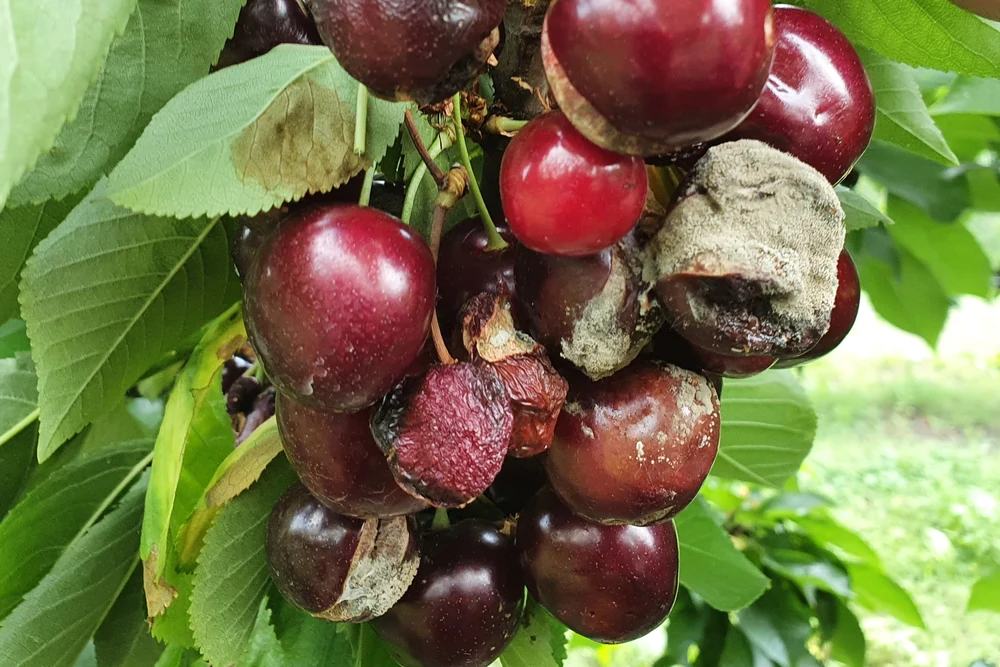
After two years of research, a project led by the University of Chile identified a strain of Streptomyces capable of counteracting Botrytis cinerea, the causal agent of gray mold and a major source of losses in grapes, cherries and blueberries.
The FONDEF ID24I10235 project has completed its laboratory phase and is now preparing for a decisive step: directly testing the effectiveness of the selected bioactive compound on fruit, with the aim of incorporating it into edible coatings for postharvest preservation.
The initiative’s final results were presented on September 3.
The project and the research
The project, titled “Diseño y aplicación de extractos de cepas aisladas de ambientes extremos de Chile contra fitopatógenos e incorporación en recubrimiento comestible para su uso en frutas postcosecha”, is led by Dr. Juan Asenjo, with academic Bárbara Andrews serving as alternate director.
Both are members of the Departamento de Ingeniería Química, Biotecnología y Materiales (DIQBM) and the Centro de Biotecnología y Bioingeniería (CeBiB) at the Facultad de Ciencias Físicas y Matemáticas (FCFM) of the University of Chile.
The project also involved professors and researchers Marcel Jaspars, Emmanuel Oluwabusola and Diego Sandoval, together with students and research unit members: Francisco Molina, Nicolás López, Leonor Retamales, Andony Anziani, Patricio Tirado, Paula Medina, Loreto García and Felipe Torres.
Extremophile microorganisms as a response to Botrytis
At the core of the research is an extensive collection of microorganisms originating from the Atacama Desert and the Atacama Trench, two habitats characterized by particularly harsh environmental conditions.
In the desert, aridity and intense UV radiation expose organisms to strong selective pressures, while in the deep waters of the trench they face conditions of extreme pressure.
This adaptation to extreme environments leads microorganisms to produce bioactive compounds with distinctive molecular characteristics.
During the two years of work, researchers assessed several alternatives before identifying a strain belonging to the genus Streptomyces, selected for its high effectiveness.
From strain selection to the bioactive fraction
From this bacterium, the team isolated and characterized a bioactive fraction capable of limiting the development of Botrytis cinerea, the fungus responsible for gray mold and one of the most significant postharvest pathogens affecting grapes, cherries and blueberries.
According to Juan Asenjo, access to a broad collection of microorganisms from the desert and the Atacama Trench made it possible to search for molecules with a range of potential applications.
In this case, the group identified an active strain against harmful microorganisms affecting Chilean fruit destined for export, subsequently obtaining an extract that will now have to be evaluated directly on the fruit.
For Diego Sandoval, postdoctoral researcher at CeBiB-DIQBM, one of the key aspects of the work was the transition from an initial observation of antagonistic activity to a solid and reproducible proof of concept, with potential practical value for the agricultural sector.
AgroFresh supports the transition from the laboratory to postharvest applications
The project was not limited to laboratory research. To bring the solution closer to the real needs of the agricultural export supply chain, AgroFresh, a company specializing in postharvest preservation technologies, was brought into the initiative.
The company’s contribution made it possible to consider from the development stages the operational parameters that a future biotechnological product would need to meet in order to be used in commercial packing facilities.
Roberto Jara, AgroFresh technical manager for Chile and Peru, highlighted the importance of collaboration between research and industry. Any solution intended for export fruit must, in fact, maintain stability and effectiveness throughout the most demanding stages of the logistics chain.
The compound will therefore have to perform under conditions very different from the controlled environment of the laboratory: from fruit washing and handling on packing lines to prolonged refrigerated storage at low temperatures required during long sea shipments.
Direct trials on fruit are now beginning
With the technical characterization in the laboratory completed, the project is entering a new phase. The priorities identified by the researchers include standardizing the process and increasing the extract’s production volume, necessary steps before considering genuine industrial scale-up.
At the same time, the biocompound will be applied directly to fruit samples intended for export in order to assess its in vivo behavior and measure its effectiveness under conditions closer to those of the real supply chain.
The University of Chile, through the Vicerrectoría de Investigación y Desarrollo (VID), will also continue to support the project in protecting its intellectual property, identifying new sources of funding and promoting future technology transfer to the agri-food sector.
The transition from laboratory trials to fruit tests will therefore represent the decisive proving ground.
If the bioactive fraction maintains under postharvest conditions the characteristics observed during the research, the extremophile microorganisms of Atacama could offer a new biotechnological route for protecting fruit quality along the complex pathways of the export supply chain.
Source: mundoagro.io
Image source: Stefano Lugli
Cherry Times - All rights reserved