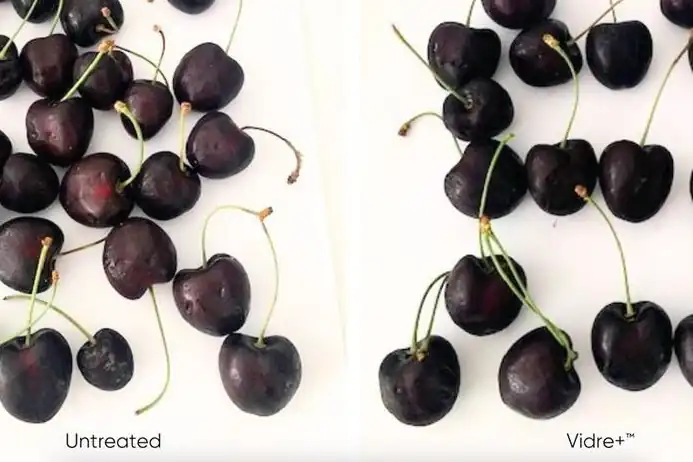
The limited storage life of sweet cherries is one of the major challenges facing the cherry supply chain. Although classified as non-climacteric fruit, sweet cherries undergo rapid postharvest deterioration, including water loss, softening, stem browning, and a decline in bioactive compounds.
A recent study evaluated the effectiveness of an innovative application of the plant growth regulator 1-methylcyclopropene (1-MCP), delivered not as a conventional gaseous treatment but through specially designed stickers (Vidre+) capable of gradually releasing the active compound directly inside the package, thereby greatly simplifying its commercial application.
The experiment was conducted on the sweet cherry cultivars 'Kordia' and 'Regina', which were treated with different doses of 1-MCP (1, 2, and 4 μL L−1) and stored for 21 days at 2-3 °C under 90-95% relative humidity.
The objective was to evaluate the effects of the treatment on both the main quality attributes and the preservation of the fruit's nutritional and antioxidant characteristics.
Quality results
The results showed that 1-MCP treatment significantly improved the storage performance of sweet cherries compared with untreated fruit. Weight loss during storage was markedly reduced, indicating lower transpiration rates and slower metabolic degradation.
At the same time, treated fruit maintained greater flesh firmness, a key attribute influencing consumer perception of quality as well as fruit resistance during transport and marketing.
In addition, the stems retained their characteristic green colour for longer, reducing browning, one of the most important visual indicators of freshness loss.
Beyond commercial quality attributes, cherries treated with 1-MCP exhibited better retention of vitamin C than the control fruit, limiting the physiological decline associated with the oxidative processes that accompany fruit ageing.
Bioactive compounds
Likewise, the treatment slowed changes in total polyphenol and anthocyanin contents throughout the storage period.
Antioxidant capacity, measured using the FRAP assay, was also higher in treated fruit, particularly at the highest 1-MCP doses, confirming the technology's ability to reduce postharvest oxidative processes.
Although sweet cherry is a non-climacteric fruit, inhibition of ethylene action also slowed the accumulation of sugars, soluble solids, and other metabolites associated with ripening, thereby helping preserve the fruit's initial quality characteristics for a longer period.
These findings suggest that, even in sweet cherries, ethylene-regulated physiological processes still play a significant role during the postharvest period.
Cultivar differences
Regarding cultivar differences, 'Regina' exhibited better storage stability than 'Kordia', showing lower weight loss, reduced stem browning, and greater overall stability during refrigerated storage. This confirms that the response to postharvest treatments is also influenced by the cultivar's genetic characteristics.
Overall, the study demonstrates that the use of 1-MCP-releasing stickers represents an innovative and practical technology for extending the shelf life of sweet cherries without the need for complex treatments in sealed storage facilities.
The ability to simultaneously preserve commercial quality, firmness, visual appearance, and antioxidant content makes this technology a promising tool for improving the postharvest management of sweet cherries.
Source: Wichrowska, D., Wolan, A., & Malefyt, T. (2026). Antioxidant potential and storage stability of sweet cherries (Prunus avium L.) depending on the use of 1-methylcyclopropene in the innovative form of a sticker. Scientific Reports 16, 13467. https://doi.org/10.1038/s41598-026-42369-3
Image source: Stefano Lugli
Andrea Giovannini
PhD in Agricultural, Environmental and Food Science and Technology – General Arboriculture and Tree Crops, University of Bologna, Italy
Cherry Times – All rights reserved