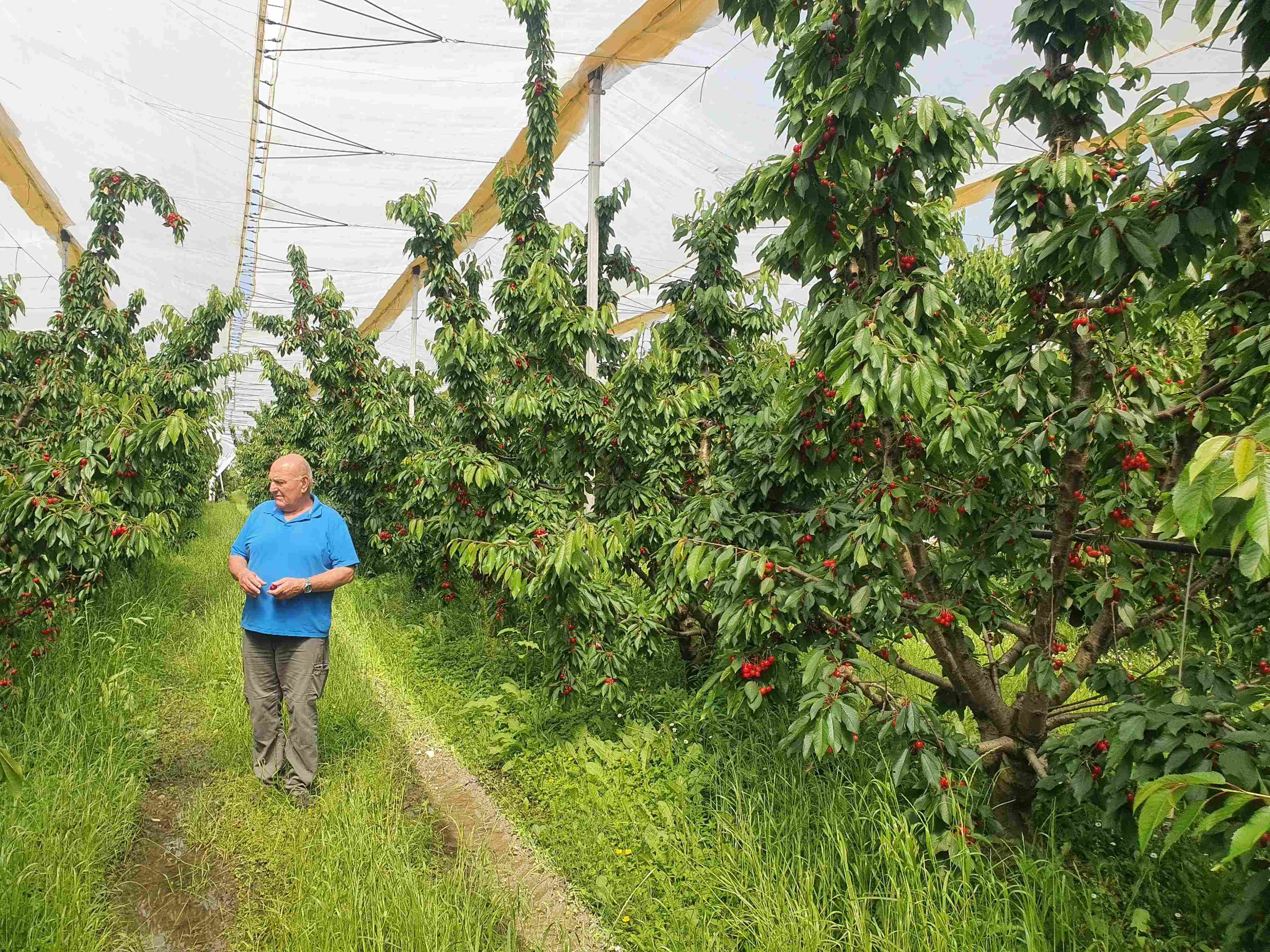
Protected agriculture in Chifeng, Inner Mongolia (China), began to develop in the early 1990s, focusing mainly on solar greenhouses and plastic-covered greenhouses.
Within these facilities, crops such as eggplants, fruits, melons, and vegetables became widespread and for a long time represented one of the main pillars of the local agricultural economy.
However, as the years passed and the same crops were repeatedly grown on the same land, increasingly evident problems emerged: soil fatigue, obstacles caused by prolonged and continuous cultivation, and a rise in soil-borne diseases.
In addition, instability in the vegetable market and the constant increase in labor costs have progressively reduced the profitability of traditional productions.
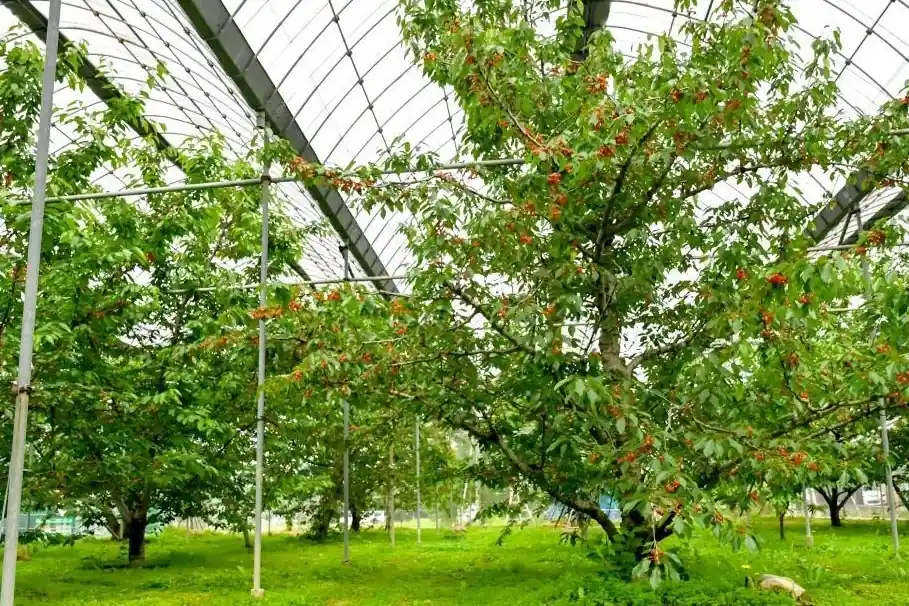
Greenhouse cultivation of sweet cherry
Against this backdrop, greenhouse cultivation of sweet cherry has emerged as a viable alternative.
This crop offers several advantages: it requires less labor input, ensures relatively stable yields, and provides promising economic returns.
Previous studies have shown that sweet cherry trees can successfully overwinter and grow normally under the climatic conditions of Chifeng, producing high-quality fruit.
For these reasons, in recent years sweet cherry has become one of the flagship crops for the restructuring and optimization of local agriculture.
Nutritional status of soils
With the large-scale expansion of greenhouse sweet cherry orchards, however, a new and crucial issue has arisen: the nutritional status of the soils.
In particular, is the availability of nutrients and micronutrients sufficient to support a demanding crop such as sweet cherry?
To address this question, the study analyzed soils from the main sweet cherry production areas in solar greenhouses in Chifeng, assessing the content of various micronutrients through systematic sampling.
Soil samples were collected using the five-point method (also known as the “S-shaped” sampling method), which provides a representative overview of soil conditions.
Analytical results and recommendations
The analytical results reveal a complex situation. The average content of calcium oxide (CaO) is relatively abundant, whereas magnesium oxide (MgO) is generally deficient in all analyzed samples.
Total sulfur shows moderate average values, but with a significant proportion of soils affected by deficiency.
As for micronutrients, copper and zinc occur at low to medium levels, while boron is markedly deficient in the vast majority of soils.
In contrast, molybdenum shows generally satisfactory availability.
Overall, the data indicate that although sweet cherry can be successfully cultivated in solar greenhouses in Chifeng, soils exhibit widespread deficiencies in several essential micronutrients and considerable spatial variability.
To ensure sustainable, high-quality production in the long term, targeted strategies for soil improvement and fertilization will therefore be required.
In particular, the study recommends increasing the application of magnesium- and micronutrient-based fertilizers to fully meet the nutritional requirements of sweet cherry and to consolidate this crop as a key resource for agricultural development in the region.
Source: Qin, L., Wang, Q., Lv, Y., Zhang, J., Wang, J., Xu, Y., Zhang, D. & Zhou, J. (2025). Classification and Spatial Distribution of Macronutrients and Micronutrients in the Soil of Greenhouse Sweet Cherries. American Journal of Biochemistry and Biotechnology, 21(2), 245-251. https://doi.org/10.3844/ajbbsp.2025.245.251
Image source: Porta
Melissa Venutri
University of Bologna (IT)
Cherry Times - All rights reserved