The increasing salinization of soils represents one of the main limitations to agricultural productivity, particularly for tree crops that are sensitive to salt stress such as sweet cherry (Prunus avium).
The accumulation of salts in soil, often associated with the intensive use of inorganic fertilizers and suboptimal irrigation management, negatively affects plant physiology by reducing growth, photosynthesis, and nutrient uptake capacity.
In recent years, plant growth-promoting rhizobacteria (PGPR) have been investigated as a sustainable biological strategy to mitigate the effects of salt stress.
These microorganisms colonize the rhizosphere and enhance plant development through various biochemical and physiological mechanisms. The study published in Nature - Scientific Reports examined the effect of the combined inoculation of two bacterial strains, Pantoea ananatis D1-28 and Bacillus aryabhattai F, originally isolated from the rhizosphere of maize (Zea mays).
The main objective was to evaluate whether microbial co-inoculation could increase salt stress tolerance in the cherry rootstock Gisela 6, which is widely used in intensive cultivation systems.
Experimental conditions and growth responses
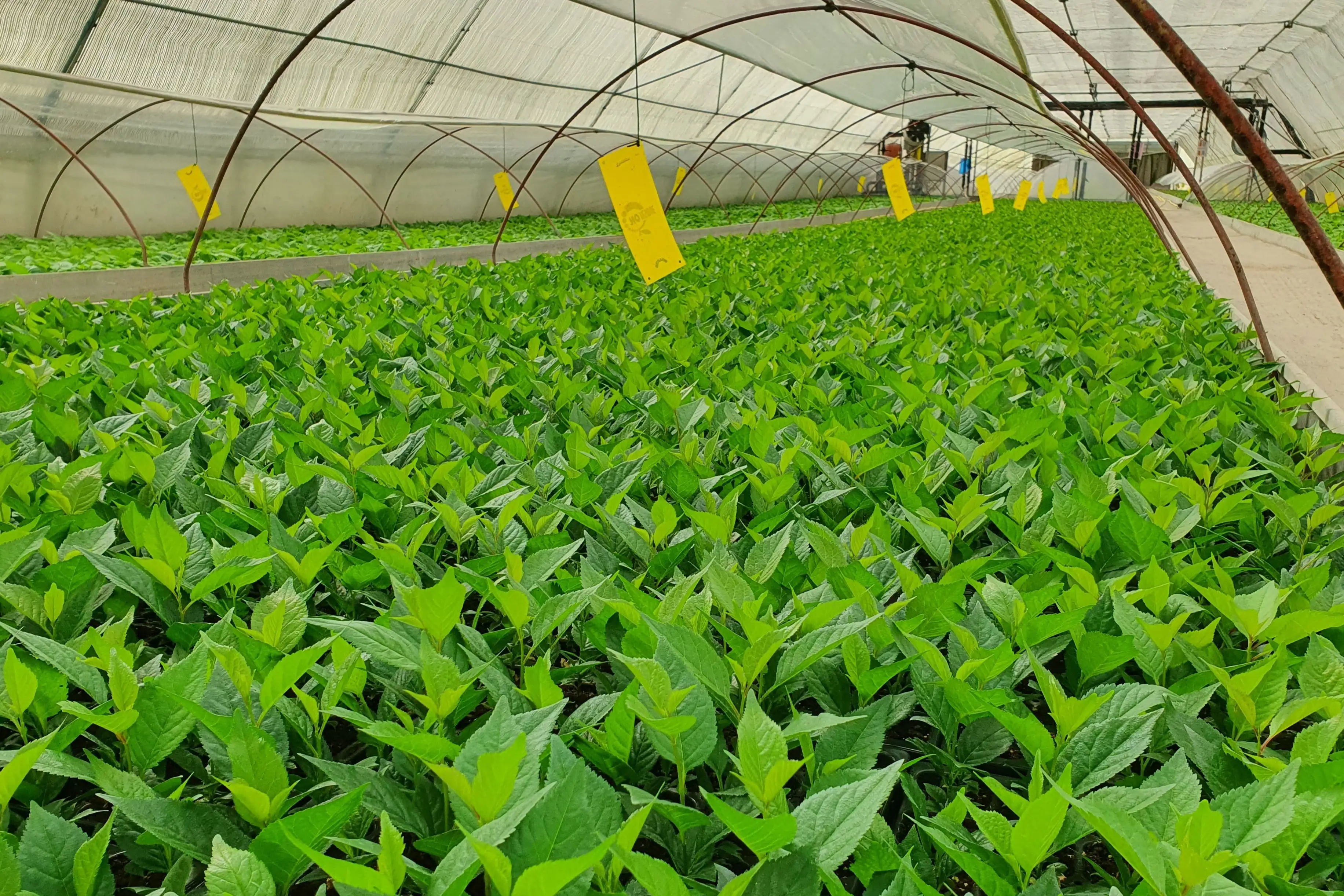
The experiments were conducted on seedlings exposed to controlled salinity conditions, specifically a concentration of 100 mM NaCl, comparing plants treated with bacterial PGPR with non-inoculated plants (control). The results showed that the combined inoculation significantly improved growth parameters including plant height and biomass accumulation.
From a physiological perspective, the microbial treatment enhanced photosynthetic capacity, as indicated by increases in photosynthetic rate, stomatal conductance, and transpiration rate.
These parameters suggest improved functioning of the photosynthetic apparatus and greater efficiency in gas exchange even under saline stress conditions. At the same time, significant changes were observed in osmotic regulation processes.
In particular, inoculated plants exhibited higher concentrations of total soluble sugars and proline. These molecules play an essential role in stabilizing cellular structures and protecting proteins and membranes during osmotic stress.
Physiological mechanisms of salt tolerance
Their accumulation helps maintain cellular water balance and reduces damage caused by excessive salt levels. Another mechanism of tolerance involves the antioxidant defense system. Plants treated with PGPR bacteria showed increased enzymatic activity of superoxide dismutase and peroxidase, which are key enzymes in combating oxidative stress. At the same time, a significant reduction in reactive oxygen species such as superoxide anion and hydrogen peroxide was observed.
These molecules typically accumulate under stress conditions and can cause cellular damage. Multivariate statistical analysis including principal component analysis confirmed that microbial PGPR treatment produces a physiological profile clearly distinct from that of the control plants, highlighting an overall positive effect in mitigating salt stress.
Implications for cherry rootstock management
The measured parameters were also strongly correlated, suggesting a synergistic interaction among osmotic regulation, antioxidant defense, and enhanced photosynthetic activity. In conclusion, the study demonstrates that the co-inoculation of Pantoea ananatis D1-28 and Bacillus aryabhattai F represents a promising strategy for improving salt tolerance in the cherry rootstock Gisela 6.
Source: Tao, Z., Chen, G., Li, F. et al. Co-inoculation with Pantoea ananatis D1-28 and Bacillus aryabhattai F promotes the growth of sweet cherry rootstock Gisela 6 under salt stress. Sci Rep 16, 523 (2026). https://doi.org/10.1038/s41598-025-29979-z
Image source: Stefano Lugli
Melissa Venturi
University of Bologna (IT)
Cherry Times - All rights reserved