Sławomir and Andrzej Doliński began by growing sour cherry trees for their own orchard. Forty years later, Kamil Doliński is carrying on the work of his father and uncle. He spent almost two years negotiating with the University of Bologna before finally reaching an agreement. Today, the family nursery near Grójec is growing sweet cherry varieties that no Polish nursery had produced before. Why did he choose these varieties?
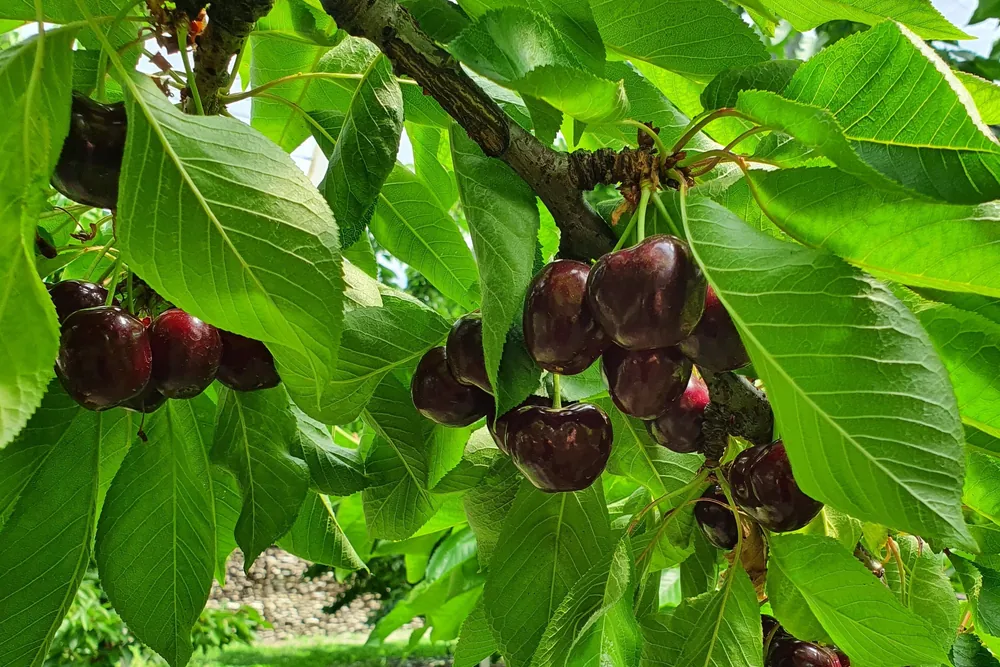
The Doliński family, from Worów near Grójec, is the first in Poland to obtain a licence to propagate six sweet cherry varieties from the Italian Sweet series, developed by the University of Bologna. They are Sweet Aryana, Sweet Lorenz, Sweet Gabriel, Sweet Valina, Sweet Saretta and Sweet Stephany. Polish cherry growers already know the Sweet varieties, but until now they have bought the trees from nurseries abroad. They will now be able to purchase trees grown in Polish climatic conditions. The first will reach the market in autumn 2027.
Key project milestones
From the nursery’s beginnings to the arrival of the first Sweet trees on the market.
Mid-1980s
The Doliński family starts its nursery business.
2016/2017
First talks with the University of Bologna.
2025
Licence signed to propagate six Sweet varieties.
Autumn 2027
The first trees reach the market.
It all began with a few sour cherry trees for the family orchard
The family business dates back to the mid-1980s. Sławomir and Andrzej Doliński started by growing ornamental plants before moving into fruit tree nursery production. They first grew sour cherry trees for their own use, intending to plant an orchard. The nursery stock proved to be good quality, so the following season they decided to grow more trees, this time also for sale. That was the beginning of a business the family continues to develop today.
Kamil Doliński, Sławomir’s son, is now also involved in running the business. Over the years, the nursery has produced hundreds of thousands of apple, sour cherry, sweet cherry and pear trees. At its peak, it produced as many as half a million apple trees a year. Production volumes are lower today, but the Doliński family is increasingly focusing on specific species and varieties. Sweet cherries have become one of its main areas of development.
The nursery market is changing, as are cherry growers’ expectations. More and more growers are establishing specialised orchards, focusing above all on high fruit quality. They are looking for varieties with large fruit, good flavour, high yields and suitable ripening times. Nurseries are adapting their production to meet this demand.
The first talks with Bologna did not lead to an agreement
The idea of producing Sweet series cherry trees had emerged at the family nursery many years ago. In 2016 or 2017, Andrzej Doliński had discussed possible cooperation with the University of Bologna, but the parties were unable to reach an agreement. Several years later, Kamil returned to the idea. “It took me almost two years to reach an agreement with them, but I succeeded,” he says. The licence to propagate six sweet cherry varieties was finally signed in 2025.
Why choose the Sweet series cherries?
Kamil explains that the family had been looking for a group of varieties to offer Polish cherry growers for some time. New selections are increasingly entering the market, but not all are suited to local climatic conditions. The Sweet series is already well known in Europe. Its varieties stand out above all for their large fruit size, flavour and attractive appearance. They are also highly productive, and some are self-fertile. These are traits increasingly sought by growers investing in modern orchards and looking to stand out through fruit quality.
The Italian cherries survived the Polish winter, but there are some drawbacks
Naturally, varieties that can deliver high yields and excellent fruit quality also come with some limitations. As Kamil puts it, “there are pros and cons.” Many growers wondered how the Italian varieties would perform in the Polish climate. The past winter was a real test for many species, but the Sweet series varieties came through it very well. Kamil bases these observations on the experience of growers who had previously purchased trees from nurseries abroad. Even after spring frosts, some self-fertile varieties in the series produced satisfactory yields.
One possible drawback is their very high productivity: the fruitlets sometimes need to be thinned. Their relatively short stalks can also make harvesting more difficult, and some varieties require more careful crop protection.
For this reason, Kamil always advises growers to test their chosen varieties on their own farms before establishing a large block. Conditions can vary even between neighbouring orchards: a variety may perform very well on one farm and cause problems on another. Nevertheless, the large fruit size and quality of the Sweet series may satisfy even the most demanding buyers and help growers stand out in the market.
A trip to the Czech Republic—and one variety won them over
The Italian cherries are not the only new addition to the Doliński nursery. The family has also signed licensing agreements to propagate varieties marketed by the German company Artevos. The Dolińskis will grow trees of Carmen, Christiana, Irena, Tamara and Felicita. The latter four come from the Czech breeding centre in Holovousy, while Carmen is a Hungarian variety.
Two licences, eleven varieties
The sweet cherry varieties the Doliński family plans to propagate.
University of Bologna 6 varieties
Sweet Aryana · Sweet Lorenz · Sweet Gabriel · Sweet Valina · Sweet Saretta · Sweet Stephany
Sweet series · Italy
Artevos 5 varieties
Carmen · Christiana · Irena · Tamara · Felicita
Christiana, Irena, Tamara and Felicita: Holovousy, Czech Republic · Carmen: Hungary
Initially, the plan included only four varieties. In June, Kamil and his father travelled to Holovousy for an open day. Although they already knew the sweet cherries on offer, they wanted to see how the event was organised and inspect the varieties in person.
Felicita was being harvested during their visit. The fruit made such a positive impression that they decided to expand the agreement they had already signed: a fifth variety joined the four selected earlier.
Gisela 5 did not perform well. Now they are choosing Krymsk 5
All the new sweet cherry varieties at the Doliński nursery will be produced on Krymsk 5 rootstock. This choice also reflects years of experience at the family nursery. In the past, Sławomir and Andrzej Doliński grew trees on Gisela 5, but it did not perform well under their conditions. Severe winters led to substantial losses, and the local soils made it difficult to produce high-quality trees.
The family began looking for an alternative. Krymsk 5 proved to be a much better choice, and today the Dolińskis use it for almost all their sweet cherry trees. Kamil explains that it performs well on both heavier and sandy soils and can cope with periods of water shortage or excess.
That does not mean the rootstock is suitable for every orchard. On very fertile soils, especially Class I and II sites, the trees may grow too vigorously. Kamil is therefore cautious about recommending it to growers with this type of land. As with the varieties, much depends on the conditions of each individual farm.
When will the new sweet cherry varieties go on sale?
The first trees of the newly licensed sweet cherry varieties will be available in autumn 2027. Production is already under way, and the Doliński family plans to gradually increase the number of trees in the following years.
The nursery is only one part of the family business: the Dolińskis also manage apple and sour cherry orchards, as well as a highbush blueberry plantation. As Kamil observes, the fruit-growing market is constantly changing. Some species and varieties become more popular, while others lose favour. The family business is changing too: an increasing share of its nursery production is now devoted to sweet cherries, because growers want to modernise their orchards and are looking for varieties that can deliver high-quality fruit.
Source: www.sad24.pl
Image source: Stefano Lugli
Cherry Times - All rights reserved