Untargeted metabolomics is an analytical approach that enables the identification of metabolites present in a sample, regardless of their chemical class.
It currently represents one of the most widely used technologies in fruit quality research, as it allows the simultaneous detection of both primary and secondary metabolites.
Numerous studies have demonstrated its effectiveness: for example, the integration of untargeted metabolomics with sensory analysis has shown that the Tianzhen No. 1 rootstock can improve the sensory quality and soluble sugar content of sweet melon fruits.
Similarly, this technique has clarified that cultivar and climatic conditions are the main factors influencing the presence of functional components, such as flavonoids and carotenoids, in tomatoes.
Sweet cherry preferences
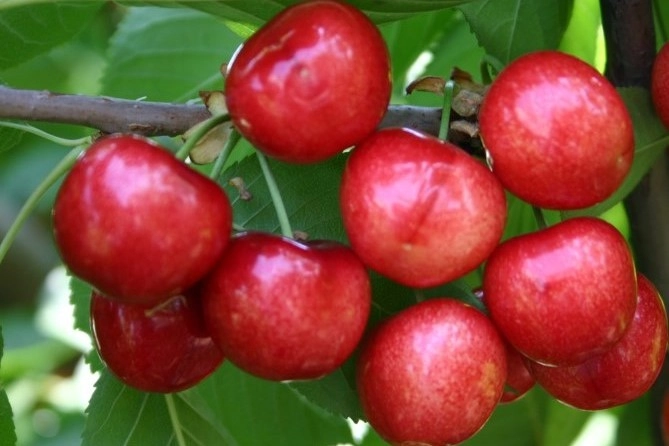
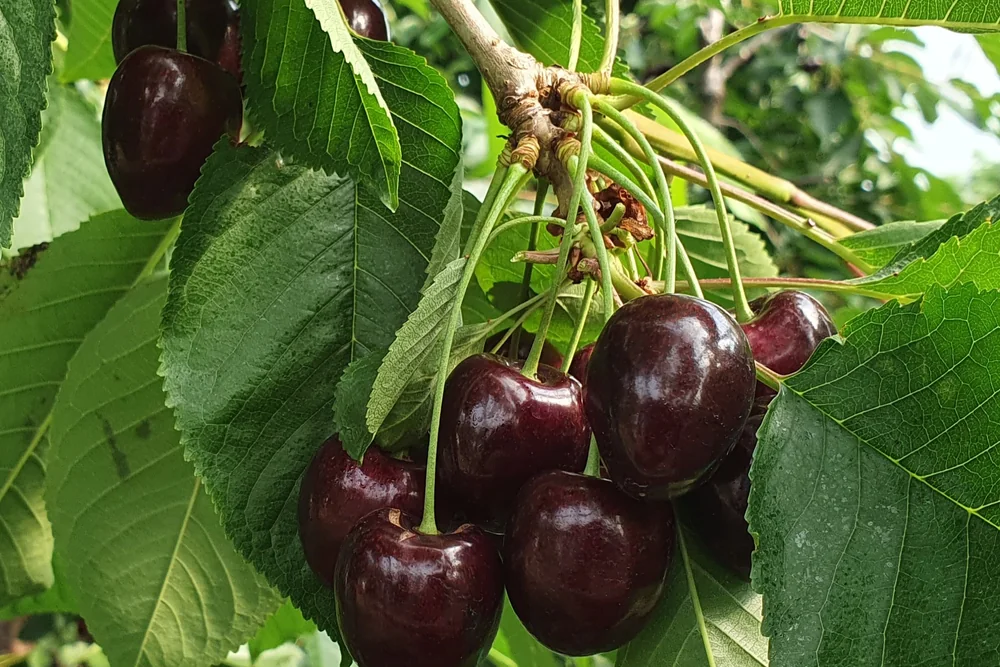
Consumers generally tend to prefer sweet cherries with an attractive appearance, such as large fruit size and a dark red color, and a well-balanced taste, typically associated with a high soluble solids–to–acid ratio.
However, to date, there is no clear evidence demonstrating a direct influence of fruit texture on consumer preferences for sweet cherries.
In light of these findings, the use of this technique to investigate quality differences among different sweet cherry cultivars is scientifically well founded and fully feasible.
In this context, the study compared the quality characteristics of four sweet cherry cultivars widely cultivated in Shanxi Province, China (“Tieton,” “Pioneer,” “Sunburst,” and “Huangmi”), combining traditional physicochemical parameters with untargeted metabolomic analysis to evaluate whether and which metabolites are shared among them.
Comparison of cherry cultivars
The results highlighted marked differences among the four varieties in terms of skin color, texture, fruit size, weight, and soluble solids–to–acid ratio.
In particular, the “Huangmi” cultivar exhibited greater susceptibility to physical damage, a stronger perception of bitterness, and a lower overall consumer acceptance compared with the other cultivars, especially after short-distance road transportation.
Untargeted metabolomic analysis enabled the identification of a total of 97 differential metabolites among the four fruits.
Of these, 44 metabolites—including cellobionate, allose, L-histidine, kaempferol, ascorbic acid, and cinnamaldehyde—were particularly abundant in “Huangmi.”
Metabolite distribution
Another 22 metabolites, such as raffinose, neochlorogenic acid, and epicatechin, reached their highest levels in “Sunburst,” whereas 9 metabolites were predominant in “Pioneer” and 3 in “Tieton.”
A particularly noteworthy finding concerns the citrulline content, which was significantly higher in the red-skinned cultivars (“Tieton,” “Pioneer,” and “Sunburst”) than in the yellow-skinned cultivar (“Huangmi”), a result that had not previously been reported in the literature.
Overall, the study demonstrates that the four cultivars differ substantially not only in appearance and texture but also in nutritional profile and in the content of nucleotides, volatile compounds, and bioactive molecules.
The lower consumer preference for “Huangmi” appears to be mainly associated with physical damage incurred during transportation, which may promote the accumulation of phenolic compounds responsible for bitterness.
Improvement strategies and applications
The authors suggest that pre-harvest treatments or genetic improvement strategies aimed at increasing fruit firmness could significantly enhance the quality of this cultivar.
Alternatively, due to its high sugar content, “Huangmi” fruit is well suited for processing into products such as wine or vinegar, whereas “Tieton,” “Pioneer,” and “Sunburst” are more suitable for fresh consumption.
Finally, metabolites such as 1-keto-D-chiro-inositol, kaempferol, and neochlorogenic acid emerge as potential markers for cultivar discrimination, while emphasizing the need for further studies to confirm and expand these preliminary results.
Source: Li, G.; Yang, X.; Cao, Z.; Li, F.; Li, G.; Erihemu. Integration of Physiological Analysis and Untargeted Metabolomics to Explore Differences in Quality Among Four Sweet Cherry Cultivars. Foods 2025, 14, 3207. https://doi.org/10.3390/foods14183207
Image source: Stefano Lugli
Melissa Venturi
University of Bologna (IT)
Cherry Times - All rights reserved