Sweet cherries are highly perishable, and maintaining fruit quality after harvest is essential to maximize returns and meet market expectations. During storage and shipping, cherries can lose quality through stem browning, softening, moisture loss, and the development of storage disorders, reducing packout and consumer satisfaction (Golding, 2017).
To minimize these losses, fruit are typically hydrocooled immediately after harvest and stored near 0 °C under high relative humidity to remove field heat, slow ripening, and reduce dehydration (Golding, 2017; Neira-Ojeda et al., 2025).
In addition to proper temperature and humidity management, many packinghouses use modified atmosphere packaging (MAP) or controlled atmosphere (CA) storage to further extend storage life. These technologies slow fruit respiration and help maintain firmness, stem greenness, and overall fruit quality during long-distance shipping and marketing.
However, their success depends on selecting storage conditions that match the characteristics of each cultivar.
Cultivar-specific responses
Sweet cherry cultivars differ in respiration rate and tolerance to low oxygen and elevated carbon dioxide. As a result, the atmosphere that develops inside MAP bags or is maintained in CA rooms may not affect all cultivars the same way.
Storage conditions that preserve quality in one cultivar may increase the risk of off-flavors, fermentation, or internal disorders in another (Wills & Golding, 2016; Liu et al., 2025). Understanding these cultivar-specific responses is essential for selecting the most effective postharvest strategy and reducing losses during storage and distribution.
The objective of this study was to compare the effectiveness of modified atmosphere packaging (MAP) and controlled atmosphere (CA) storage in maintaining fruit quality and reducing postharvest disorders during long-term storage of major sweet cherry cultivars.
Methodology
The study was conducted during the 2024 and 2025 seasons using four commercially important cultivars: ‘Rainier’, ‘Bing’, ‘Skeena’, and ‘Sweetheart’, harvested at commercial maturity. After hydrocooling, fruit were stored at 0.5 °C and more than 95% relative humidity under four storage regimes: regular atmosphere (RA), modified atmosphere packaging (MAP; O₂ 15%, CO2: 5% ), controlled atmosphere with high CO₂ (CA-High: 11% O₂, 15% CO₂), and controlled atmosphere with low O₂ (CA-Low: 1% O₂, 1% CO₂).
Fruit quality was evaluated at harvest and after 15 and 30 days of cold storage. Internal browning was additionally assessed after 45 days of storage. Stem condition was rated using a 1–5 visual scale, where 1 represented green, fresh stems and 5 represented brown, dehydrated stems (Fig. 2).
Results
Stem condition
Across cultivars, MAP bags and CA-Low generally maintained lower stem condition scores during storage, indicating better preservation of stem freshness. ‘Rainier’ showed the best stem condition after 30 days (1.2) under CA-Low.
In contrast, treatment responses varied by cultivar; for example, ‘Sweetheart’ showed the highest stem condition score (2.2) under the same treatment after 30 days of storage (Fig. 1), indicating greater stem browning and dehydration.
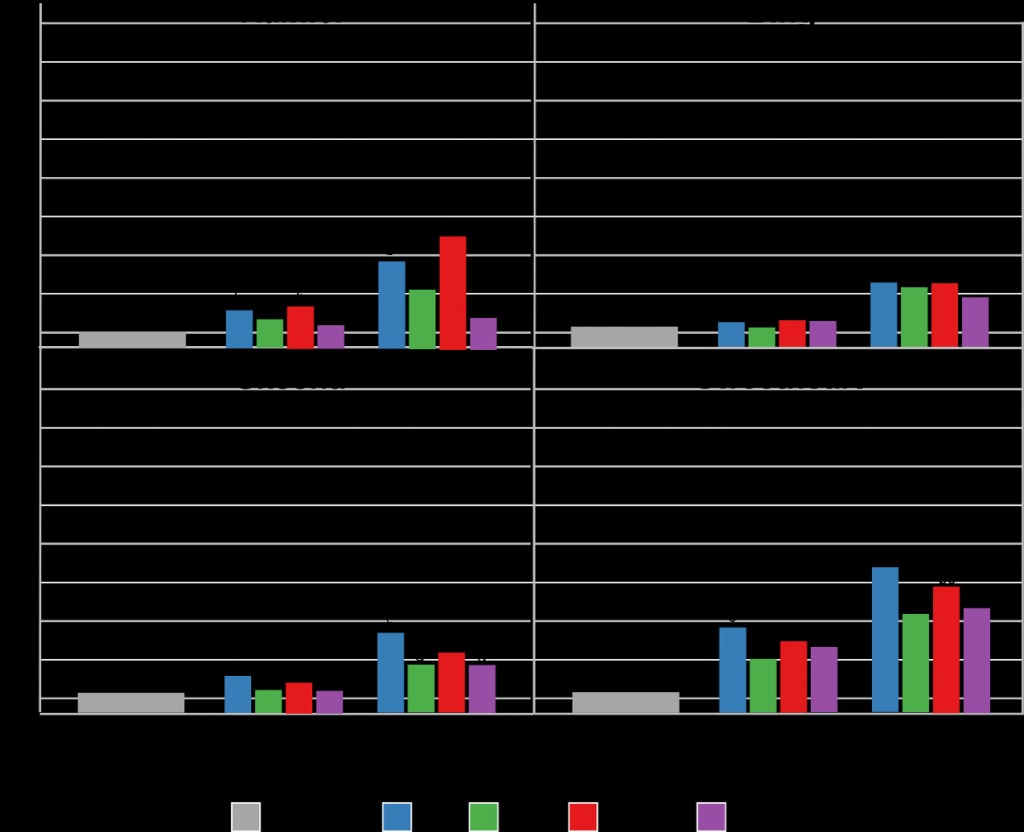 Figure 1. Stem condition of ‘Rainier’, ‘Bing’, ‘Skeena’, and ‘Sweetheart’ cherries after 15 and 30 days of cold storage. Values are means ± SE across 2024–2025. Different letters, when present, indicate treatment differences within each storage time (Tukey, P ≤ 0.05).
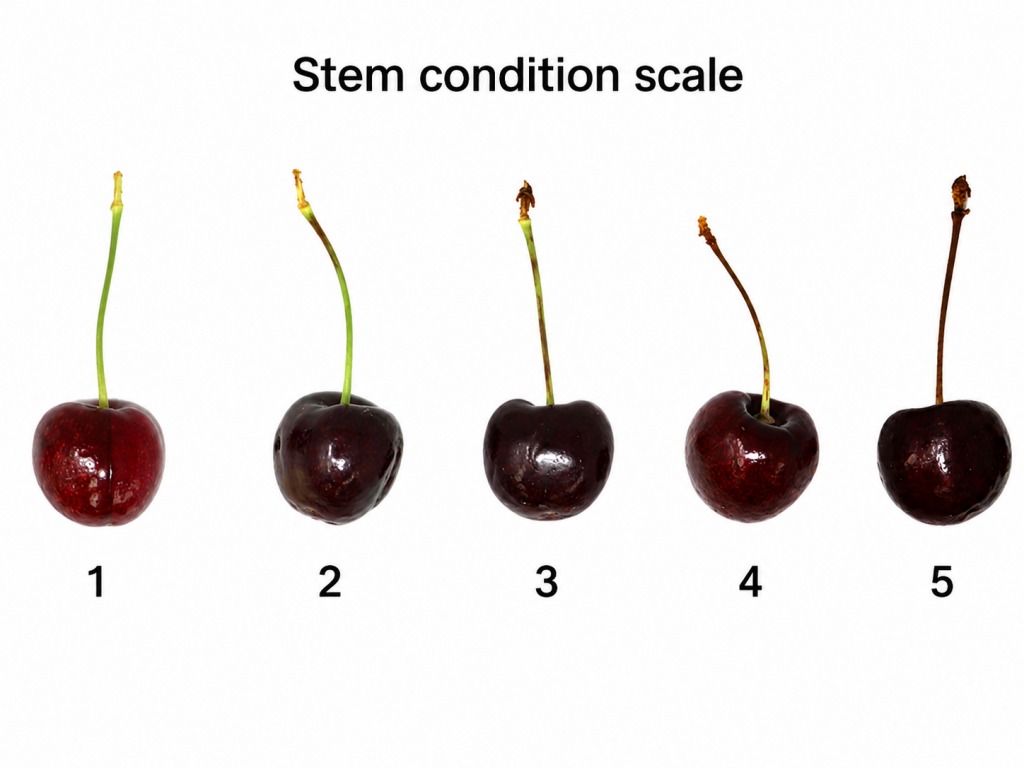 Figure 2. Stem condition scale used to evaluate sweet cherry stem quality, from 1 (fresh green stems) to 5 (severely browned and dehydrated stems). Photo: Gabriela Bolaños.
Firmness
Firmness was measured by compression using a Firm Tech instrument. Firmness increased during cold storage across cultivars (Figure 3). MAP maintained the highest firmness in ‘Rainier’ after 30 days of storage, reaching 430.5 g/mm compared with 359 g/mm under CA-High conditions.
In ‘Skeena’, MAP also resulted in the highest firmness after 15 days of storage (540 g/mm). Although treatment differences were not significant in all cultivars and evaluation periods, MAP generally showed a tendency toward higher firmness values during storage.
MAP also generally reduced fruit weight loss compared with regular atmosphere storage, supporting its potential to maintain fruit hydration and reduce shrivel during storage.
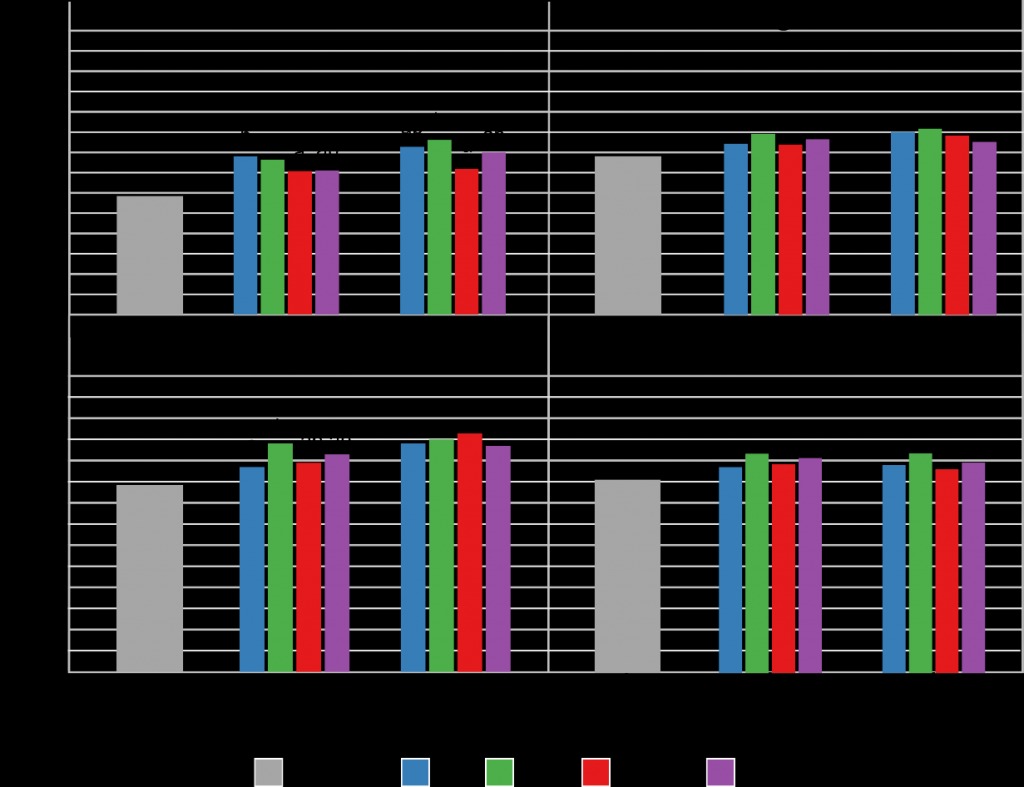 Figure 3. Firmness of ‘Rainier’, ‘Bing’, ‘Skeena’, and ‘Sweetheart’ cherries after 15 and 30 days of cold storage. Values are means ± SE across 2024–2025. Different letters, when present, indicate treatment differences within each storage time (Tukey, P ≤ 0.05).
Fruit defects
(Fruit defects)- pitting, pebbling, internal browning
Postharvest defects were generally low during the first 30 days of cold storage. Pitting was observed in all cultivars, but it was more evident in ‘Bing’ and ‘Skeena’, with incidence close to 4%. No clear differences among storage treatments were observed for pitting.
Pebbling was mainly observed in ‘Sweetheart’ and ‘Skeena’. In ‘Sweetheart’, the highest incidence was observed under MAP (9%), while in ‘Skeena’, it was highest under CA-High (17%).
CA-Low showed the lowest pebbling incidence in both cultivars, with 4% in ‘Sweetheart’ and 10% in ‘Skeena’. ‘Rainier’ and ‘Bing’ remained below 1% incidence during the first 30 days of storage.
Internal browning was low during the first 30 days but became more evident after longer storage. CA-High was associated with internal browning in ‘Skeena’, ‘Bing’, and ‘Rainier’ after 45 days of storage.
Storage strategies
These results suggest that cultivar response and storage duration should be considered when selecting storage strategies, especially for cherries intended for longer storage periods.
The effectiveness of long-term storage strategies for sweet cherries depends on storage atmosphere and cultivar. MAP bags showed potential to maintain firmness and reduce weight loss during extended cold storage. CA-Low helped maintain stem condition, while CA-High should be carefully managed because of its association with internal browning in some cultivars.
These findings can help guide postharvest decisions to maintain sweet cherry quality during storage and distribution.
Image source: Fruit Matters
Gabriela Bolaños and Carolina A. Torres
Department of Horticulture, Washington State University
Source: Fruit Matters
Cherry Times - All rights reserved