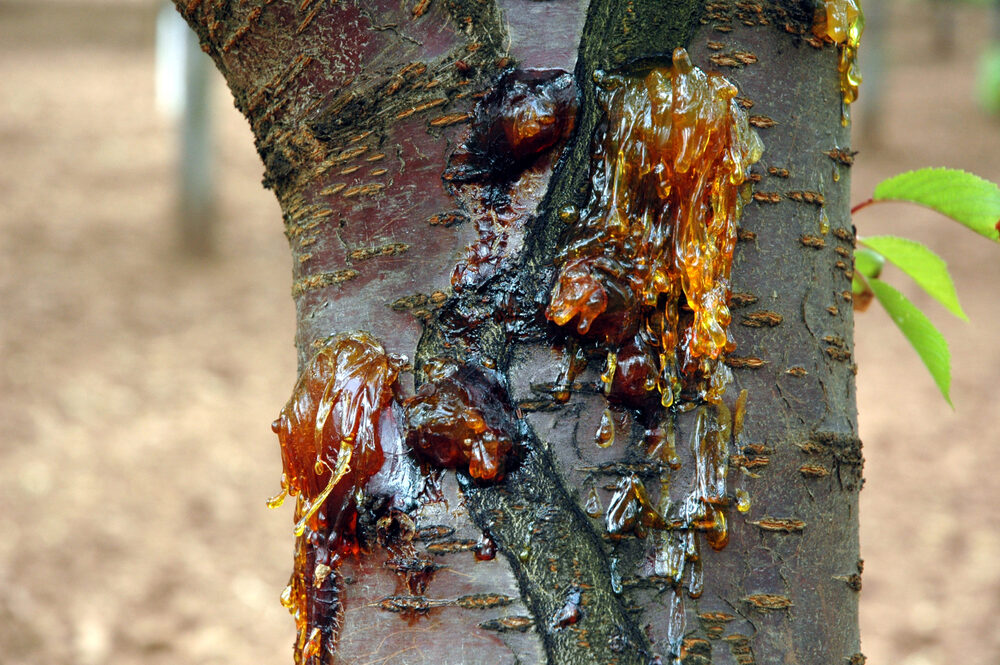
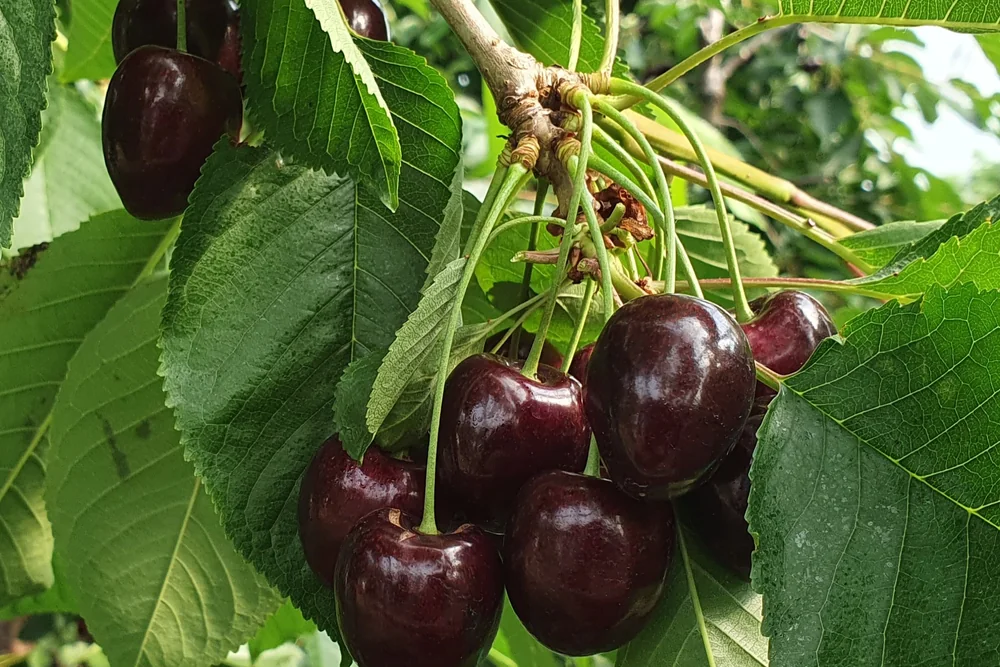
Graft compatibility is a crucial factor for the agronomic success of sweet cherry orchards, as it directly affects tree vigor, productivity, fruit quality, and orchard longevity.
Despite the widespread use of clonal and hybrid rootstocks, the biological mechanisms underlying graft compatibility between rootstock and scion are still not fully understood, particularly in cases of delayed incompatibility, which is common in many combinations involving Prunus mahaleb.
Within this framework, a recent study proposes an integrated approach combining traditional anatomical assessments with machine learning techniques to identify rootstocks compatible with the sweet cherry cultivars ‘0900 Ziraat’ and ‘Lambert’.
Evaluation of local genotypes
Eight local genotypes (three sweet cherry, three sour cherry, and two P. mahaleb) collected in the Turkish region of Giresun, an area considered part of the center of origin of sweet cherry, were compared with the standard rootstocks Gisela 6 and SL 64.
Graft compatibility was evaluated 12 months after grafting using morphological, anatomical, and physiological parameters.
Morphological traits included bud growth, shoot length, and rootstock/scion diameter ratio; anatomical traits involved callus formation, cambial continuity, and necrosis; physiological traits included starch accumulation, defoliation, and leaf discoloration.
The results revealed marked differences among genotypes: Gisela 6 clearly stood out for its high callus formation, continuous cambial connection, high bud take percentage (over 80%), and reduced incidence of necrosis and starch accumulation, all indicators of good vascular integration between rootstock and scion.
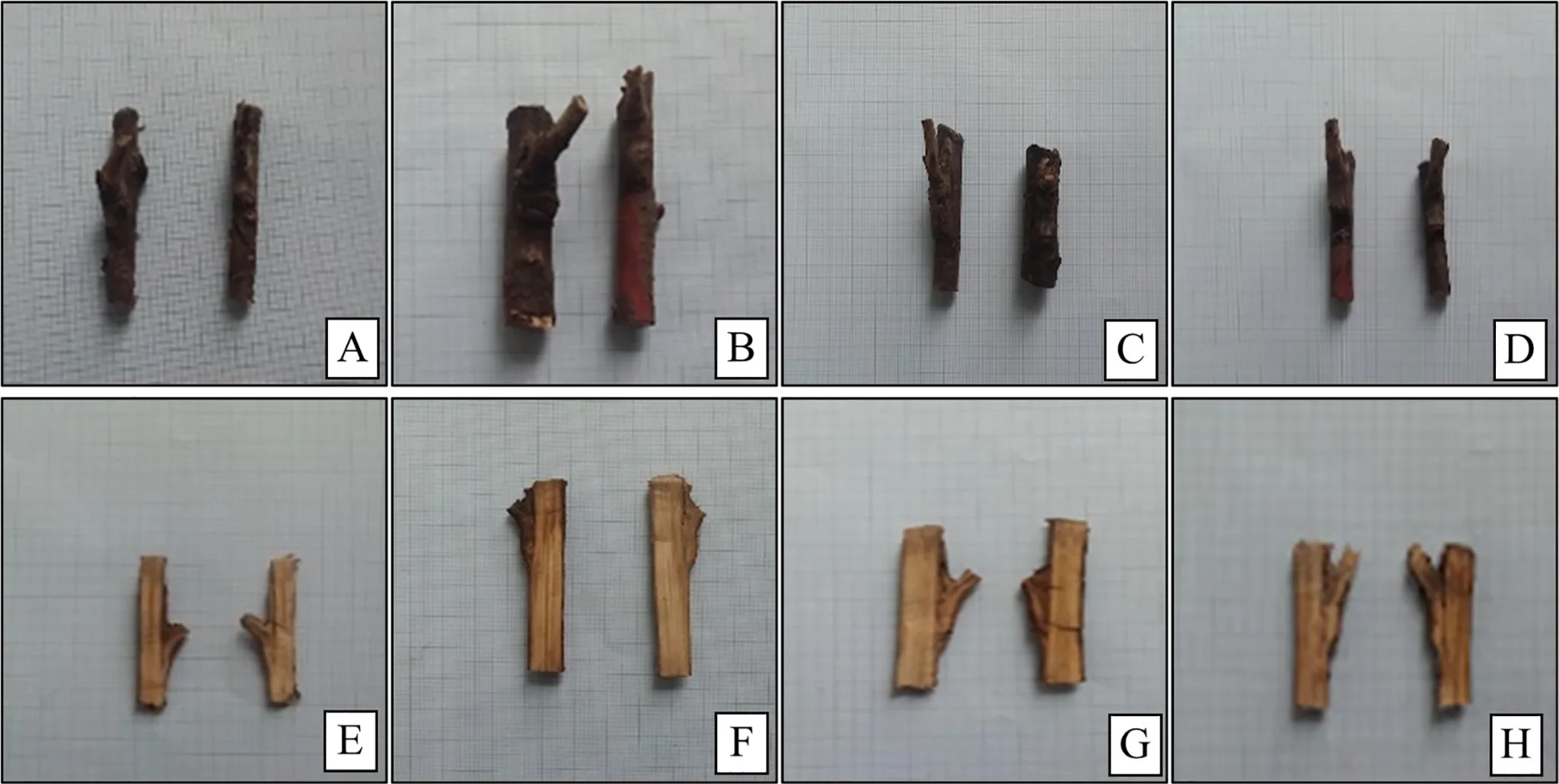 Internal photo 1. Graft development on variety/rootstock combinations after 12 months. (A and E): 08 K 056/0900 Ziraat, (B and F): 55 K 104/Lambert, (C and G): 55 V 004/0900 Ziraat, (D and H): Gisela 6/0900 Ziraat. Source: Aydin et al., 2026
Key findings and genotype performance
In contrast, genotypes 28 M 005 and 52 M 003 showed poor shoot growth, low cambial continuity, and strong starch accumulation near the graft union, which are typical signs of physiological incompatibility.
The main innovation of the study lies in the combined application of multivariate analyses, Random Forest models with SHAP interpretation, and Bayesian ranking.
PCA enabled the identification of groups of genotypes with similar behavior, clearly isolating Gisela 6 as a rootstock with a unique and highly compatible phenotypic profile.
The Random Forest model identified bud growth, cambial continuity, and callus formation capacity as the most influential variables, confirming the central role of tissue regeneration processes in successful graft establishment.
Model insights and predictions
SHAP analysis further clarified the direction of variable effects: higher values of bud growth and callus formation increased the probability of compatibility, whereas higher levels of necrosis and leaf discoloration tended to reduce it.
Finally, the Bayesian model provided a probabilistic ranking of rootstocks while accounting for statistical uncertainty.
Gisela 6 showed a probability greater than 95% of being the best-performing rootstock, followed by 55 K 104 and SL 64, whereas 28 M 005 was identified as the least compatible.
Although these findings provide valuable insights into graft compatibility at early stages, it should be noted that long-term agronomic traits such as yield, fruit quality, and stress tolerance were not evaluated in this study.
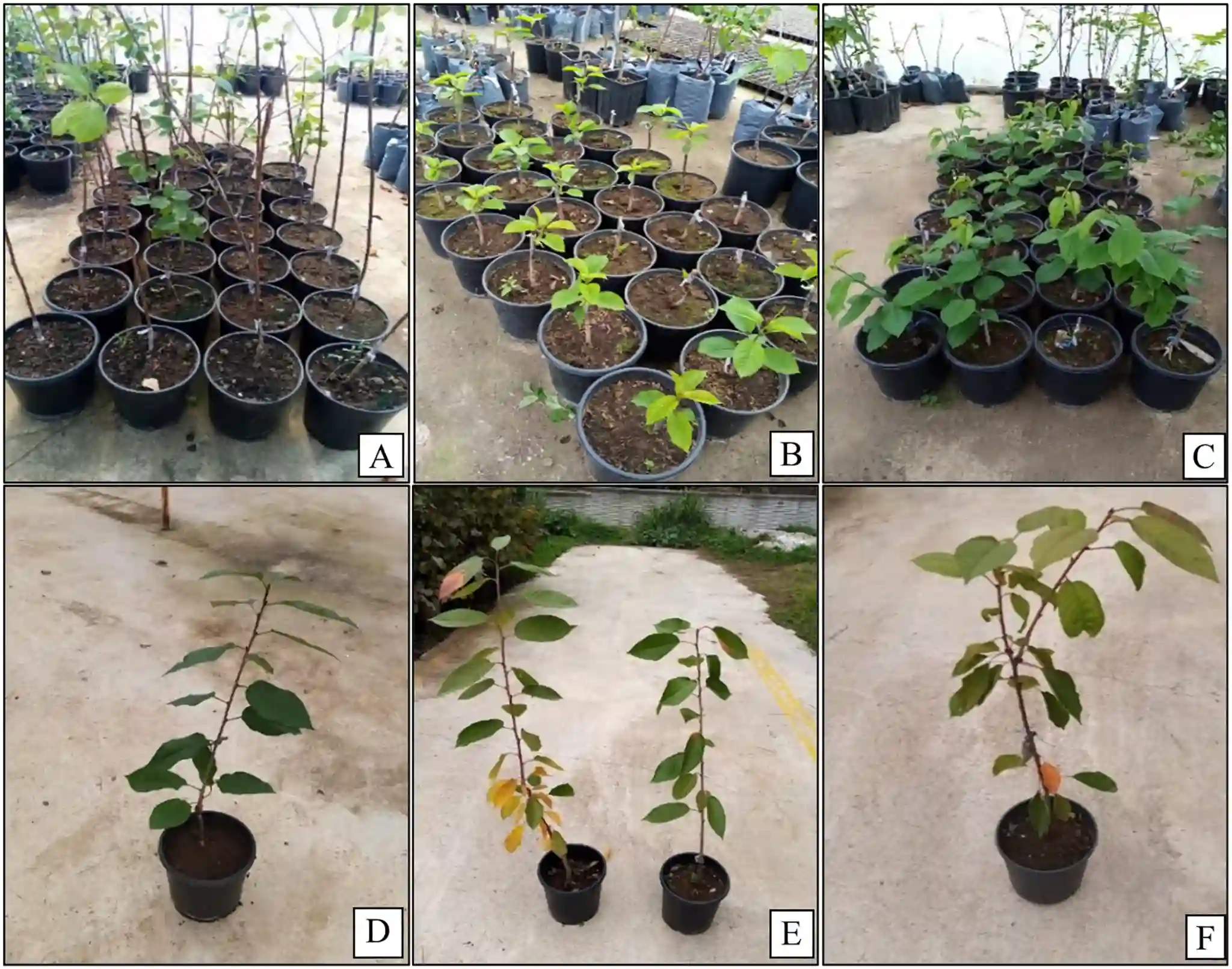 Foto interna 2. Sviluppo dei germogli in combinazioni varietà/portinnesto. (A e D):08 K 056/0900 Ziraat, (B e E):55 K 104/Lambert, (C e F): 55 V 004/0900 Ziraat. Fonte: Aydin et al., 2026
Conclusions and future directions
From an applied perspective, the results demonstrate that integrating anatomical observations with machine learning tools enables a robust assessment of graft compatibility, overcoming the limitations of traditional descriptive analyses alone.
These findings confirm the reliability of Gisela 6 as a rootstock for sweet cherry and highlight new promising genotypes for breeding programs.
Moreover, the proposed approach paves the way for more objective decision-support systems in rootstock selection, based on predictive models that account for the complexity of rootstock–scion interactions.
Source: Aydın, E., Cengiz, M. A., Er, E., & Demirsoy, H. (2025). Identifying graft incompatible rootstocks for sweet cherry through machine learning algorithms. PLoS One, 20(10), e0332889. https://doi.org/10.1371/journal.pone.0332889
Opening image source: Stefano Lugli
Internal images source: Aydin et al 2026
Andrea Giovannini
PhD in Agricultural, Environmental and Food Science and Technology - Arboriculture and Fruitculture, University of Bologna, IT
Cherry Times - All rights reserved