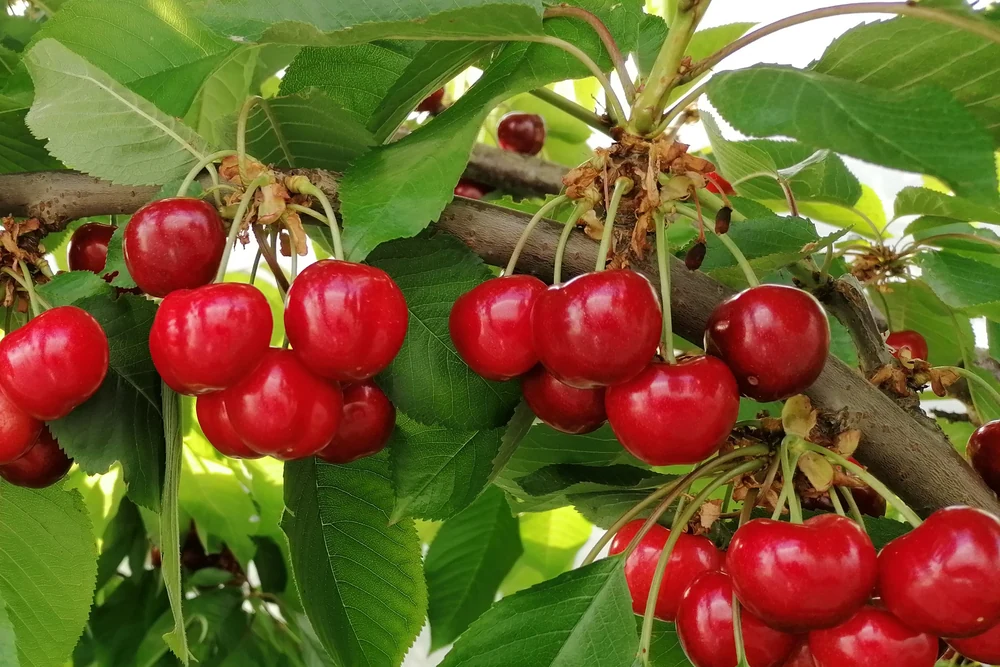
The ability of forest tree species to adapt to climate change depends on the interaction among phenotypic plasticity, genetic variability, and local environmental conditions. A recent study investigated these mechanisms in two important European broadleaf species, sweet cherry (Prunus avium) and pedunculate oak (Quercus robur), highlighting how growth performance is determined primarily by site characteristics, while functional traits exhibit significant but relatively limited plasticity.
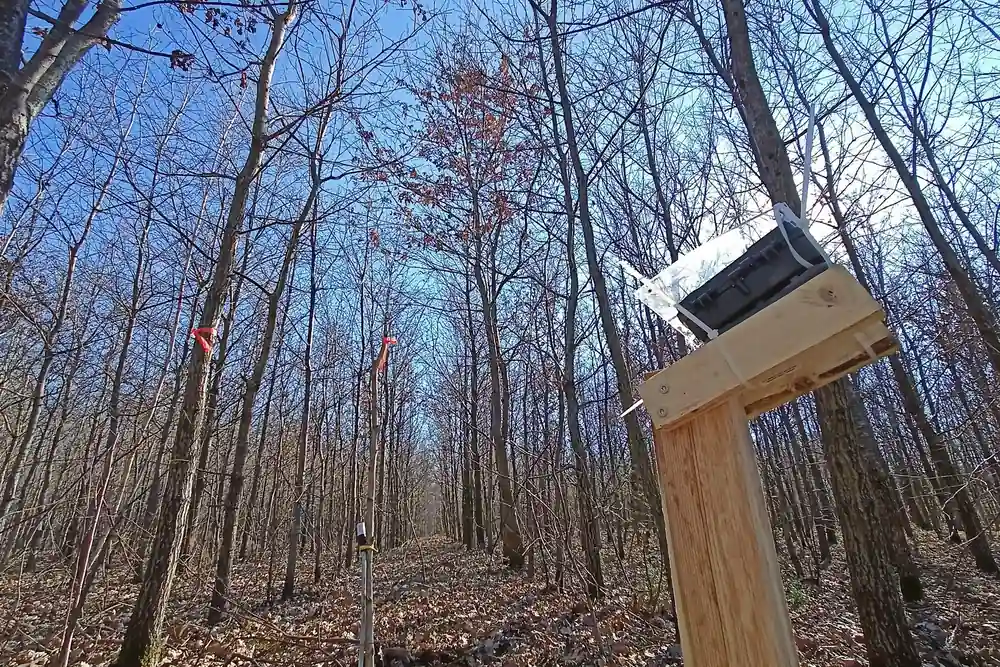
The study was based on provenance trials distributed along a climatic gradient of approximately 2 °C between Austria and Croatia, with the aim of understanding the extent to which traits such as specific leaf area (SLA) and phenology contribute to growth and climate resilience in the two species.
Local environmental conditions
The results showed that tree growth was strongly influenced by local environmental conditions, including climate, water availability, and soil characteristics. In the statistical models applied, the “site” effect explained more than one-third of the observed variability, confirming that ecological and pedological factors have a greater impact than genetic differences among provenances.
In both species, specific leaf area emerged as the functional trait most closely associated with growth. In sweet cherry, high SLA values, indicative of thinner leaves with a larger photosynthetic surface area, promoted growth especially in early leaf-flushing individuals.
The researchers interpreted this result as a typical strategy of pioneer species: early leaf emergence allows trees to exploit spring light radiation for a longer period, at least partly compensating for the negative effects of summer water stress. In oak, by contrast, increased SLA was associated with lower growth rates, probably due to greater water losses through transpiration under relatively dry conditions.
Phenological response
The study also highlighted marked differences between the two species in their phenological response to climate. Sweet cherry showed strong sensitivity to spring conditions: higher soil temperatures and moisture significantly advanced budburst. In particular, a 1 °C increase in soil temperature resulted in an advance of vegetative resumption of approximately 13 days. This high phenological plasticity reflects the ecology of a pioneer species with intermediate longevity, for which rapidly exploiting favorable growth windows represents a competitive advantage.
Oak, on the other hand, showed a much weaker response to climatic variation, with tighter genetic control over phenology. Indeed, provenance effects and even mother-tree effects explained a substantial proportion of the observed variability, suggesting stronger genetic structuring of phenological traits.
Adaptive reserve
Regarding SLA, climatic plasticity proved significant but limited. In sweet cherry, higher soil water content increased SLA values, whereas in oak, higher temperatures led to thicker and less expanded leaves. However, these effects explained only a small proportion of the overall variability, while more than 70% of the observed differences remained attributable to individual variability not directly linked to either climate or provenance genetics. In fact, forest populations exhibit high levels of individual heterogeneity, which could represent a crucial adaptive reserve under rapid climate change scenarios.
Future adaptation
The study concluded that the combination of phenotypic plasticity and broad individual variability provides sweet cherry and oak with a concrete potential for future acclimation and adaptation. Under increasingly unstable climatic conditions, the response capacity of individual trees may prove to be just as important as, or even more important than, the geographic origin of the forest reproductive material.
Source: Di Fabio, A., Aspalter, S., Chakraborty, D., van Loo, M., Rolke, L. M., Schüler, S., Thiel, R., Veit, C., & Kreyling, J. (2026). Growth Performance Is Driven by Site Conditions and Moderated by Functional Trait Plasticity in Quercus robur and Prunus avium. Ecology and Evolution, 16(2), e72978. https://doi.org/10.1002/ece3.72978
Image source: Di Fabio et al 2026
Andrea Giovannini
PhD in Agricultural, Environmental and Food Science and Technology - Arboriculture and Fruitculture, University of Bologna, IT
Cherry Times - All rights reserved