A significant part of the plant’s
physiological and metabolic processes, essential for the production of high-quality fruit, takes place within the bud during the post-harvest period. During this phase, the tree initiates a recovery process by redistributing photoassimilates toward the formation of roots and permanent structures, which store reserves for the subsequent flowering.
Management practices must be adapted to the agroclimatic zone, the training system, and the cultivar/rootstock combination, as each orchard responds differently to the same practices. Light, water, and nutrition, in addition to reducing environmental stress, determine flowering and future fruit set. These factors are fundamental, as they define the orchard’s future in the following season and ensure good productivity.
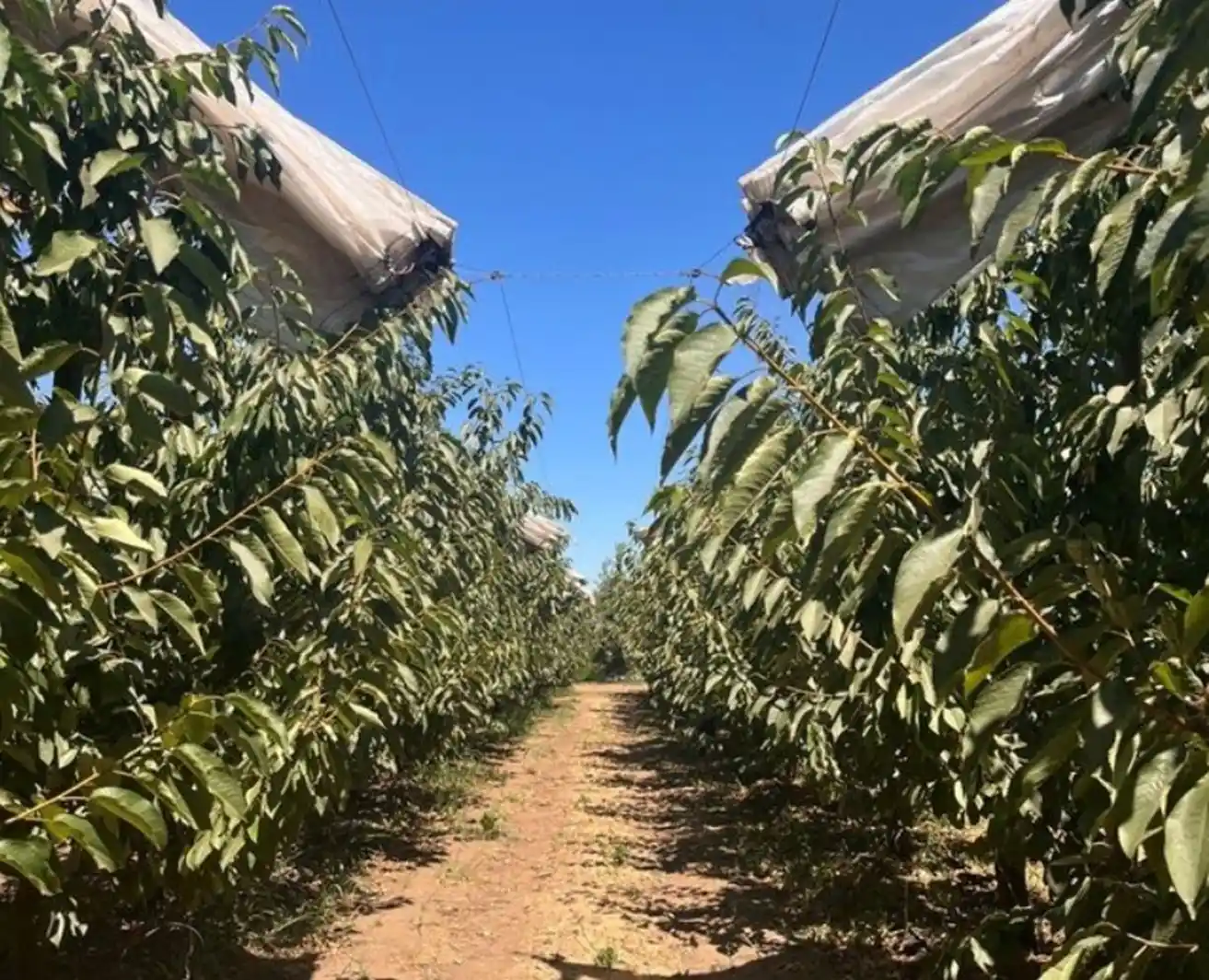
Summer pruning: controlling light interception and vigor
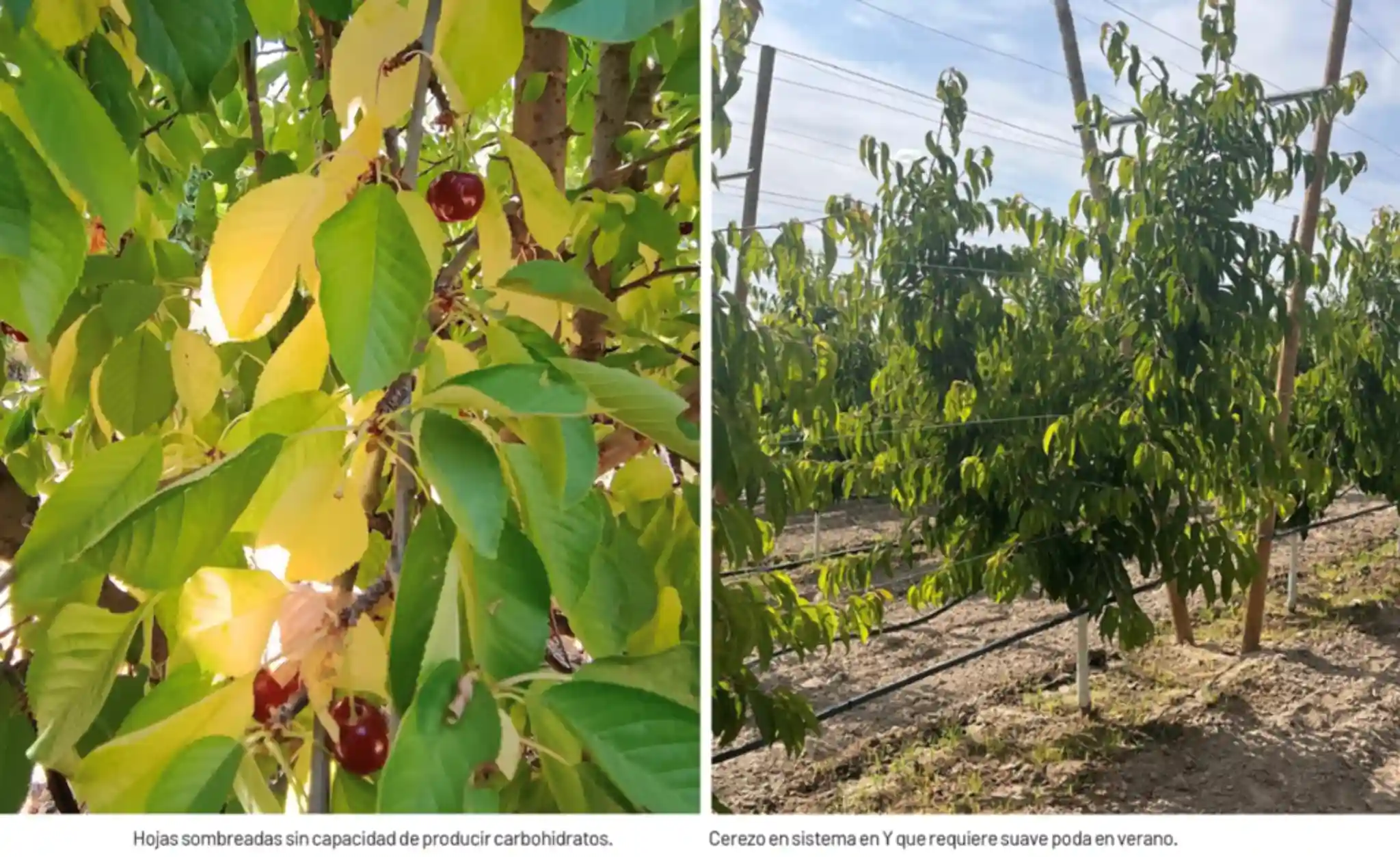
Summer pruning is particularly recommended for more vigorous combinations that tend to create shading, such as Lapins/Colt, Lapins/MaxMa 60, or Santina/Colt, as well as for orchards with high soil fertility that showed strong annual growth during spring.
A well-lit tree induces and differentiates its floral buds more effectively; light penetration within the canopy promotes the development of strong reproductive buds, with adequate quantity and quality of reserves required for the flowering phase.
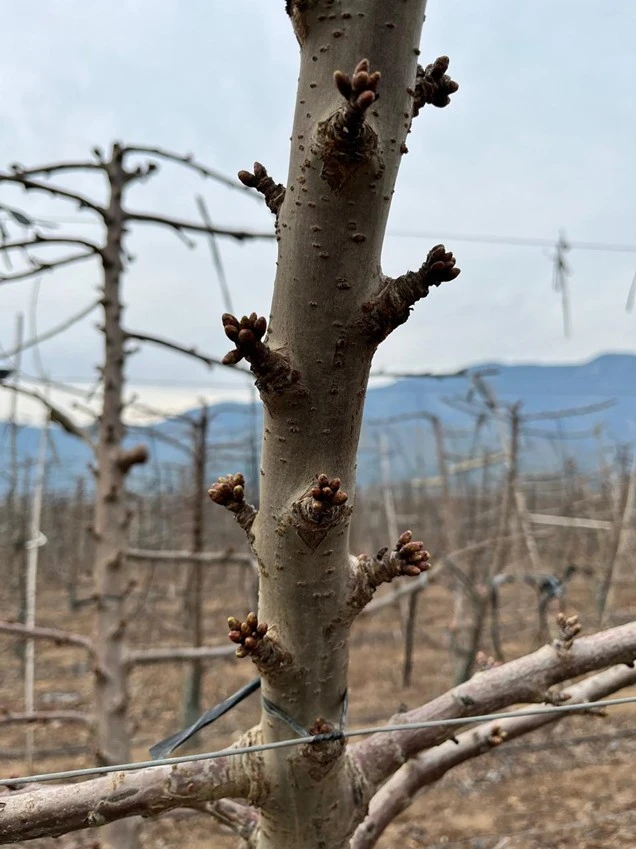
Reproductive bud in winter dormancy, accumulating chilling
Excessive shading negatively affects flower differentiation, sometimes leading to bud death on shoots and even the death of entire shoots at the base of the tree. In addition, insufficient light combined with poor light distribution within the canopy causes fruit to concentrate on the periphery, resulting in taller and larger trees that are less efficient to manage.
In central Chile, the process of floral differentiation occurs mainly between December and April. Therefore, summer pruning is preferably carried out between late January and late February, avoiding overlap with nitrogen fertilization of the soil.
When branches are removed too early, a hormonal imbalance is created that eliminates apical dominance and triggers new growth below the cut. This effect is undesirable because it causes the tree to consume carbohydrates intended for reserves for the following season in order to form new shoots, which are often poorly positioned and susceptible to frost.
Conversely, when summer pruning is performed in January and part of February, the vegetative response is less pronounced.
Depending on the cultivar/rootstock combination and the training system, the intensity of summer pruning will be more or less severe. Vigorous combinations, such as Lapins/Colt or Lapins/MaxMa 60, require more intense interventions compared with semi-vigorous combinations such as Santina/MaxMa 14 or Santina/Gisela 12.
This is because summer pruning, by removing photosynthetically active leaves and reserve storage structures, tends to weaken the tree. Less vigorous combinations should therefore be pruned mainly in winter, while vigorous ones can tolerate more intense summer pruning.
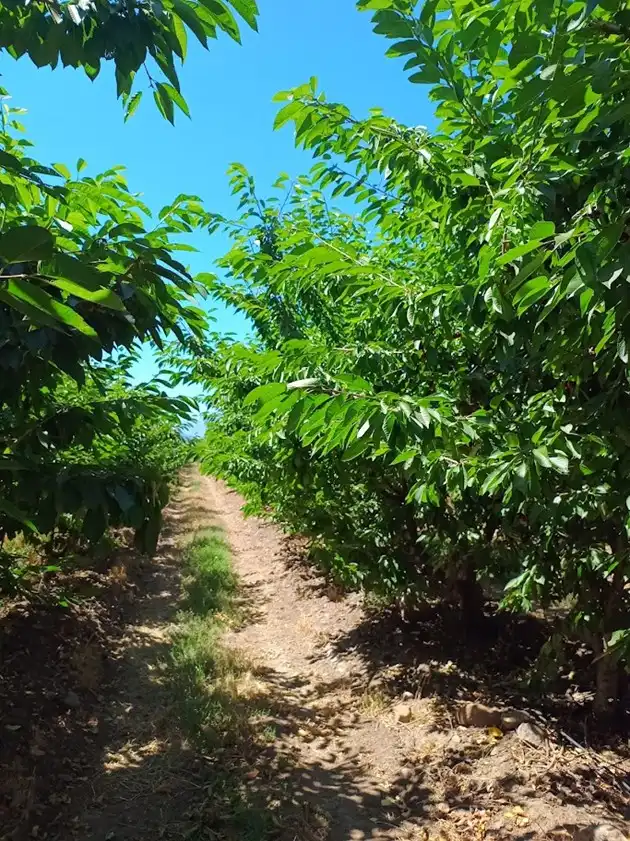
Cherry tree with abundant vegetative growth after harvest, with potential shading
In general, for weaker cultivars it is recommended not to remove more than 15–20% of total growth to avoid imbalances that could compromise the following season’s production.
A visible sign of the need for summer pruning is the appearance of yellow leaves in the lower and inner sections of the tree. The associated buds, receiving limited light, are unable to properly differentiate into flower buds.
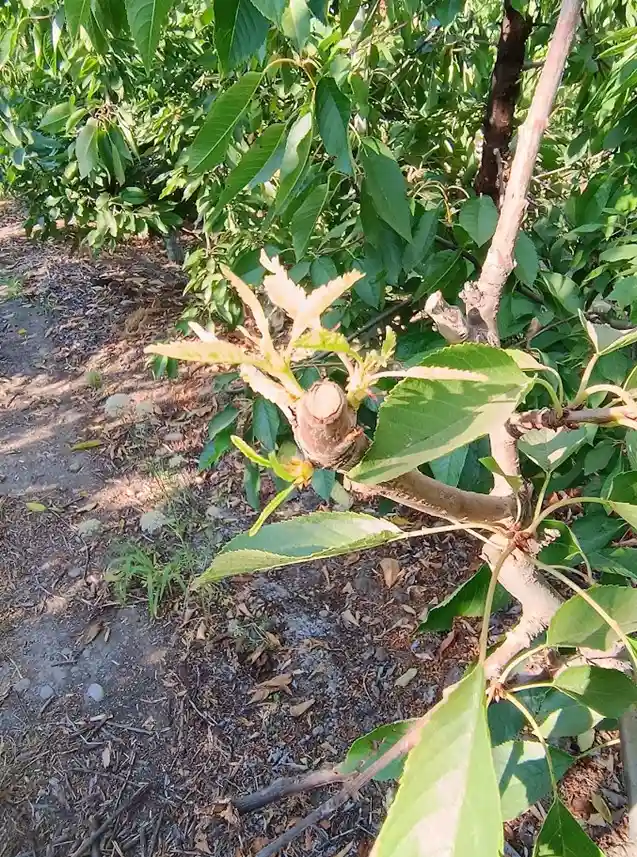
Regrowth after January pruning using stored reserves
Training systems
In the central leader system, the priority is to remove vigorous suckers from the upper part and eliminate internal branches that create shade, improving light penetration and keeping vegetative buds active.
In Y- or V-shaped systems, summer pruning aims to regulate acrotonic growth by lightening the upper part through the removal of vertical suckers that shade the lower branches.
In vase and KGB systems, characterized by greater volume, it is recommended to prune the upper annual branches to control tree height and improve light penetration inside the canopy.
In all cases, summer pruning is a complementary practice to the more intensive pruning carried out in winter or late winter.
Irrigation: continuing after harvest
After harvest, the tree must recover from the energy expenditure associated with fruit production and the formation of new structures. Roots remain active, with growth peaks between December and January and again in March.
Both irrigation suspension and excess irrigation negatively affect root function and reserve accumulation.
Between 30 and 40% of fine roots are renewed, making it necessary to maintain stable soil moisture. The goal is to avoid water stress between December and February.
From March onward, irrigation should be moderated to encourage the transition to dormancy.
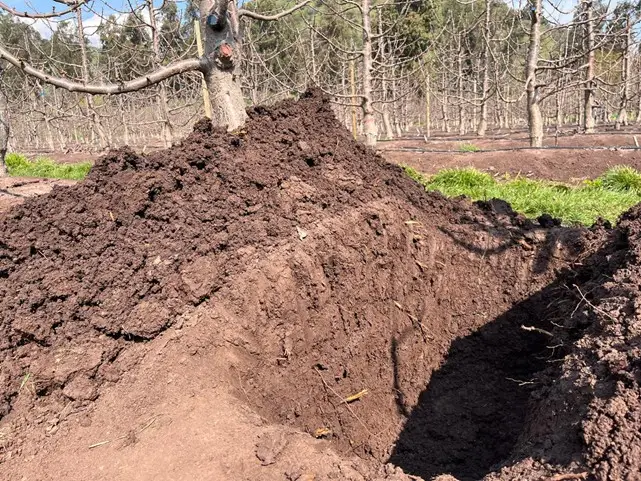
Digging a pit in winter to observe root abundance and health
Nutrition and reserve accumulation
Post-harvest nutrition should promote reserve accumulation in roots, wood, and buds rather than excessive vegetative growth.
In vigorous orchards, intensive nitrogen fertilization in spring is not recommended; nitrogen is generally applied during the post-harvest period.
Foliar applications of nitrogen, magnesium, boron, and zinc are recommended, as well as the use of humic and fulvic acids to improve nutrient availability and soil structure.
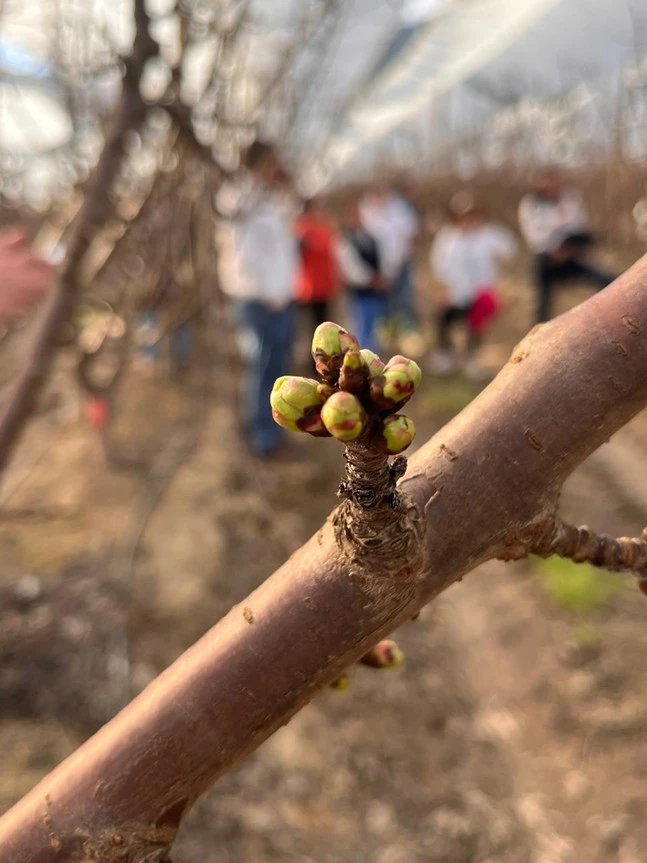
Swollen bud in spring using stored reserves
Thermal stress and radiation
During heat waves with temperatures above 30 °C, which are common between Coquimbo and Maule, abiotic stress damages leaves and buds, affecting floral differentiation.
To mitigate these effects, adequate irrigation is recommended, along with applications of sun-protective products such as kaolin, and antioxidant elicitors or biostimulants.
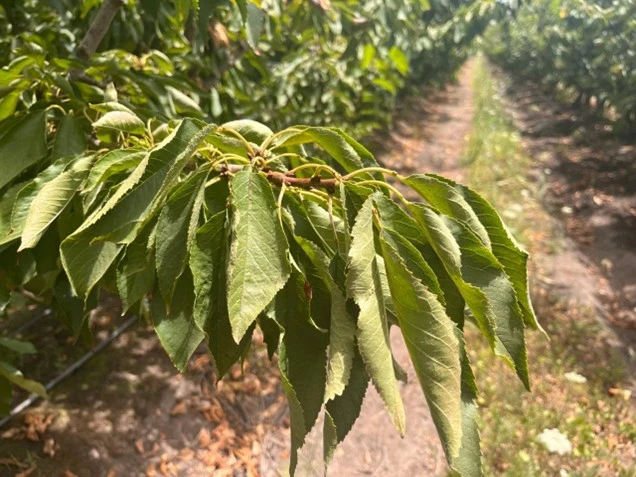 Leaves exposed to thermal and radiative stress in summer
Leaf fall and preparation for winter
Uniform leaf fall allows the tree to enter dormancy evenly and to accumulate winter chilling.
It is essential to avoid premature or abrupt defoliation that would interrupt photosynthesis and carbohydrate translocation.
Preparation for winter requires a gradual reduction in irrigation and the absence of late nitrogen fertilization.
Health and disease control
After harvest, latent infections of bacterial canker or wood-inhabiting fungi may appear. Sanitary pruning and the removal of dry branches or trees are recommended.
Mites and moths must be monitored, as they affect photosynthesis and can induce late regrowth.
Key aspects and recommendations
The post-harvest period is a critical strategic phase in cherry orchard management, during which reserve accumulation, bud quality, and future productivity are determined.
A well-managed orchard shows large, well-differentiated buds, lignified shoots, uniform leaf fall, and healthy, active roots.
Marlene Ayala
Pontificia Universidad Catolica de Chile
Mauricio Opazo
Agricultural Production Manager – Agrícola San Luis de Yáquil, Chile
Source: Mundoagro Magazine, cherry special issue, 2025
Opening image source: Stefano Lugli
Cherry Times – All rights reserved