There is a scientific explanation behind the spectacular spring bloom of cherry trees. But this uniformity, the result of centuries-old practices, could make them more vulnerable to diseases and pests.
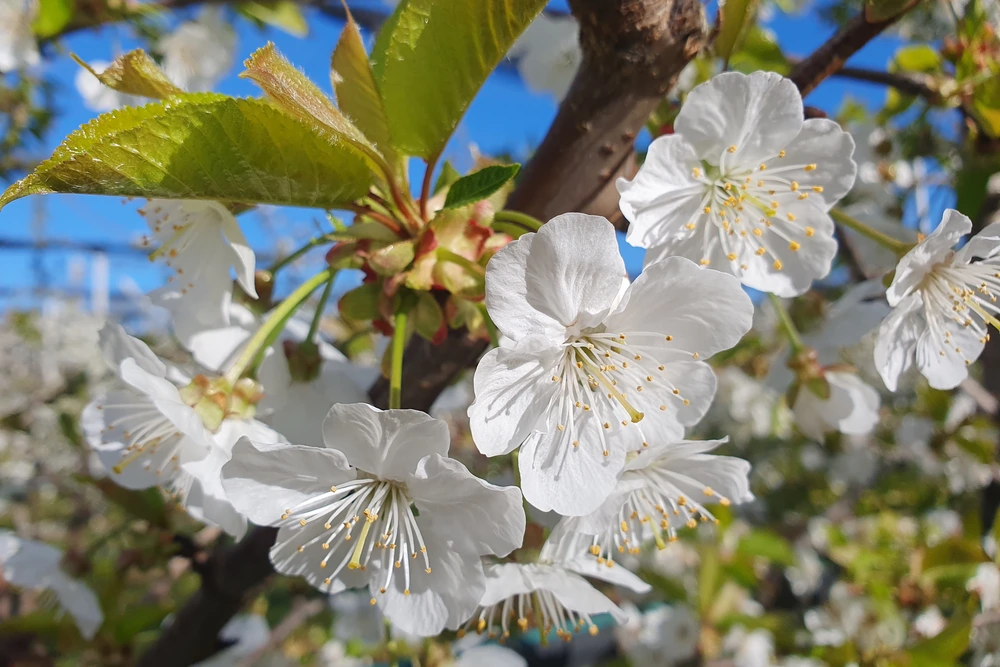
A single cherry blossom is a silent wonder of spring. Thousands of cotton candy pink flowers create a sublime spectacle.
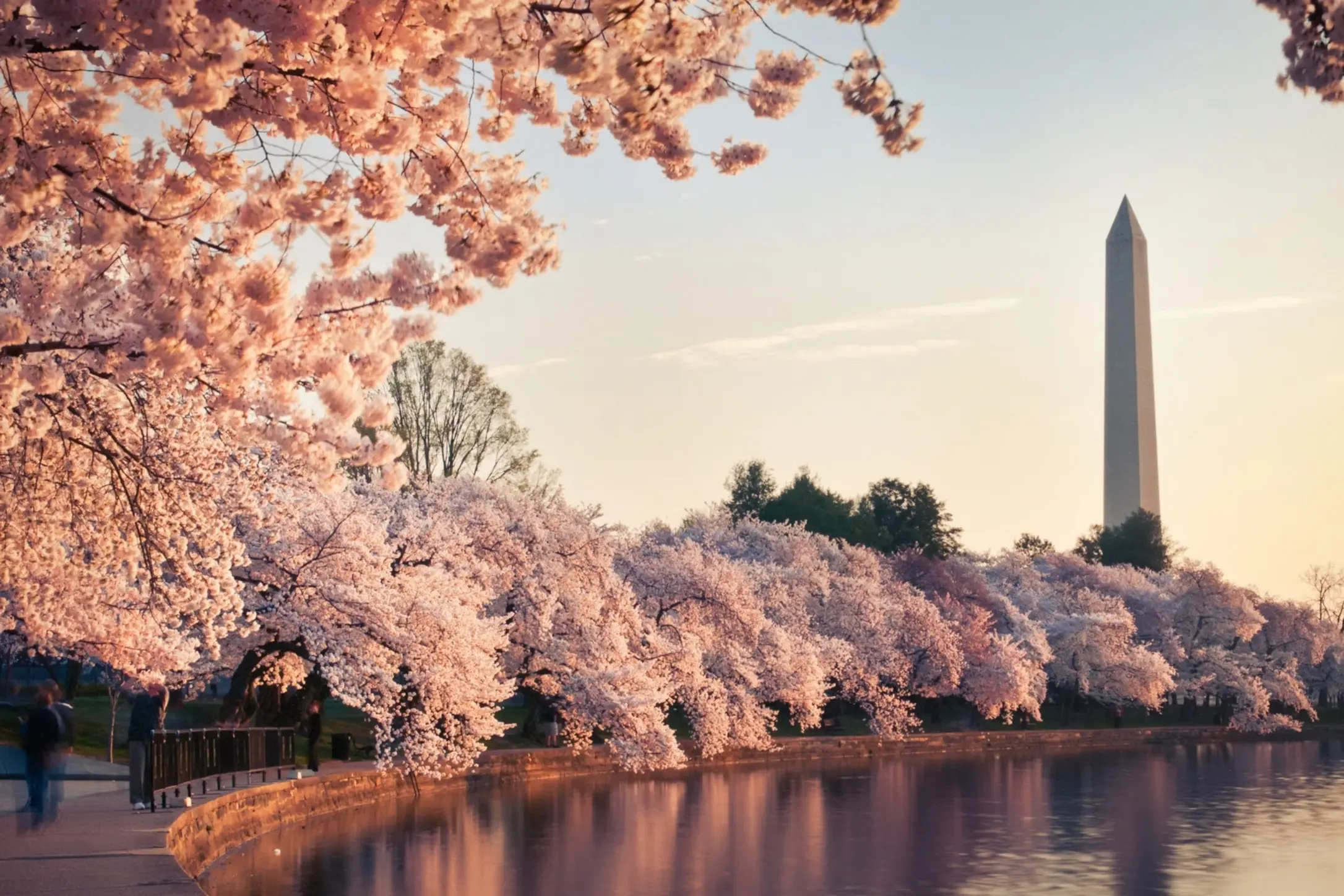
Every spring, thousands of cherry trees bloom simultaneously, transforming the austere marble landscape of Washington, D.C. into an enchanting wonderland. The columns of the U.S. Capitol soften with pastel hues, while identical pink petals frame the Washington Monument and the Tidal Basin.
“If you’ve ever been there at peak bloom and seen 1,700 cherry trees around the Tidal Basin all flowering at once, you know it’s a must-see spectacle,” says Mike Litterst, communications manager for the National Mall and Memorial Parks. “It’s one of those places, like the Grand Canyon, that defies description.”
This synchronized dance is no coincidence. For centuries, arborists have cloned cherry trees to achieve this harmonious display, ensuring they grow and bloom in the same way.
But this also creates a hidden vulnerability: a single disease or pest outbreak could wipe out the entire population, threatening the spectacle that attracts over a million visitors to the U.S. capital each spring.
A single tree
It is “essentially a single tree.” In 1912, Japan gifted Washington, D.C. more than 3,000 cherry trees as a symbol of friendship and gratitude. The shipment included 12 varieties, but most were of the Somei Yoshino type, which can now be admired around the Tidal Basin in Washington.
Yoshino trees were created around 200 to 300 years ago and are known for their beautiful white-pink blossoms and delicate almond fragrance. They are a hybrid of two other cherry species and, due to their beauty, horticulturists have continued to clone these trees for centuries.
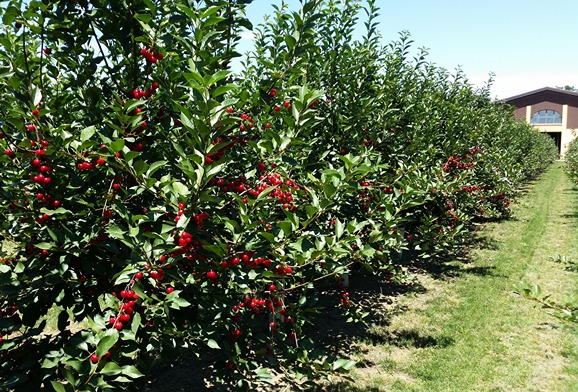
Each year, J. Frank Schmidt & Son Company, based in Oregon, collects and ships more than 1.5 million trees across North America, including many Yoshino cherry trees to the U.S. East Coast.
Nurseries clone trees using two main techniques, explains Guy Meacham. One method, called grafting, involves attaching plant material from one tree to the root system of another. The other, increasingly common method, uses softwood cuttings in a controlled environment with hormones until new roots develop.
Genetic identity
"It’s simply a continuous process of cloning from the original tree, repeated thousands and thousands of times," says Meacham. "All Yoshino trees propagated clonally are identical to the original specimen."
In fact, some Japanese researchers analyzed the genomes of 46 Yoshino cherry trees and showed they belonged to the same clonal lineage. Some exhibited small mutations, but they shared the same two parental genomes.
Vulnerability
"The downside is that you have thousands of nearly identical trees. They are essentially a single tree," says Meacham. "If a pest or disease to which the clone is susceptible appears, it would be more vulnerable than a genetically diverse seedling."
Over the years, cherry trees have faced numerous threats. In 1910, Japan donated 2,000 trees, but they were infested and were completely burned. Fungal and bacterial diseases, such as witch’s broom or leaf spot, weaken the trees.
In 1945, cherry leaf spot caused early defoliation and killed more than 25,000 cherry and sour cherry trees. Such a loss would damage tourism, but also wildlife and pollinators.
Birds, bees, and butterflies would lose a source of pollen and nectar. To protect against this, horticulturists are developing new resistant varieties. The United States National Arboretum clones cherry trees but also develops new varieties, such as Prunus First Lady, better suited to colder temperatures.
“The goal is to develop hybrid cherry trees for the nursery sector,” says Piper Zettel. Some nurseries are already distributing cold- and disease-resistant hybrids.
The Tidal Basin is the most celebrated location, but blossoms can also be admired in other parks. Visitors can explore the National Arboretum, which hosts 70 varieties across more than 180 hectares.
Future strategies
This year, the National Park Service is planting more cherry trees than usual. In addition to the annual 90 trees, another 300 have been replanted, and Japan has donated an additional 250 commemorative trees.
"We’ve introduced a broader variety," says Litterst. "We want the genetic mix to be slightly different, to make the population less susceptible to disease."
KASHA PATEL
National Geographic
Image source: CAMERON WHITMAN, STOCKSY
Cherry Times - All rights reserved