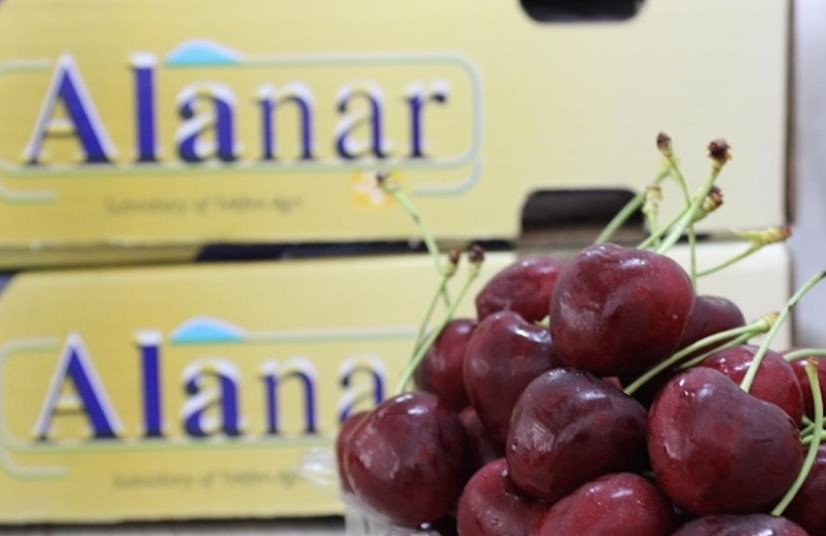
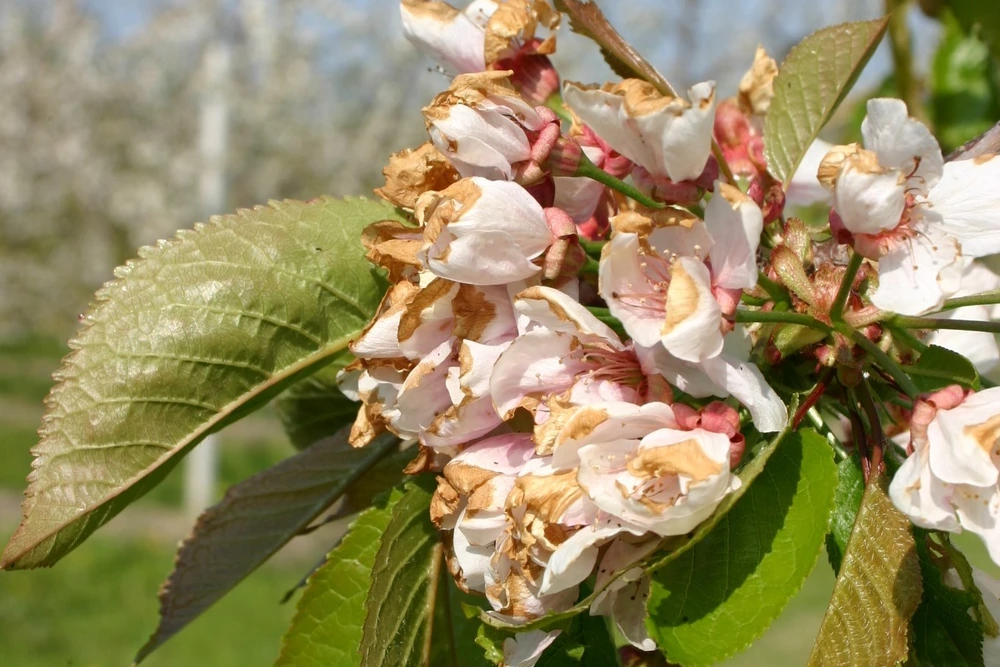
For decades, being able to sell in Russia was considered a competitive advantage for fruit exporters from the former Soviet Union. But the paths taken by Moldova and Uzbekistan suggest that relying on a familiar market can also hold back investment and the ability to compete abroad.
Moldova and Uzbekistan are among the world’s leading sweet cherry exporters: together, they account for about 7% of global production and rank among the ten largest exporters by volume. Their seasons follow one another: Uzbekistan offers early cherries in May, while Moldova comes into the picture in June and July.
Share of global production
≈ 7%
Moldova and Uzbekistan combined
Uzbekistan’s season
May
Early cherries
Moldova’s season
June–July
Later harvest
The differences, however, are substantial. Uzbekistan produces much more and has a large domestic market. Moldova harvests less but exports a larger share of its crop: with almost identical per capita production, it sells nearly five times more cherries abroad per person.
The cost of relying on one market
Russia offers immediate advantages: consumers who know the products, established trade relationships and a language widely spoken in both countries. For many exporters, selling to familiar buyers is easier than establishing a foothold in Western Europe, East Asia or the Middle East.
Easy access, however, can reduce the incentive to invest. Meeting the demands of more exacting international retailers requires consistent quality, new varieties, careful sorting, refrigeration, packaging, certifications and traceability. These elements support the competitiveness of the entire supply chain.
When traditional channels absorb most of the product, producers and exporters may have little immediate incentive to change. Over time, the industry becomes tailored to the demands of a single destination and more vulnerable: when access is cut off, finding other buyers takes more than rerouting a truck.
Moldova: more markets and higher revenues
For years, almost all Moldovan cherry exports went to Russia and Belarus. Seeking other outlets seemed too complicated or costly. Russian restrictions on Moldovan agricultural products, including those introduced in 2022, helped accelerate the search for new destinations.
“When I visited orchards in Moldova in 2025, I was truly impressed: I saw tremendous technological progress, driven by the motivation to meet EU standards,” says Andriy Yarmak, an economist at the FAO Investment Centre. “Then I looked at the statistics and was even more impressed.”
A comparison of the four years before 2022 with the four years after shows that Moldova’s average annual cherry export volume increased by 44%. Revenues, adjusted for inflation, rose by about 182%. The average unit export value also increased, almost doubling in real terms between the two periods. Access to European markets appears to have contributed to the result, alongside changes in quality, harvest conditions and market composition.
Moldova: exports before and after 2022
Average annual volume
Previous period = 100 · following period = 144 (+44%)
Real revenues
Previous period = 100 · following period = 282 (+182%)
Visual indices based on the changes reported in the text; comparison periods: the four years before and the four years after 2022.
Romania has become the main alternative destination. Poland, Germany, the Netherlands and the United Kingdom are increasingly among the markets served by Moldovan exporters. Ten years ago, sales outside the former Soviet Union were almost nonexistent; by 2025, they accounted for nearly a quarter of total cherry exports.
Market diversification is progressing alongside investment: commercial growers are focusing on modern orchards, more effective post-harvest management and more precise production systems. Subsurface drip irrigation, digital pest monitoring, and data-based water and fertiliser management are becoming more important. During a recent study visit to Moldova organised by FAO and the EBRD, Uzbek producers showed interest in these solutions, which can increase productivity and reduce costs.
Read more: Moldova’s experience with bioprotection to produce large cherries for demanding EU customers
Moldova’s transformation is not complete: Russia and Belarus still account for almost two-thirds of recorded cherry exports. The country’s experience nevertheless shows that losing privileged access does not necessarily mean losing opportunities: it can encourage the supply chain to seek more profitable markets.
Uzbekistan: production up, exports down
Cherry production in Uzbekistan has increased thanks to favourable conditions, a long tradition and strong domestic demand. The growth, however, has not translated into higher export revenues.
Comparing 2018–2021 with 2022–2025, average annual export volume fell by about 15% and real revenues declined by 43%. The average unit export value also fell considerably: by about one-third in real terms.
Uzbekistan: changes between the two periods
Average annual export volume
−15%
Comparison between 2018–2021 and 2022–2025, based on the figures reported in the text.
At the same time, sales have become increasingly concentrated in Russia. In 2017, Russia and Belarus bought about one-fifth of Uzbekistan’s cherry exports; by 2024, their combined share had risen to almost 80%.
Share of exports going to Russia and Belarus
The 2017 share shown includes Russia and Belarus; by 2024 their combined share had risen to almost 80%.
The country has struggled to maintain its presence in alternative markets. South Korea and China, once promising outlets, now buy modest quantities. Shipments to the United Arab Emirates have partly recovered, but remain too small to change the export structure. In 2024, less than 1% of recorded Uzbek cherry exports went to destinations outside the former Soviet Union.
Uzbekistan’s actual dependence on Russia may be even greater: some fruit exported to Kazakhstan, Kyrgyzstan or Belarus may be resold. Bilateral statistics do not always reveal the final destination. An exporter may therefore appear to serve several markets while relying heavily on Russian consumers.
The large domestic market gives Uzbekistan an alternative outlet, and lower exports do not necessarily mean worse outcomes for growers. But the combination of expanding production, falling real export revenues and increasing concentration in Russia raises a central question: is the supply chain becoming more competitive, or simply producing more fruit for the same limited group of buyers?
Ukraine’s precedent
The experience of Ukraine’s fruit industry offers another point of reference. When Russia restricted access to its market, many producers feared serious repercussions. Losing an established buyer forced them to rethink products, quality standards, logistics and business relationships.
According to an EastFruit analysis, before access to the Russian market was lost, Ukraine’s exports of fruit, berries and nuts were declining by about 11% a year. Between 2016 and 2020, the trend reversed, reaching annual growth of about 11%. In 2020, export revenues from these products were more than 50% higher than in 2015. A significant part of the subsequent expansion came from markets outside the former Soviet Union, particularly the EU.
Russian restrictions were not the only cause of the change: investment, production specialisation, trade initiatives and improved access to other markets also contributed. Ukraine nevertheless showed that a fruit industry can not only survive losing Russia, but also expand abroad.
For Moldova, Uzbekistan and Ukraine, this experience highlights a crossroads. Access to a familiar market can secure short-term sales, but excessive dependence risks holding back investment in quality and technology. Diversification takes time and requires changes throughout the supply chain: starting before access is cut off can make all the difference.
Source: east-fruit.com/
Image source: Stefano Lugli
Cherry Times - All rights reserved