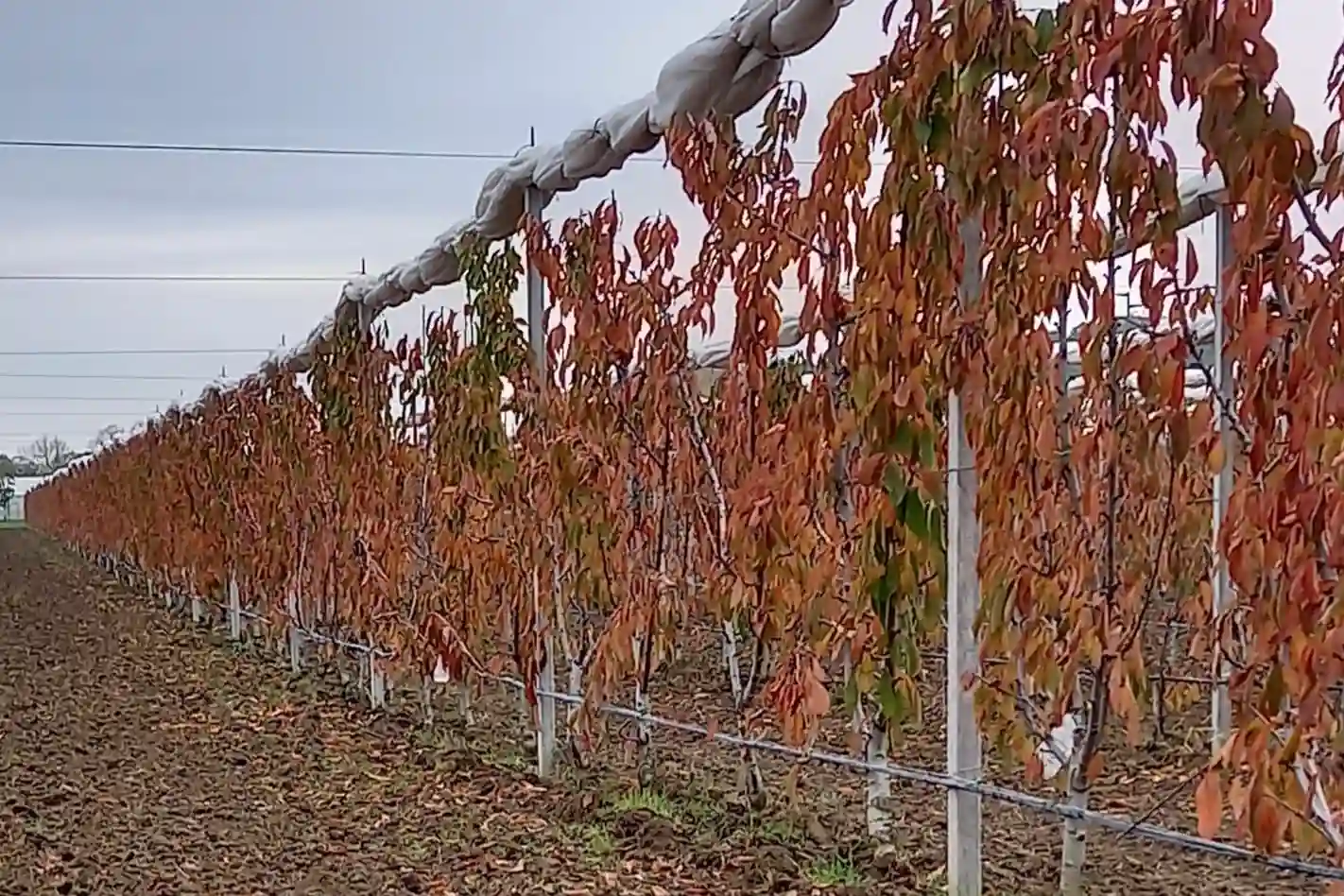
Wild cherry (Prunus avium L.) is a forest tree species of considerable economic and ecological importance. It is valued not only for its high-quality wood, characterized by excellent mechanical and aesthetic properties, but also for its key role in forest ecosystems, where it provides food for numerous bird and mammal species.
However, the conventional propagation of this species is often complex and inefficient. The availability of viable seeds is irregular and subject to annual fluctuations, while germination and early growth processes are generally slow and require environmental conditions that are difficult to control.
In this context, the micropropagation of selected elite genotypes emerges as the most effective strategy for producing high-quality seedlings intended for reforestation activities, the creation of clonal seed plantations, and the conservation of valuable genetic resources.
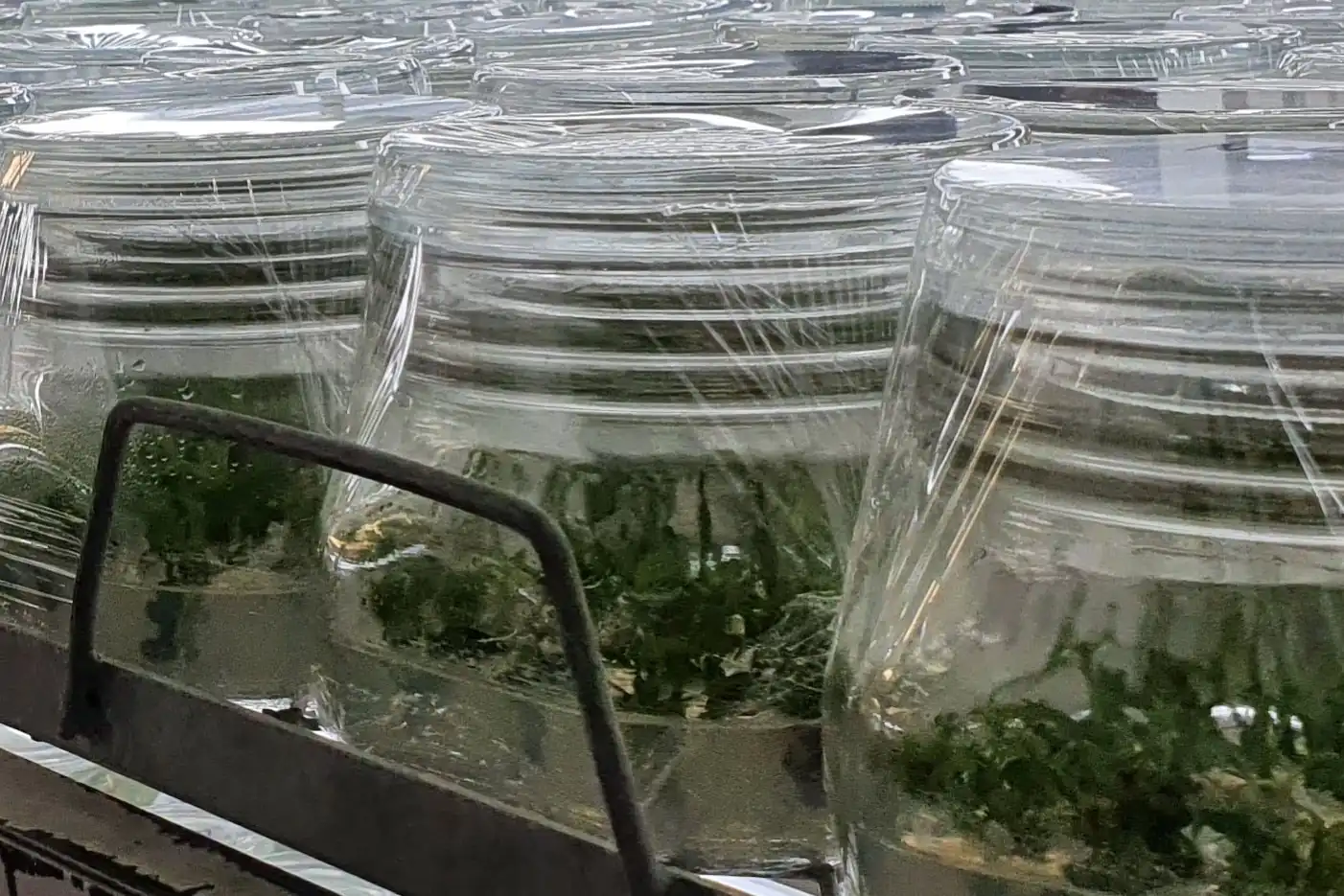
Micropropagation and elite genotypes
The ability to rapidly multiply individuals with specific desirable traits represents a significant advantage for breeding programs and for the sustainable management of forest resources. The European Network for Innovative Woody Plant Cloning is a network that brings together researchers working on this topic, and during its third conference, “Trees for the future: Cloning and beyond,” a study was presented with the primary objective of evaluating the effect of three new synthetic CKX inhibitors on shoot development in an elite wild cherry genotype.
Cytokinins play an essential role in regulating plant growth and development; these plant hormones are involved in numerous physiological processes, including cell division, shoot formation, and the determination of plant architecture. The endogenous levels of these molecules are largely regulated by the enzyme cytokinin oxidase/dehydrogenase (CKX), which is responsible for their degradation.
The use of synthetic CKX inhibitors makes it possible to reduce this degradation, leading to an increase in internal cytokinin concentrations and, potentially, an improvement in meristematic activity and shoot development.
Results and implications
The results obtained showed significant differences among the treatments tested. In particular, the combination of the three compounds with two different concentrations of the cytokinin 6-(γ,γ-dimethylallylamino) purine (2iP) resulted in a noticeable increase in leaf and shoot biomass in the explants. This suggests that these molecules may positively influence in vitro growth, promoting proliferation and vigor of plant tissues.
These findings contribute to expanding current knowledge on the use of CKX inhibitors in the micropropagation of wild cherry and open new perspectives for optimizing in vitro propagation protocols.
The integration of such compounds could indeed improve the efficiency of culture systems, shorten production times, and ensure a larger number of healthy and uniform plants.
Future perspectives
Overall, the application of these innovative approaches may prove valuable in supporting the spread and enhancement of this forest species of great interest.
Fonte: Bogunović, Sanja Preliminary results on the effect of CKX inhibitors on shoot development in wild cherry micropropagation // Book of Abstract - 3rd Conference of Cost ACTION CA21157 Trees for the future: Cloning and beyond. Coimbra: Cost ACTION CA21157, 2025. str. 73-73
Image source: SL ruit Service
Melissa Venturi
University of Bologna (IT)
Cherry Times - All rights reserved