Cherry growers in the Yakima Valley and Northwest region are harvesting between 16.5 and 17 million 20-pound (9.07 kg) boxes this year, roughly 2 million boxes below the predicted crop.
However, that might not be a bad thing financially, as demand for cherries has been solid and translated to better and more consistent prices, officials with the Northwest Cherry Growers say.
When the growers held their annual five-state meeting in May, the 2026 cherry crop for the Northwest region was estimated between 18.4 and 19.2 million boxes.
By early August, the group estimated roughly 16.75 million boxes had been harvested, with the last of the cherry crop perhaps pushing it close to 17 million.
Cherry crop
“Ultimately, the crop turned out to be a good-quality crop, but the overall volume was lower than expected,” Karley Lange, director of domestic promotions for Northwest Cherries, told the Yakima Herald-Republic.
“But a shorter crop can help bring supply and demand into better balance,” she added. “We are hopeful that as growers begin to see their returns from this season, they will be better than what they have experienced over the past four to five years.”
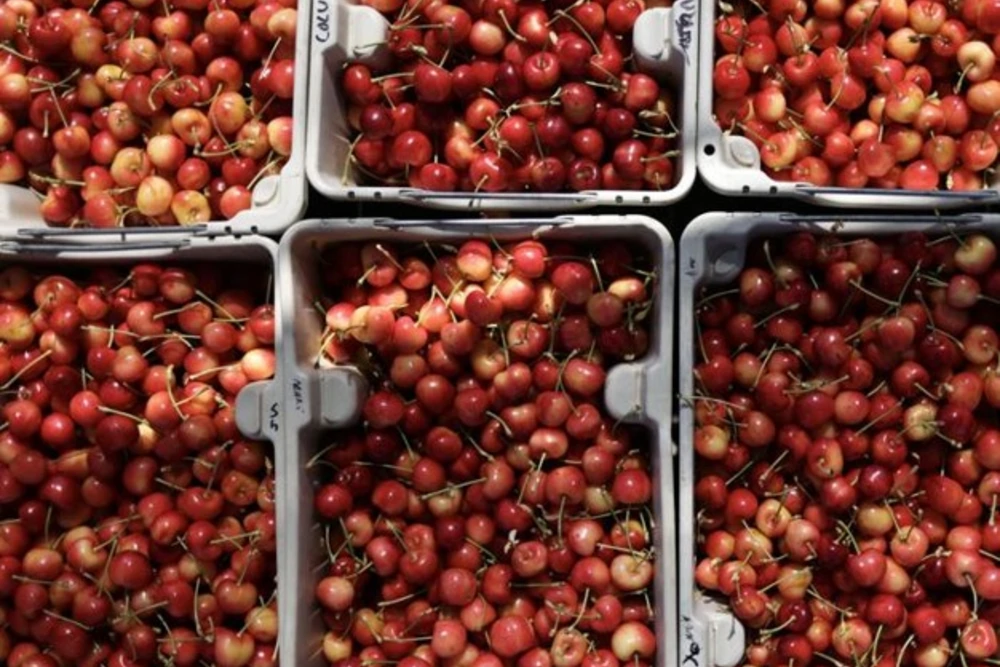 Bins of Rainier cherries are arranged in an orchard Wednesday, June 10, 2026, in Wapato, Washington. Evan Abell / Yakima Herald-Republic
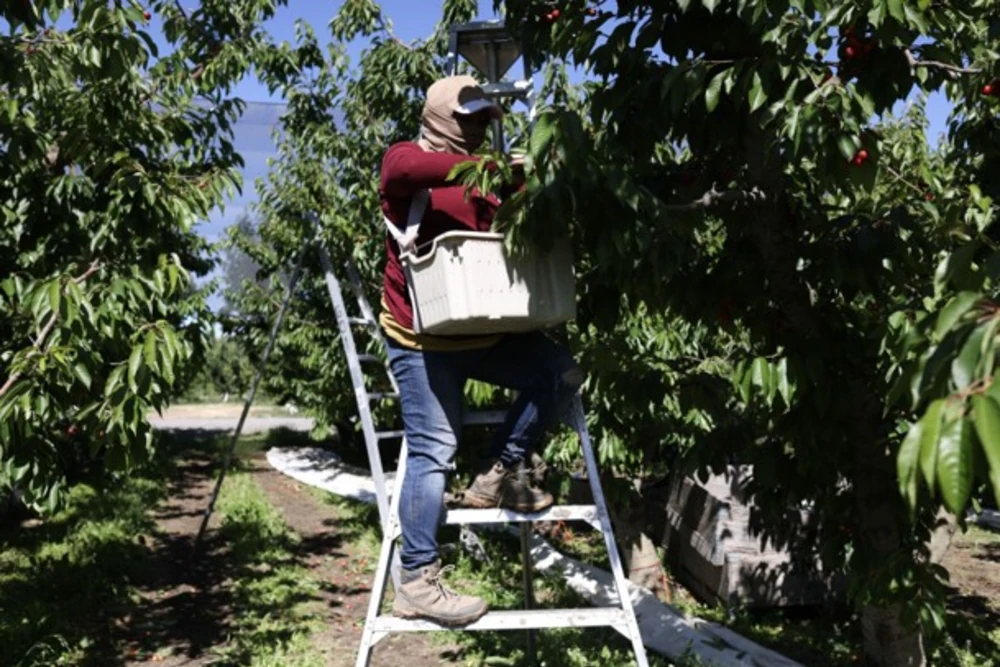 A worker picks Rainier cherries Wednesday, June 10, 2026, in Wapato, Washington. Evan Abell / Yakima Herald-Republic
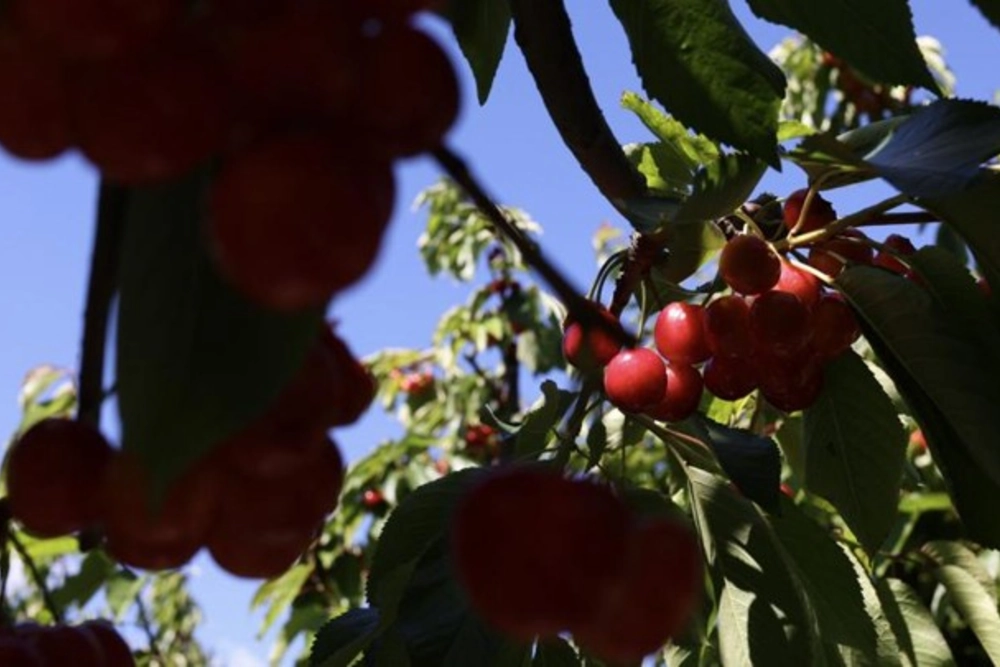 Rainier cherry trees grow in an orchard Wednesday, June 10, 2026, in Wapato, Washington. Evan Abell / Yakima Herald-Republic
Richard Dahlin of Dahlin Farms near Zillah has roughly 50 acres (20.23 hectares) of cherry trees. While there were some frost problems in March, his orchard used a pollen applicator on the trees for the first time this year and that helped with the 2026 crop.
“We were right around our five-year average (for production),” Dahlin said. “But the prices seemed to hold up better this year.
“I think we had a good cherry year overall,” he added. “We can a lot of the late varieties and Bings, so that’s a set price. We’ll have a better idea of things financially by early October.”
Drop in Rainier production
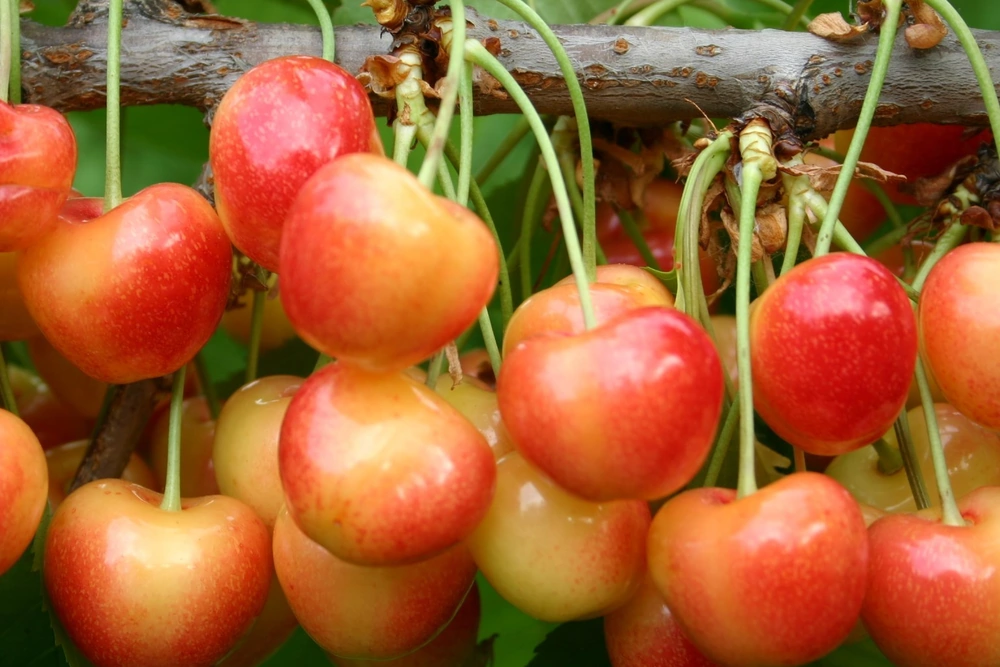
One specific area that saw a dramatic decline from previous years was Rainiers, the Northwest Cherry Growers reported.
Although it’s not a final number, as of Aug. 12, there were 1.1 million 15-pound (6.80 kg) box equivalents of Rainiers shipped, compared with 2.3 million in 2025 — a 52% decline, Lange said.
She noted this year’s Rainier production is similar to 2022, which saw a short overall cherry crop in the Northwest and a Rainier crop roughly the same size as this year.
Weather and volumes
“The primary reason for the lower volume in both 2022 and 2026 was the weather,” Lange said. “The spring freeze had a significant impact on early varieties like Rainiers, and depending on the growing region, growers also experienced wind and rain damage.”
She also noted that Rainiers are a particularly sensitive variety of cherry, with a thin skin more susceptible to weather-related damage.
Rainiers have a distinctive red and yellow appearance that is a big part of their appeal to consumers, Lange said, so any cosmetic damage that affects coloring can determine whether growers pick them.
Dahlin, the Lower Yakima Valley grower, said his Rainier crop was “fairly decent” this summer.
Rainier production
“I noticed there was a lack of Rainiers (from elsewhere) … we had no trouble finding buyers this year,” Dahlin said.
The 2022 and 2026 Rainier production dips are the lowest amounts of production among Northwest growers since 2009, with more than 2 million boxes shipped seven years during that time frame.
Although there has been a gradual decline in acreage of Rainier trees and production since 2020, Lange said this year’s short crop was primarily due to weather rather than a change in consumer demand.
“Growers are continually making decisions about varieties based on production risk, labor cost, packout, returns and changing growing conditions,” she said. “But Rainiers remain an important and very popular variety.”
A seasonal fruit
Although some cherries are sent to packing facilities, the majority of the Northwest crop is sold fresh — mostly between June and August. That makes them unique among Washington state fruit crops, noted Mac Riggan, vice president of sales and business development for Chelan Fresh.
“Cherries are that rare item anymore that are still seasonal,” Riggan said at the Washington State Tree Fruit Association’s annual meeting in Wenatchee. “There’s a pent-up demand (because) they’re only available for 10 to 12 weeks.”
Jon DeVaney, president of the Washington State Tree Fruit Association, said earlier this year that a crop closer to the region’s five-year average of 19.2 million boxes would help with prices and perhaps boost profits for cherry growers.
Last year’s Northwest cherry crop was 23.6 million boxes. Another factor with pricing is the production timeline for cherries, and how it corresponds with fruit from other areas, such as California.
Harvest timing
Timing of the California cherry crop was an issue for local growers in the 2023 season, where the size and later peak of California’s cherry shipments kept Northwest growers’ healthy crop off grocery store shelves until after July 4.
The 2023 glut of California cherries, and their dominance of regional and national grocery store produce departments, left an estimated 4 1/2 to 5 million boxes of cherries that were grown but not picked in the Northwest that year, former Northwest Cherry Growers president B.J. Thurlby said.
This year, warmer-than-usual spring temperatures were observed throughout the West, putting both California and Northwest cherry production about two weeks ahead of the five-year average, Northwest Cherries reported.
Data for this year shows daily shipments of Northwest cherries began in the final week of May, peaked in late June and was winding down by mid-August. The peak shipments of Northwest cherries usually occur around the July 4 holiday.
JOEL DONOFRIO
Yakima Herald-Republic
Cherry Times - Tutti i diritti riservati