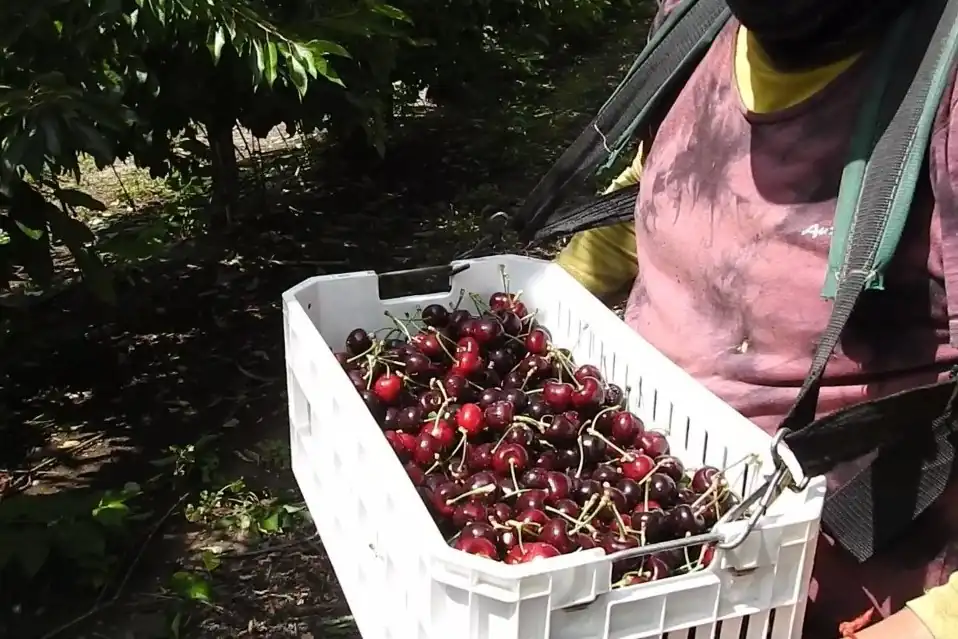
The global production of cherries for the upcoming season is expected to be 4.958 million tons, reflecting a new record for global harvest of cherries. This figure represents a 1% growth year-on-year and a 62% increase compared to harvest numbers from a decade ago.
The data was released in the latest report from the United States Department of Agriculture (USDA) published yesterday, Tuesday, September 17. The official report specifies that conditions in China, Chile, the European Union, and the United States have led to production increases that have more than offset the reduction in Turkey's harvest.
Exports are projected at 759,000 tons, nearly matching last year’s record volume, thanks to increased shipments from Chile and a decline from Uzbekistan and Iran.
In another part of the document, the USDA states that Turkish production will decrease by 48,000 tons, falling to 900,000 tons, despite favorable climatic conditions this year, but it is not expected to match last year’s exceptional climate and the record production achieved during that period.
Chinese production is expected to increase by 50,000 tons, reaching 850,000 tons, despite drought conditions in Shandong, the main cherry-producing province. The increase in cultivated areas and favorable growing conditions in other regions support the ongoing growth of supply in the sector. Imports are expected to rise by 7%, reaching 415,000 tons, due to increased production in Chile and the United States.
At this point, the USDA specifies that, thanks to the simultaneous growth of production and imports, domestic consumption of cherries in China has more than doubled over the last six years and is expected to reach 1.3 million tons for the 2024/25 season. On the other hand, the study asserts that EU production will increase by 10,000 tons, reaching 715,000 tons, thanks to recovery from last year.
China: The Engine of Trade
Fresh cherry exports from Chile have quadrupled over the last decade, with over 90% of this exportable supply destined for the Chinese market. According to the USDA report, Chilean exports to the Asian giant accounted for nearly half of the global trade in fresh cherries by volume in the 2023/24 campaign (from November 2023 to October 2024 in the Southern Hemisphere), estimated at 375,000 tons.
With the trends in Chilean production and projections for domestic consumption in China, it is likely that this bilateral relationship will continue to play an important role in the global trade of fresh cherries.
Chinese production of fresh cherries has steadily increased in recent years, reaching 850,000 tons in the 2023/24 season (from April 2023 to March 2024 in the Northern Hemisphere), but it has not kept pace with the domestic demand for consumption.
Imports from Chile provide a significant off-season supply from December to February, coinciding with the peak demand around Lunar New Year. The United States is the second source of cherry imports in China, but the U.S. market share is limited by high tariffs and seasonal competition with domestic Chinese production.
Source: Más Producción
Image: China Daily
Cherry Times - All rights reserved