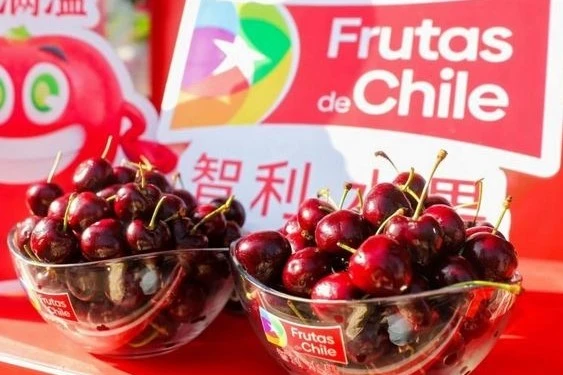
A brand new type of cherry, known as Selection 21 or S-21, has been officially presented to the public as a highly promising prospect developed by the Agricultural Research Institute of Chile (INIA) and the biotechnology coalition BioFrutales under the Cherry Genetic Improvement Program.
S-21 represents the very first cherry variant created exclusively in Chile and was designed by placing special emphasis on early ripening and extended postharvest duration, aiming to ensure a smooth export process to China, which is the main destination for cherries from Chile. Efforts have also been devoted to size, establishing a minimum requirement of 28 millimeters, as well as a rich taste and high yield, no less than 18 tons per hectare, as indicated by BioFrutales director Rodrigo Cruzat.
Over the past 14 years, BioFrutales has analyzed as many as 50,000 distinct cherry trees in its experimental fields in the Coquimbo and O'Higgins regions. About 40 of them made it to the intermediate selection stage, but only seven were selected for the final stage. With the unanimous approval of INIA's Regional Committee for the Introduction of New Varieties, S-21 will move on to the registration process with the Chilean Agriculture and Livestock Service, preparing to become a commercial variety next year. Official planting is scheduled for 2025.
S-21 received approval in Chile's central Coquimbo region due to its ability to withstand high temperatures during the winter months. Its suitability has also been verified in south-central Chile, demonstrating growth potential in the Valparaiso, O'Higgins and Maule regions.
Read the full article: Produce Report
Image: Asiafruit
Cherry Times - All rights reserved