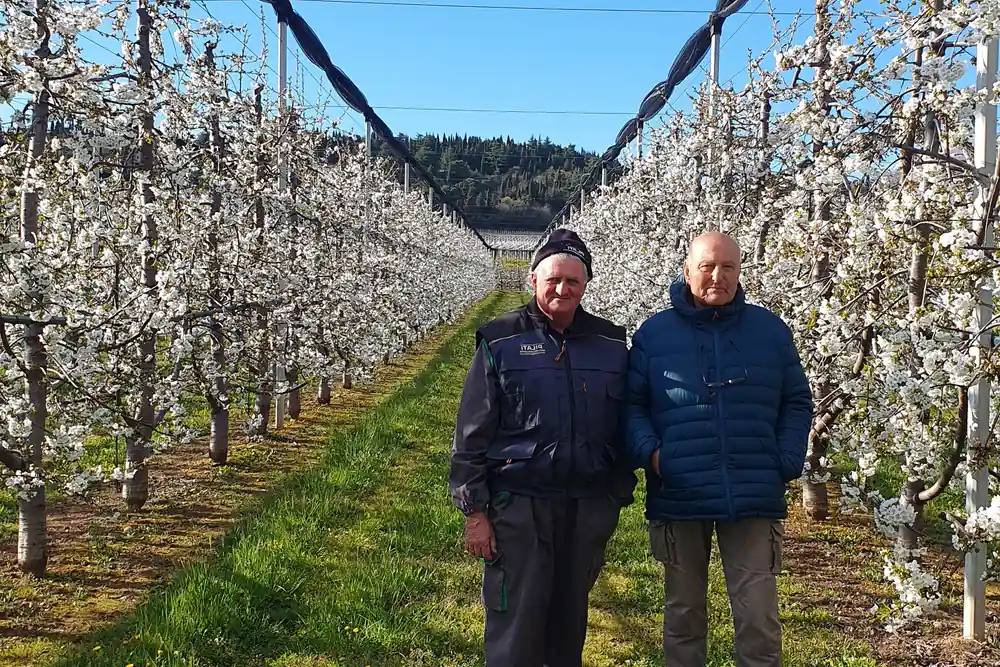
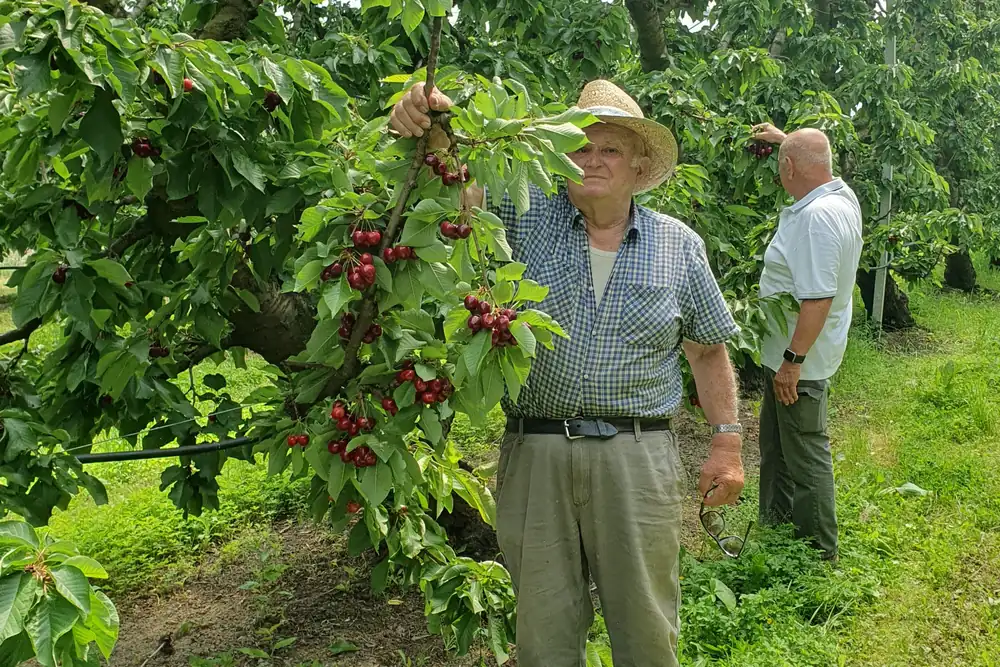
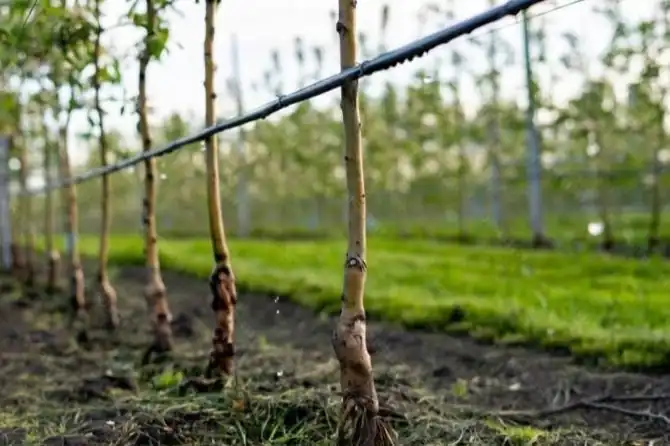
In Sammichele di Bari, the 3rd National Cherry Conference – “Cherry growing today: challenges and perspectives” – was held. Now in its third edition, the event confirms itself as a key reference point for the technical and strategic analysis of the Italian cherry supply chain. The high level of participation highlights a sector highly sensitive to evolving dynamics, yet still lacking a shared systemic vision capable of guiding its development.
In this context, the conference took on the role of a platform for discussion, ensuring a cross-cutting analysis across the entire cherry supply chain. The debate covered all levels of the sector: from political to scientific, technical, entrepreneurial, and finally commercial.
This integrated approach made it possible to analyze not only sector-specific challenges, but above all the functional discontinuities and coordination gaps among the different levels of the supply chain. During the discussions, structural critical issues emerged, along with precise technical insights.
On varietal innovation
From a varietal innovation perspective, there is a clear convergence towards the introduction of cultivars capable of meeting higher quality standards aligned with modern retail requirements.
In particular, the identified development lines include:
increasing shelf life, with minimum targets ranging between 20 and 30 days, essential for logistics management and expansion into non-local markets;
improving organoleptic characteristics, with particular focus on firmness and aromatic profile;
achieving large and uniform sizes, with average diameters above 28–30 mm, now considered the market standard;
introducing new elements into the varietal landscape, including bicolored cultivars, which until a few years ago were marginal in breeding programs.
On the technical and production side
Alongside these directions, there is growing interest in low chilling requirement varieties, which are strategic in relation to the effects of climate change on chill hour accumulation in traditional growing areas, and to enable partial production de-seasonalization.
On the technical-production front, rain covers and multifunctional protection systems represent a now well-established solution for mitigating climate risks (especially cracking, rainfall, and wind events during ripening) and improving the commercial quality of the product. However, their adoption remains limited compared to their application potential.
In this context fits the CSR Puglia call for the implementation of protective covers in new cherry orchards, whose development was critically analyzed during the conference. The measure, introduced in the first edition and formalized in the second, was further discussed in the third edition in light of the issues that emerged.
The measure and participation data
With the involvement of regional representatives aimed at improving accessibility and operational effectiveness, participation data remain particularly low: around 80 applications submitted against more than 18,000 hectares of cherry-growing area in Puglia, and just over 6 million euros spent out of an allocation of approximately 14 million.
The resulting picture is that of a sector equipped with already validated technical solutions, but struggling to implement them in practice. Fragmentation of approaches and weak integration among supply chain actors continue to represent a major limitation.
Particularly significant, in this context, was the testimony of a farmer who initiated a large-scale farm conversion process, transforming approximately 14 hectares from table grapes to an intensive covered cherry orchard. A practical case demonstrating the technical and economic feasibility of change.
Integration and outlook
Summarized in the concept “it can be done,” but at the same time highlighting an essential condition: innovation is sustainable only if supported by proper market positioning. Integration with organized retail operators and specialized commercial structures is in fact a key enabling factor.
Without an effective connection to demand and consistent economic recognition, innovation risks remaining an end in itself, without generating real value along the supply chain.
The open questions therefore remain strategic: what development path for cherry growing in Puglia? To what extent can planning tools such as the CSR be made more effective? And above all, will it be possible to build a shared vision capable of integrating research, production innovation, and the market?
The message summarizing the entire event is as simple as it is demanding: innovate, do better, do it together. Everything else is not progress, just noise.
In Chile’s cherry orchards, the University of O’Higgins combines AI, LoRaWAN sensors, computer vision, hyperspectral imaging and 3D models to estimate yield, fruit size, ripening and microclimates, improving quality, harvest planning and agronomic decisions.
Chile faces increasing water scarcity, threatening its world-class fruit industry. Efficient irrigation and optimized crop nutrition are key to maintaining yield and quality in changing climate conditions. Explore practical strategies to face this challenge.
A German study compares mineral nitrogen in apple and sweet cherry orchard soils. Nitrate accounts for 83% in apple orchards, while ammonium reaches 58% in cherry orchards. The findings highlight crop-specific soil interactions and implications for nitrogen fertilization.
Cherry juice is gaining popularity among footballers and cyclists for its potential muscle recovery benefits. Rich in anthocyanins and polyphenols, research suggests it may help regulate inflammation and oxidative stress after intense exercise, supporting athletic recovery.