The research, published in the journal Plants, provides new insights into why the main cherry disease in Chile has become persistent and how to move toward more effective and sustainable orchard management.
The Agricultural Research Institute (INIA) has received an important international recognition with the publication of a scientific study in Plants, one of the world’s leading journals in plant sciences.
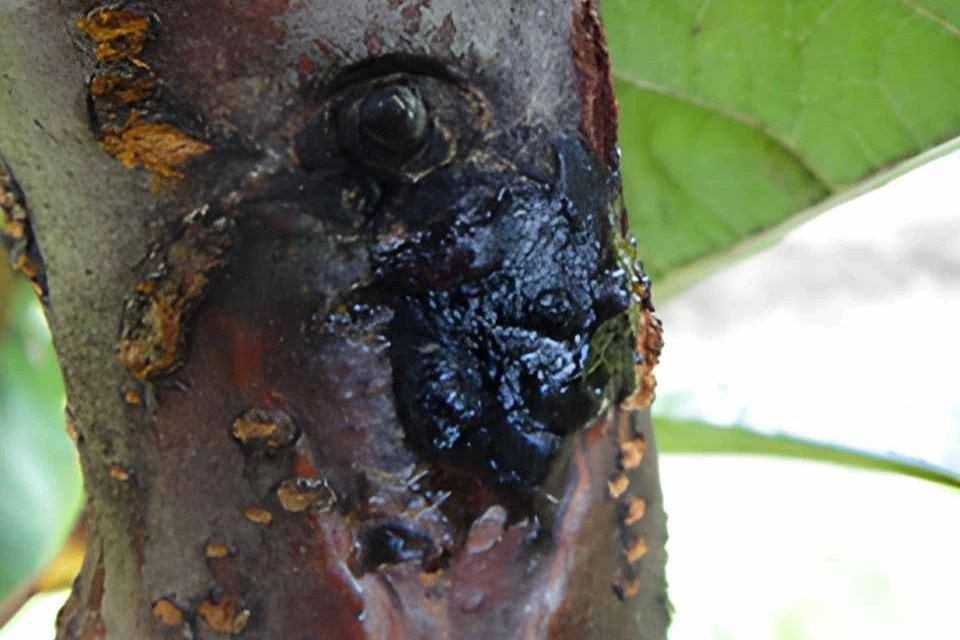
The research addresses bacterial canker of cherry, the most important disease affecting this crop in Chile, responsible for yield losses of up to 20%.
The study analyzed samples of the bacterium Pseudomonas syringae pv. syringae (Pss), the causal agent of the disease, collected from orchards in the country’s main fruit-growing regions.
Pathogen adaptation
The study demonstrated that this pathogen is not simply an external introduction, but has adapted to the specific agro-climatic and management conditions of Chilean fruit production.
This adaptability helps explain why the disease remains difficult to control in orchards.
"Publishing this work in a high-level scientific journal is highly relevant, but the most important aspect is that it allows us to better understand bacterial populations in Chile and move toward more effective management strategies aligned with our production reality," says Dr. Boris Sagredo, researcher at INIA Rayentué and lead author of the article.
Resistance to copper-based products
The research also revealed that some bacterial populations have developed increased resistance to copper-based products, widely used for disease control in fruit trees.
This finding reinforces the need to strengthen integrated management strategies that combine different tools, cultural practices, and a more rational use of available products.
The results of this work will help improve detection and monitoring systems for bacterial canker, support the selection of plant material with greater tolerance, and optimize field control strategies, contributing to a more resilient and sustainable fruit sector.
Research line and institutional support
The study is part of a research line that INIA has been developing continuously since 2017. It began with support from the Regional Government of O'Higgins and later received funding from the National Agency for Research and Development (ANID) through Fondecyt Regular Project No. 1231208.
The full article (in English) is available at the following link: https://www.mdpi.com/2223-7747/15/4/552.
About INIA
The Agricultural Research Institute (INIA) is Chile’s leading institution for agricultural research, development and innovation in the food sector.
Affiliated with the Ministry of Agriculture, it has a nationwide presence and a team of over 1,000 highly qualified professionals.
Each year, it carries out an average of 400 projects across five strategic areas: Climate Change, Sustainability, Future Foods, Emerging Technologies, and Capacity Building.
These initiatives contribute to the country’s sustainable agricultural development, creating value and providing innovative solutions to farmers, strategic partners and society, generating a social return on investment of between 15% and 25% for every peso invested in each project.
For over 61 years, INIA has been leading the sustainable agri-food development of Chile.
Source: Portal Agro Chile | Digital Press Group
Image source: Portal Agro Chile
Cherry Times - All rights reserved