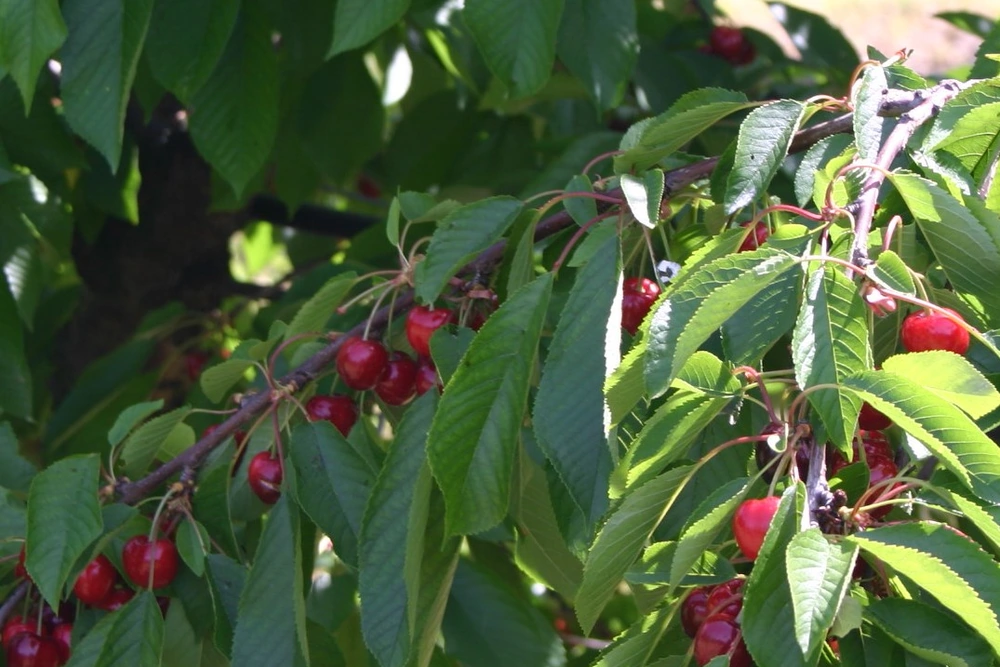
Bacterial canker disease of sweet cherry continues to be a persistent and economically important disease of sweet cherry in the Pacific Northwest. The pathogen primarily overwinters in cankers.
Removing cankers is essential to reduce the inoculum, especially in young orchards, where heading cut infection in the spring always leads to canker development as fresh pruning wounds provide direct entry points for the bacterial pathogens.
How far to cut
One of the most common questions growers ask is how far to cut below a visible canker to completely remove the canker and associated pathogens. A recent study found that bacteria can still be recovered 3 inches (≈7,6 cm) below visible canker but not 5 inches (≈12,7 cm) (Fig. 1), therefore, removing approximately five inches (≈12,7 cm) below the visible margin of a canker during hot/dry conditions can effectively remove the pathogen from further infection and limit disease spread during pruning.
In addition, allowing pruning wounds to dry and heal before the onset of cool, humid, or wet conditions is an effective cultural strategy for reducing infection risk. It is also beneficial if pruning tools are sanitized after every cut as pruning tools could transfer bacterial inoculum from infected to healthy tissues, leading to new infection.
Figure and findings
Photo of bacterial canker infected tissue (A) and bar graph of recovery rate on y-axis versus pruning margin on x-axis (B)
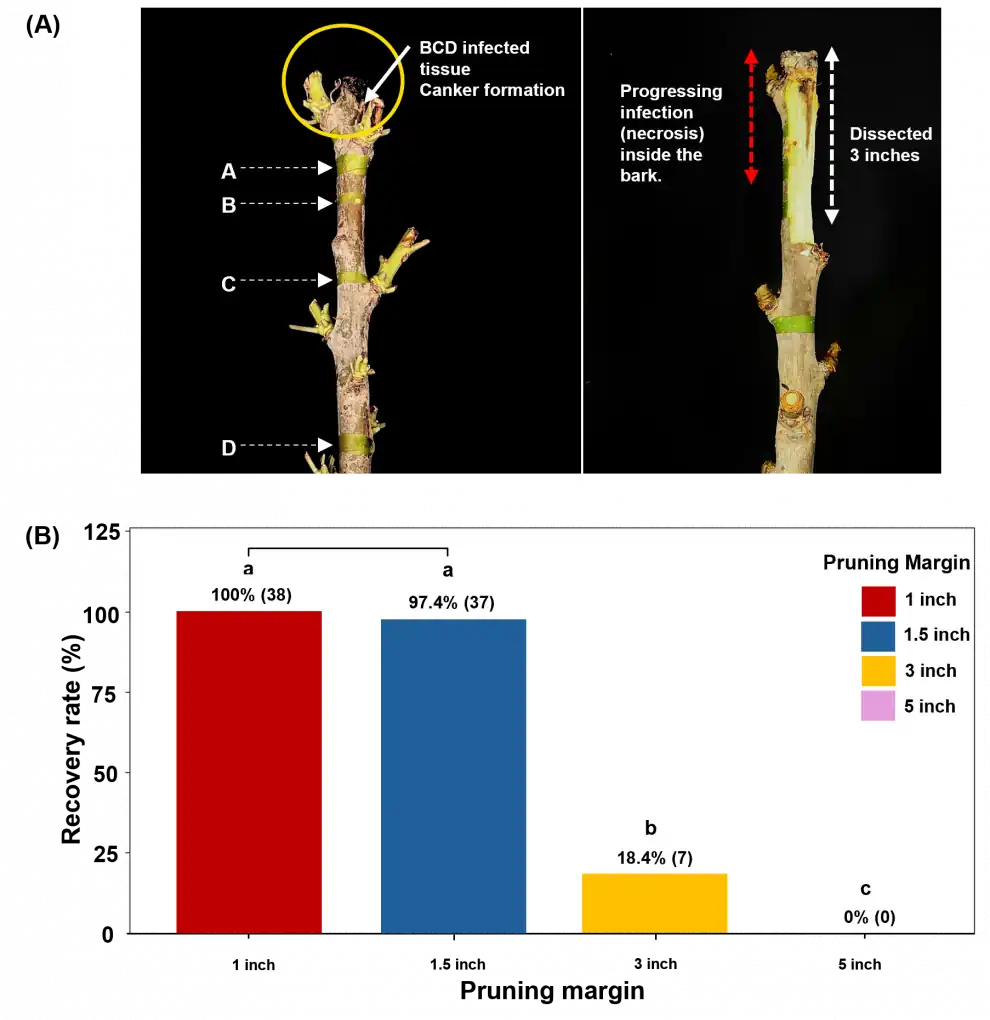 Figure 1. Recovery of Pseudomonas syringae pv. syringae (Pss) from sweet cherry shoots at increasing distances below visible canker symptoms. Tissue was sampled from four positions (A-D) located 1, 1.5, 3, and 5 inches (≈2,5; ≈3,8; ≈7,6; ≈12,7 cm) below the visible canker margin from 38 shoots infected with the Pss S2 strain.
Bacterial recovery was 100% at 1 inch (≈2,5 cm), 97.4% at 1.5 inches (≈3,8 cm), 18.4% at 3 inches (≈7,6 cm), and 0% at 5 inches (≈12,7 cm).
Sheersa Manna and Frank Zhao
WSU Plant Pathology
Source: Washington State Tree Fruit Extension, Fruit Matters, treefruit.wsu.edu
Image source: WSU
Cherry Times - All rights reserved