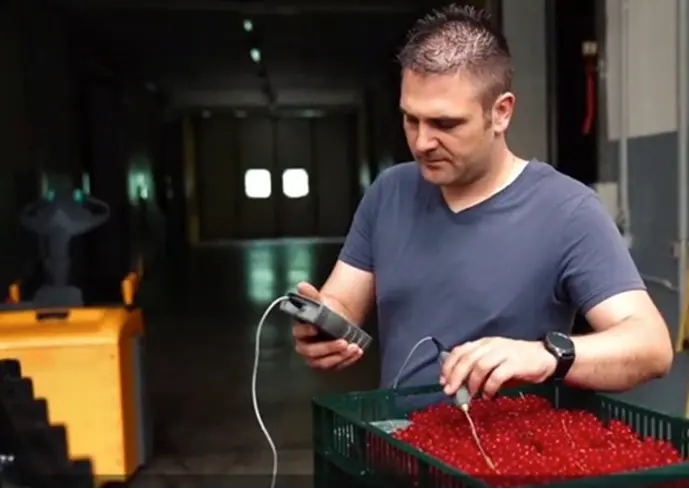
In the weeks leading up to Chinese New Year, the Clyde Orchards packhouse is a true hive of activity: rich red cherries freshly picked from the surrounding Central Otago orchards are brought in to be washed, packed and prepared, ready for export.
The auspicious coloring of these summer fruits – shades of deep plum and ruby red – makes them a highly sought-after delicacy to celebrate the Lunar New Year. "We’re packing fruit today that was picked this morning," explained Kris Robb, the manager of Clyde Orchards, based in Earnscleugh.
Roots of a family business
"We want to keep the cherries fresh, we want to keep the stems fresh, and we really want to preserve that crispness of the fruit before it goes into the cool stores." Clyde Orchards is a family business, founded by the Paulin family in 1921.
Today it is run by third-generation brothers Kevin and Raymond “Musso”, with the next generation beginning to join the business. The orchards cover more than 105 hectares across three different sites in Central Otago – the Earnscleugh blocks, some in Bannockburn near Cromwell and another in Bendigo.
Vertical integration model
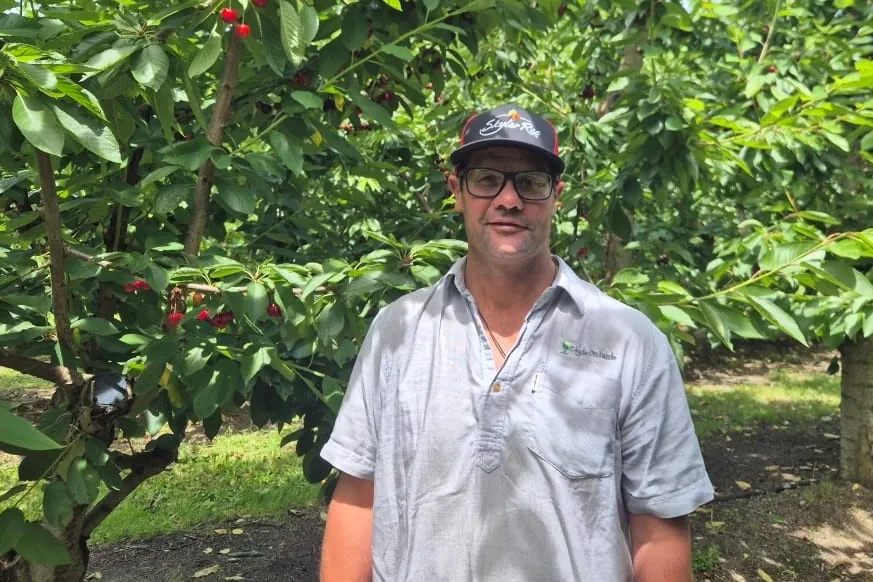
Robb explained that the company is "fairly unique" because it grows, packs, exports and markets all of its own fruit. "That vertical integration is probably a real driver of the company’s success and its future sustainability.
It really means we are masters of our own destiny. We focus on high-end niche products [so] that we can control how they are grown and when they are packed, how they are packed and how they are sold."
Climatic advantages
With hot, dry summers and cold winters, Central Otago is a region of climatic extremes. This makes it ideal for growing summer fruit varieties.
"Trees need colder temperatures in winter – it’s called winter chill – and they require a certain number of hours at low temperatures to understand that it’s time to wake up when spring arrives," Robb told Country Life.
"Then the hot, dry summer helps us with pest and disease control, but it also enhances those fruit flavors that everyone loves: those juicy, sweet tastes really come out in the heat."
Main products and export
The "core business" is cherries and flat peaches, he says. Clyde Orchards grows around 10 different cherry varieties across half of its orchards, meaning the harvest period lasts about eight weeks starting from mid-December.
These fruits are largely exported to markets such as Taiwan, China, Malaysia and Singapore. Clyde Orchards is also the only commercial grower, packer and marketer of flat peaches, or flattos, in New Zealand.
A challenging season
Central Otago’s rainy summer made this season particularly complex and delayed the cherry harvest by about a week. Robb says it is more important to allow the fruit to ripen properly and pick it when it is at its best, rather than rushing the process.
It hasn’t been exactly the harvest they hoped for, with volumes down, but it is far from a disaster and they are now shifting their focus to the arrival of peaches. Essential to the harvest is the contribution of more than 150 workers who assist with picking and packing.
Seasonal workforce
The team includes local residents, from high school students to retirees, backpackers from around the world and 20 ni-Vanuatu workers, part of the Recognised Seasonal Employer program, or RSE.
Clyde Orchards has participated in the program since its inception in 2007. It is a grower-led scheme designed to address labor shortages in the horticulture and viticulture sectors, while also aiming to support economic development in the Pacific. Many of Clyde Orchards’ workers have been returning for nearly 20 years.
The contribution of the RSE
Robb says they are "very, very efficient", averaging around 50 buckets per day. The five-person team currently picking cherries can harvest as much as 15 or even 20 new pickers, he told Country Life.
"It’s fantastic to have them here." This season, Clyde Orchards opened a new 10-room accommodation unit for the RSE team, inspired by a traditional Vanuatu community house.
Supporting communities
For RSE workers like Mike Mangau, it is an opportunity to support people in his home island of Tanna. "When we earn money here, it’s good to be able to take something home."
Mike has invested the money he earned in a coffee plantation and a beekeeping business, as well as building a local kindergarten. It can be difficult to stay away from home for so long: he arrived in October and will remain for the entire harvest period until May. "It’s good to come here and help someone so we can help our communities and other realities."
Source: Radio New Zealand
Opening image source: Gianina Schwanecke, Country Life
Gianina Schwanecke
Country Life
Cherry Times - All rights reserved