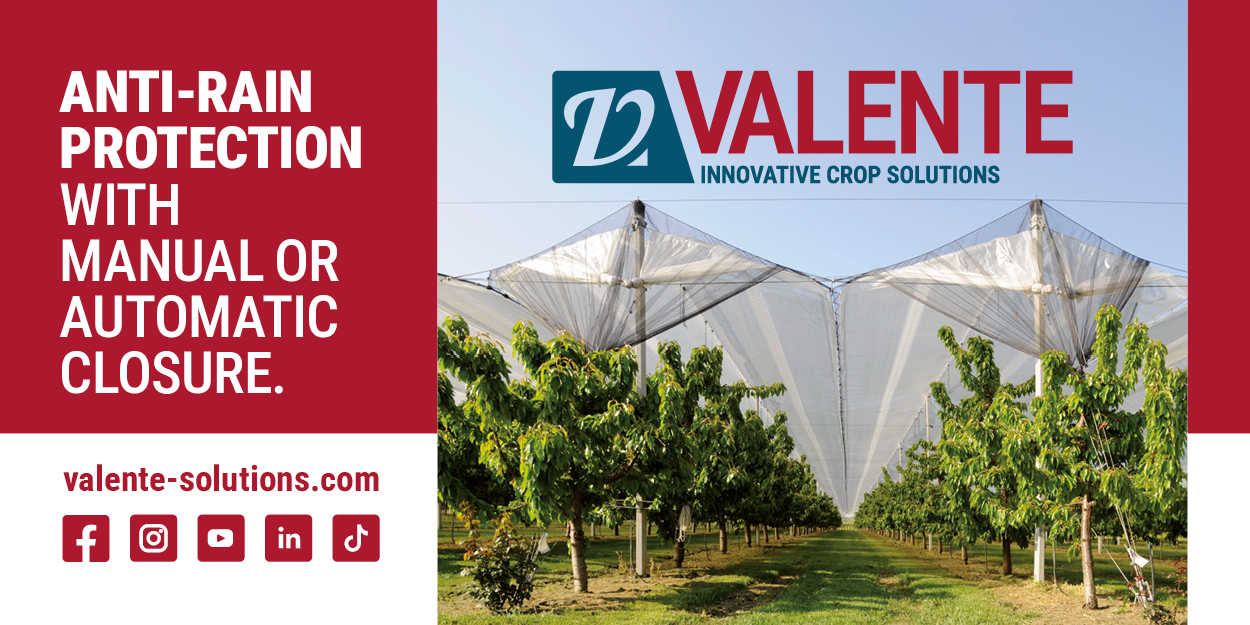
The experience of Abud & Cía. during the 2025 season confirmed that the use of cherry orchard coverings not only mitigates climatic risks but also serves as a production management tool capable of improving chill hour accumulation, homogenising bloom and significantly increasing yields.
Raimundo Cuevas, Technical Director of Abud & Cía., highlighted that the implementation of cherry orchard coverings has enabled better management of the climatic variability observed in recent years, especially in early-maturing varieties. He also stressed that they are essential for ensuring fruit quality and preventing commercial losses during critical stages.
This year, the cherry season began with significant climatic variability, in sharp contrast to the uniformity of the previous year. An unusually warm autumn and thermal instability hindered the onset of dormancy, resulting in irregular bloom and inconsistent responses to dormancy-breaking agents, particularly in high-chill varieties such as Santina.
Impact of early-season conditions
Added to this were frosts of varying intensity and rainfall during critical periods, further complicating the synchronisation of phenological stages and affecting fruit quality.
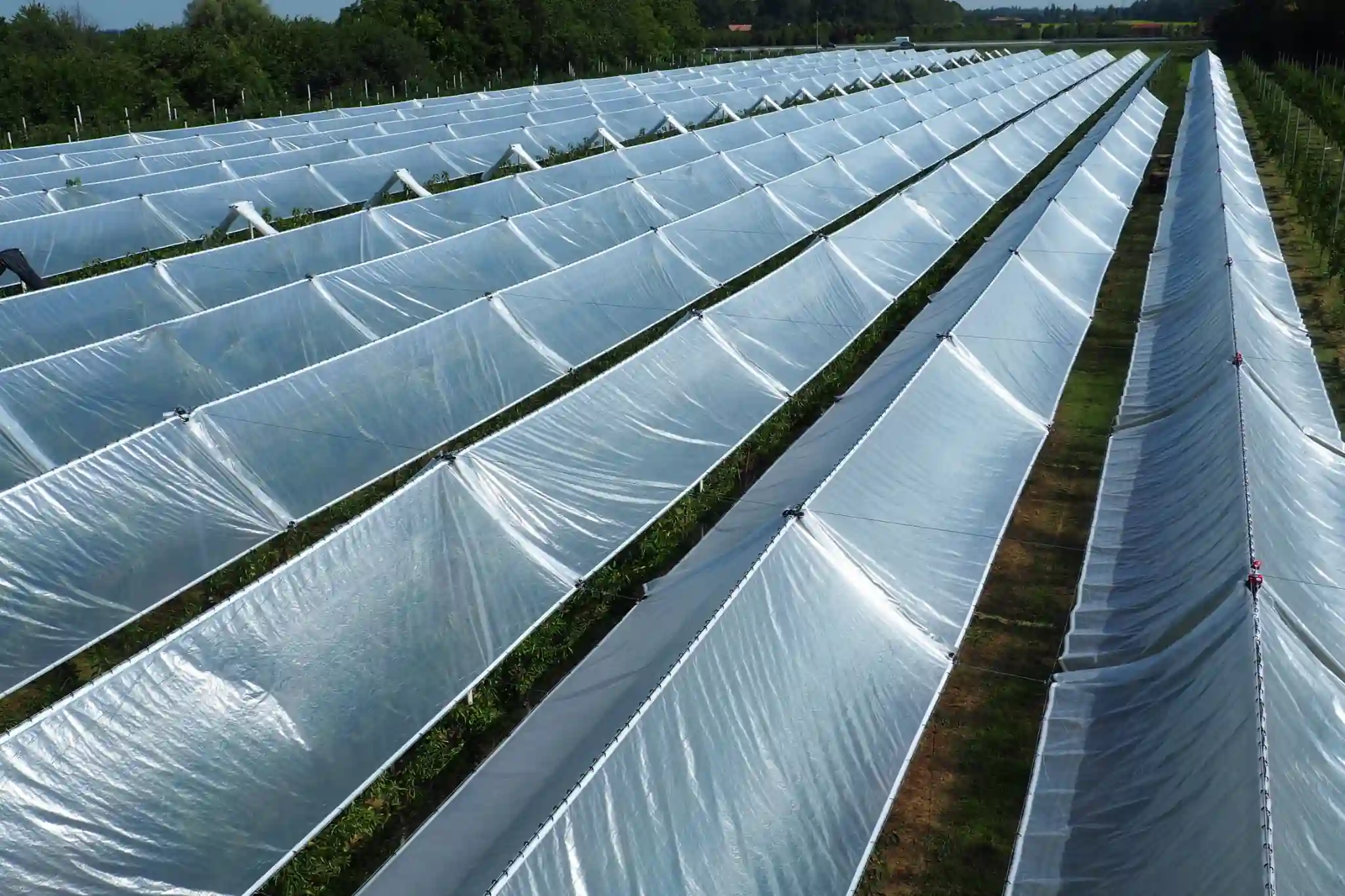
This early and heterogeneous scenario amplified the impact of the late-August frosts, which affected sensitive varieties during key developmental stages. In this context, protective coverings became a crucial tool, stabilising conditions, protecting vulnerable phases and compensating for the lack of uniformity in the growth cycle, thereby ensuring better yields in a particularly challenging year.
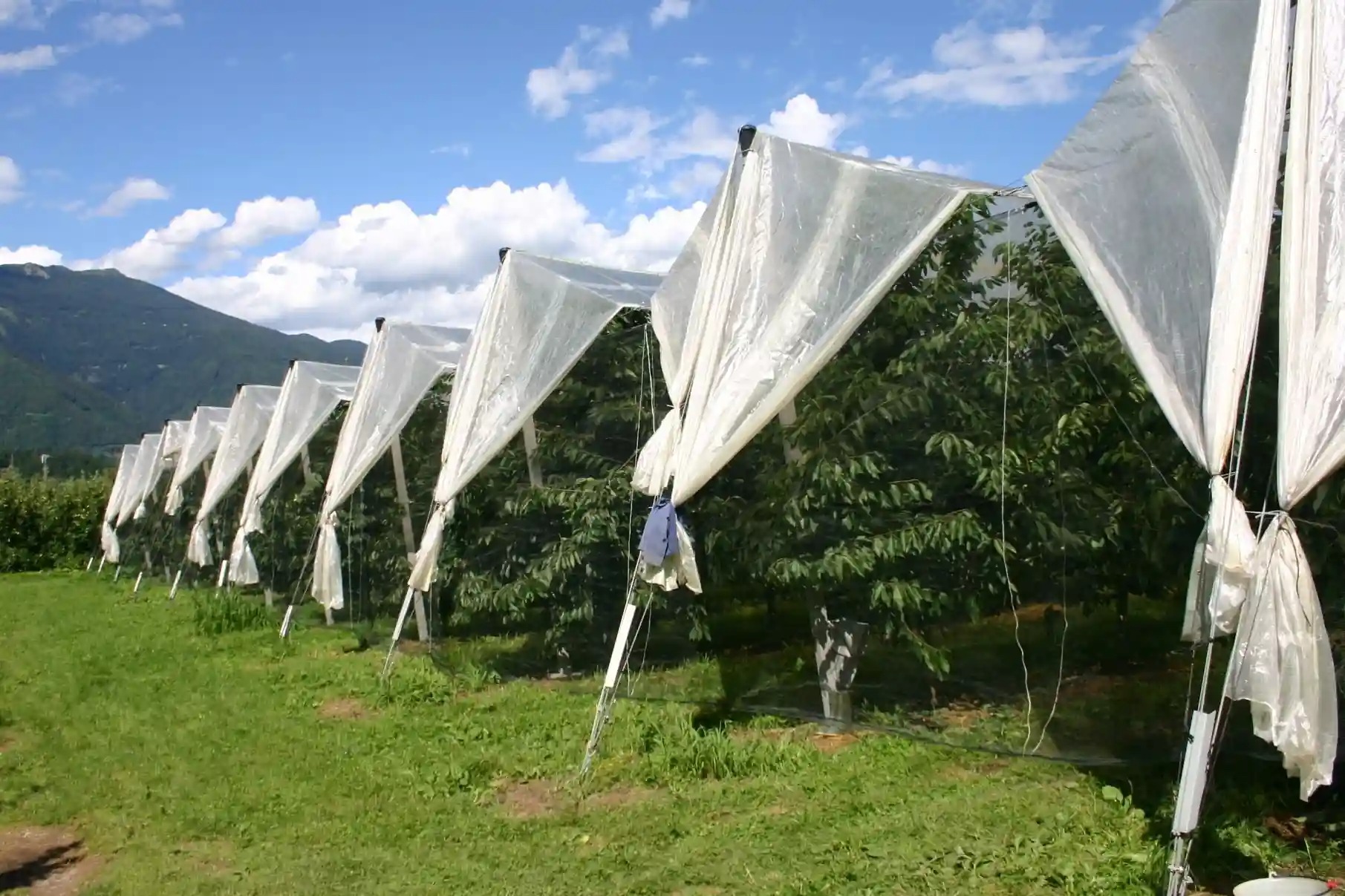 Image 1. Rain covers over cherry orchards
Protection against weather events
The coverings, highly effective against rainfall, light frosts and unexpected events, prevent fruit cracking in early varieties such as Santina, Nimba and Sweet Aryana, which are highly susceptible when rain coincides with periods of fruit sensitivity.
"Even when water is absorbed through the soil, the risk of cracking persists, compromising marketability," Cuevas explained.
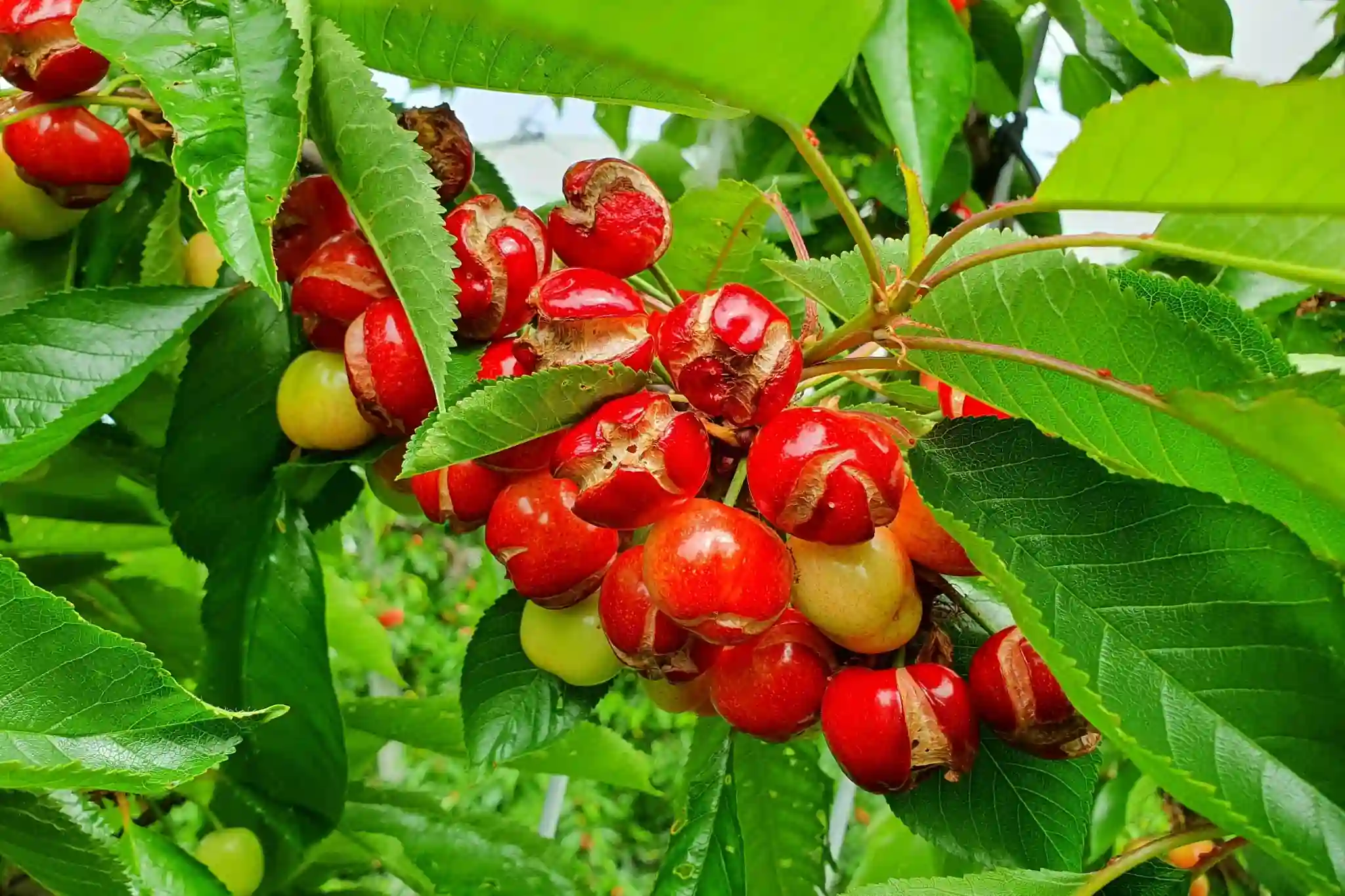 Image 2. Fruit cracking in cv Nimba
Additionally, the structures have proven effective in mitigating damage caused by light frosts (between 0 °C and -2 °C), providing additional protection during critical crop development stages.
Benefits for productivity
Beyond weather protection, the greatest contribution of the coverings this season stemmed from their ability to accumulate chill hours thanks to the shade generated in winter through the use of nets that rely on the same structure as the plastic cover. This management practice promoted a more uniform and better-distributed bloom.
Data from Abud & Co. showed conclusive results, such as productivity increases of 20% to 30% or more, along with more uniform and concentrated harvests that allowed for a single picking pass, unlike uncovered fields that required two or three.
The combined use of coverings and side closures, which create a controlled greenhouse effect, also allowed for harvest advancement of around seven days for most varieties.
This advantage is strategic in early-maturing areas with low chill accumulation, as earlier market access offers better prices and higher returns for the grower. According to Cuevas, in these scenarios, the investment in coverings is fully justified.
Moreover, the consultant warned that the management of perimeter closures is a critical factor, as keeping them closed for too long can compromise fruit firmness; therefore, they must be operated with precision and good timing.
Company profile
Abud & Cía. is a Chilean company specialising in technical consultancy and production management for high-value fruit crops. It integrates agronomic knowledge, technological innovation and fieldwork to optimise the performance and competitiveness of its growers.
With specialised teams and data-driven management, it develops solutions that address the growing climatic, productive and commercial challenges of the sector.
Abud & Cía.
Curicó, Maule Region, Chile
https://abudycia.com/
Opening image source: Valente Pali
Internal images source: SL Fruit Service
Cherry Times – All rights reserved