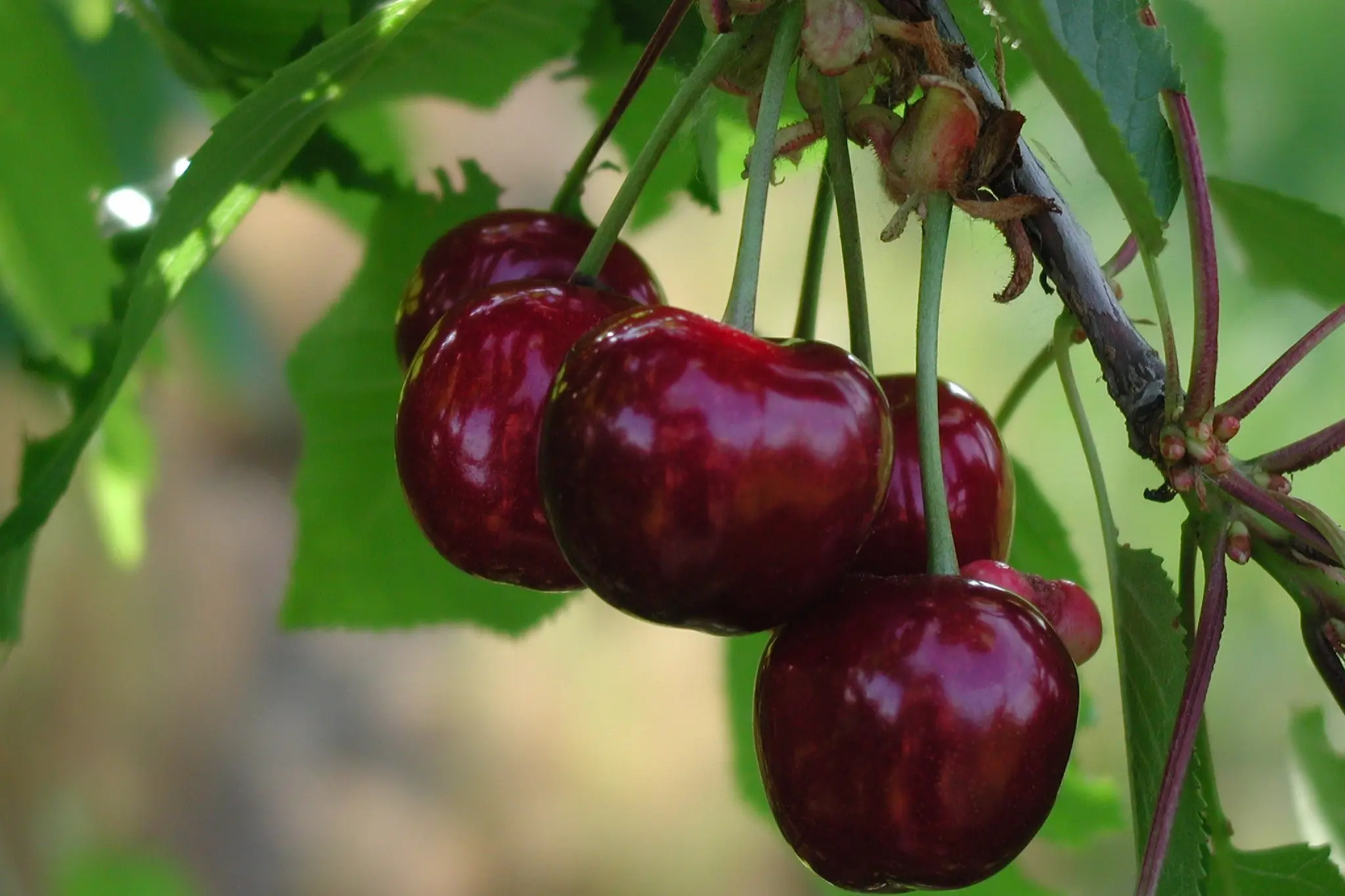
Fruit cracking is one of the main productive and commercial constraints in modern sweet cherry production, particularly under conditions characterized by intense and frequent rainfall events.
A recent study from China investigated the effect of pre-cooling on susceptibility to water-induced cracking in sweet cherries, providing useful applied insights for technicians and industry operators.
The study was carried out using two cultivars with contrasting cracking susceptibility: the cracking-tolerant “Jiahong” and the cracking-susceptible “Hongdeng”. Skin and flesh tissues were analyzed separately, integrating physiological, biochemical and gene-expression data.
Effect of pre-cooling
The results show that pre-cooling at 4 °C for 24 h prior to water stress drastically reduced cracking incidence, with reductions exceeding 50% in both cultivars and even surpassing 60% in the more tolerant cultivar (“Jiahong”).
This effect is not merely quantitative, but is associated with changes in the mechanisms involved in fruit mechanical resistance. From a cell wall perspective, cracking is closely linked to pectin degradation, particularly to an increase in the water-soluble pectin fraction (WSP), which has been widely associated in the literature with greater cracking susceptibility.
Pre-cooling significantly limited WSP accumulation in both the skin and flesh tissues, while maintaining higher levels of ionically and covalently bound pectins (ISP and CSP), which contribute to cell wall structural stability.
Role of flesh tissue and gene expression
In this context, the central role of the flesh tissue also emerges, as it appears metabolically more responsive than the skin and more strongly involved in the response to water stress.
At the molecular level, pre-cooling treatment altered the expression of key genes involved in cell wall remodeling, such as XTH, expansins (EXPA2 and EXPA8) and aquaporins (PIP2), which are generally associated with increased cell wall extensibility and water uptake.
In the cracking-susceptible cultivar “Hongdeng”, these genes were strongly upregulated during water stress, whereas pre-cooling reduced their expression, helping to limit cell expansion and the buildup of internal pressure.
Oxidative stress and antioxidant response
Another important aspect concerns the metabolism of reactive oxygen species (ROS). Pre-cooling activated the antioxidant system, leading to increased expression of enzymes such as superoxide dismutase and peroxidase, particularly in the flesh tissue.
This enhancement of antioxidant defenses helped to limit oxidative damage to membranes and the cell wall, thereby reducing structural weakening processes that favor fruit cracking.
Implications and conclusions
Overall, pre-cooling proved to be an effective, sustainable and low-impact strategy for reducing cracking in sweet cherries, by influencing cell wall metabolism, the regulation of water uptake and the control of oxidative stress.
These findings offer valuable perspectives for technical operators, both for optimizing postharvest management practices and for integrating pre-cooling as a preventive tool in high-risk seasons.
At the same time, the molecular evidence reinforces the concept that varietal selection and breeding strategies should consider not only skin characteristics, but also the key role of flesh tissue in determining resistance to fruit cracking.
Source: Wu, K., Xie, J., Wang, M., Guo, R., Zhang, Y., & Chen, C. (2025). Effect of pre-cooling on water-induced cracking of sweet cherry (Prunus avium L.). Journal of Food Measurement and Characterization, 19(11), 9080-9089. https://doi.org/10.1007/s11694-025-03571-5
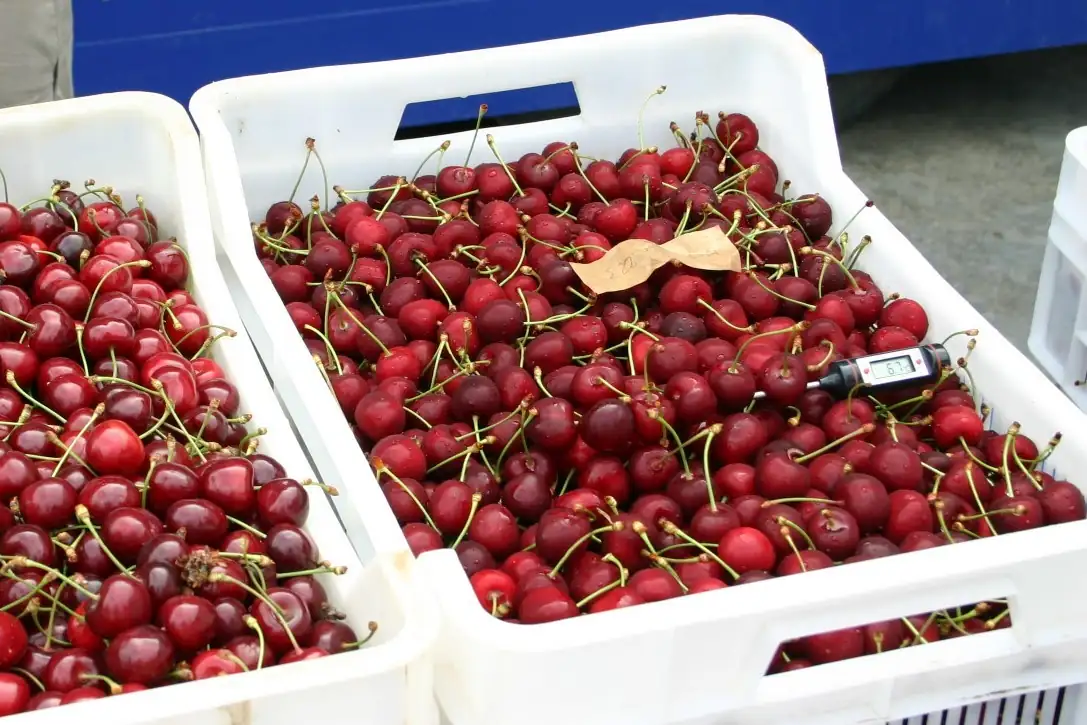
Image source: SL Fruit Service
Andrea Giovannini
University of Bologna (IT)
Cherry Times - All rights reserved