At Proyectos Integrales Johnson, we have identified five major “enemies” of fruit condition:
- Dehydration.
- Metabolism.
- Processing times.
- Pitting.
- The commitment of the people involved in the processes.
We believe that, before discussing solutions, it is essential to understand the origin of the problems. Only by understanding how and why they occur can we design truly effective strategies to reduce their impact.
Dehydration
Dehydration is the loss of water from the fruit, both from the cherry itself and from its herbaceous structures, such as the stem. Although the effects may differ, both problems have the same origin: the movement of water from the fruit into the surrounding environment.
Fruit permeability
Dehydration is a physical process related to the permeability of the epidermis. The greater this permeability, the greater the potential for water loss.
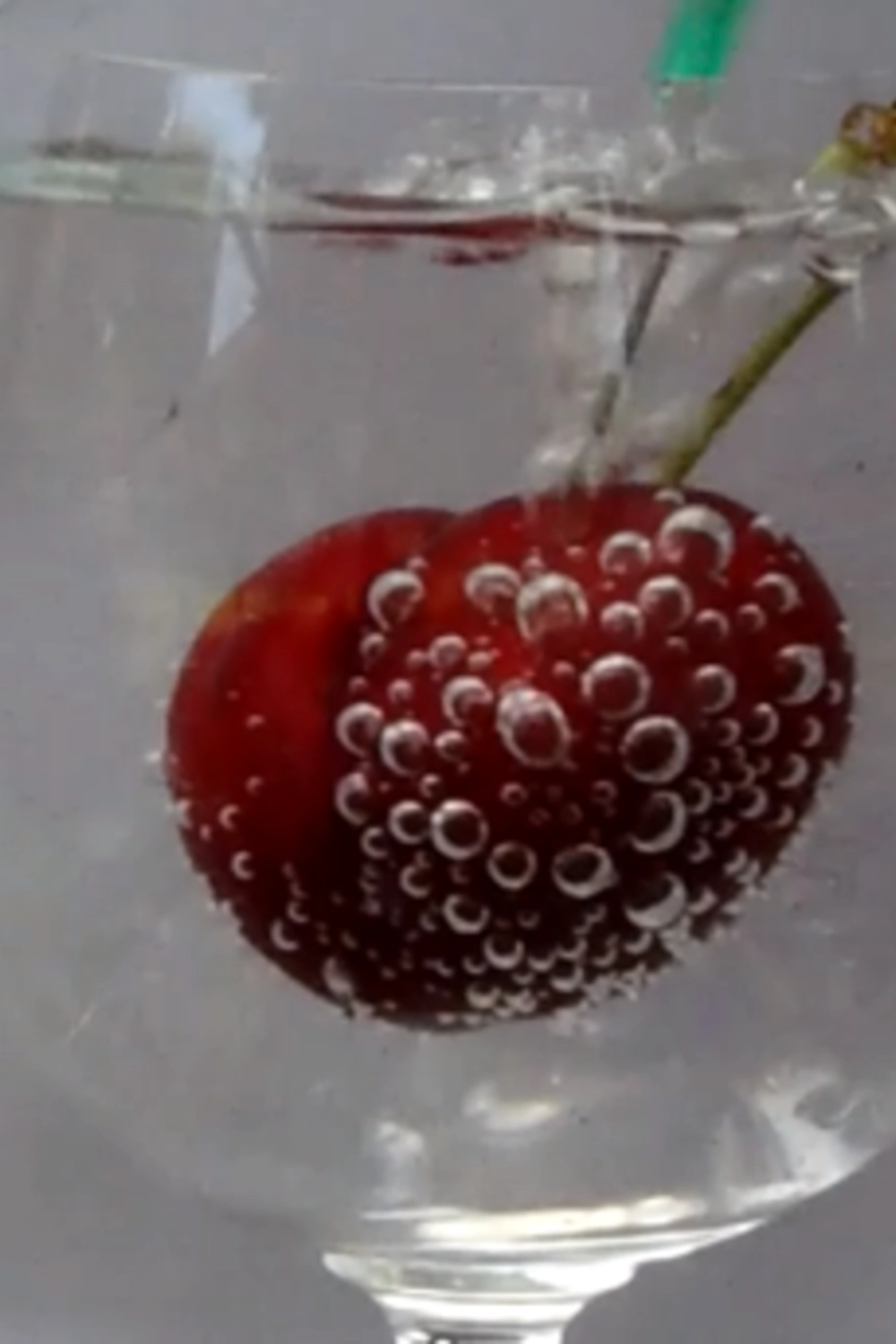 Figure 1. Cherry permeability demonstrated through an experiment in which a cherry is submerged in water while air is injected into it.
However, the fact that a cherry has a highly permeable epidermis does not necessarily mean that it will lose water. For dehydration to occur, certain environmental conditions must also be present. These conditions are related to the vapor pressure deficit (VPD).
The fundamental rule for dehydration to occur is that the fruit's vapor pressure (VP) must be higher than the VP of the surrounding environment. Otherwise, no water loss occurs.
What is vapor pressure deficit (VPD)?
VPD is the difference between the vapor pressure (VP) of the fruit and that of the surrounding environment. The difference between these two VP values is defined as VPD.
VP is calculated based on temperature (T °C) and relative humidity (RH%). The MUSTERS PsychroApp application can be downloaded to perform these calculations.
The greater this difference, the greater the rate of water loss. If the two pressures, that of the cherry and that of the surrounding environment, were to become equal (VPD = 0), dehydration would be virtually nonexistent.
This is the key to control: bringing the two vapor pressures closer together or making them equal. For this reason, the true control mechanism is not simply the technology itself, but the proper management of the vapor pressure deficit.
Variables that determine VPD
To control VPD and consequently reduce dehydration throughout the entire postharvest period, we need to control three main variables in the cherry handling process:
- Pulp temperature.
- Ambient temperature.
- Relative humidity of the surrounding environment.
In the upcoming newsletters, we will present some key actions for controlling each of these parameters.
For example, pulp temperature can be reduced by harvesting during the coolest hours of the day and carrying out rapid pre-cooling. These factors effectively modify VPD.
Dehydration is an asymptomatic process
Dehydration is an asymptomatic process: we cannot see water leaving the fruit and, as a result, we tend not to believe that the phenomenon is occurring or give it the importance it deserves.
It is not a phenomenon that causes immediate, visible “pain,” which is precisely why measurement is so important: it is essential to quantify what we cannot see.
In many cases, by the time the first visible symptoms appear, the damage has already occurred. For this reason, the first step must always be to understand the phenomenon and, based on this knowledge, develop the solution.
Experience indicates that working with VPD values close to or below 0.5 kPa can significantly reduce dehydration.
What happens when VPD exceeds 0.5 kPa for prolonged periods?
- Cherry weight loss.
- Stem browning.
- Loss of physical firmness.
- Cellular stress, accelerating senescence.
- Reduced postharvest shelf life.
- Reduced commercial value.
How can we reduce dehydration?
By modifying the three factors that accelerate it and targeting a VPD of 0.5 kPa:
- Pulp temperature: prevent it from increasing during processing and lower it as quickly as possible.
- Ambient temperature: reduce it.
- Relative humidity: increase it.
This is the “recipe”, which must be adapted to each production process. Each operation can decide whether or not to apply it, because the methodology and technology exist and have been validated by PIJ.
For example, when harvesting at night, these three factors are naturally controlled: ambient temperature and pulp temperature are lower, while relative humidity is higher.
The challenge is to reproduce these nighttime conditions during the day. And this can be done. Through the design of our humidified temporary storage systems in the field, we can literally “bring the night into the day”, maintaining more favorable conditions for the fruit during the waiting period.
Humidified temporary storage areas in the field and/or receiving areas at processing plants
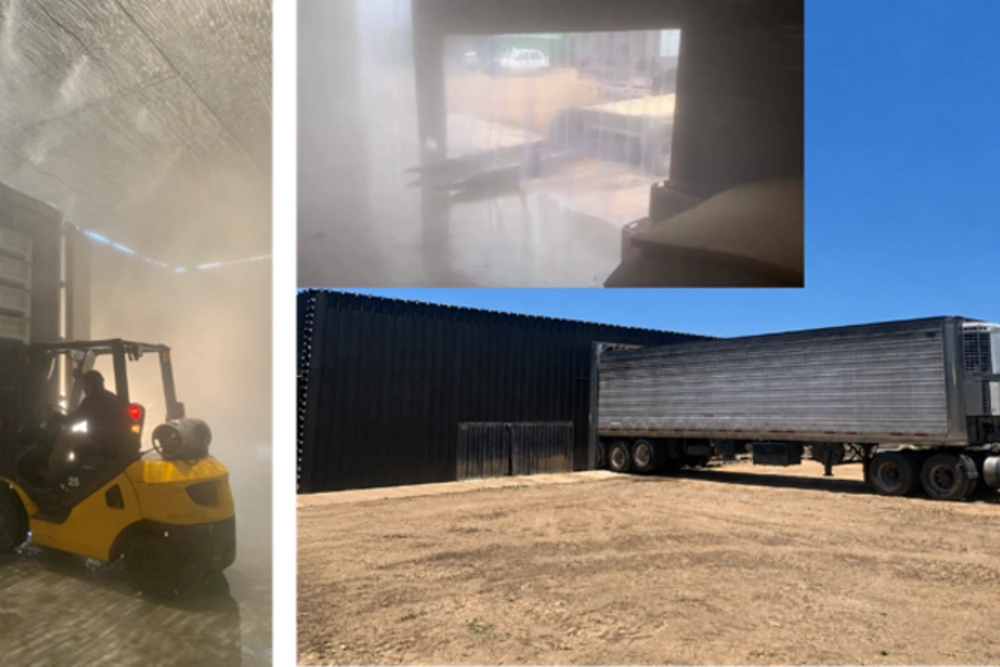 Figure 2. Humidified temporary storage area in the field with a truck backed into position, designed to maintain favorable temperature and humidity conditions while the fruit is waiting.
Tests show that a cherry kept inside a humidified storage area can remain there for up to 15 hours while losing the same amount of weight through dehydration as it would in just one hour outside it.
Measurements of ambient temperature, relative humidity and VPD in cherry storage areas with and without humidification
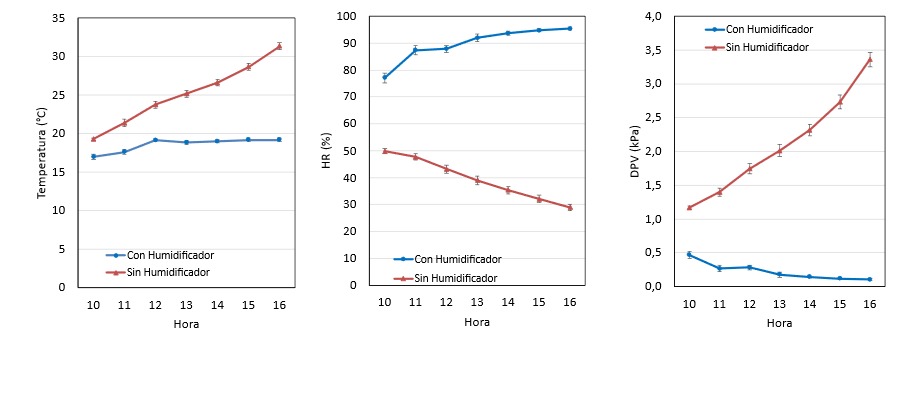 Figure 2. Humidified temporary storage area in the field with a truck backed into position, designed to maintain favorable temperature and humidity conditions while the fruit is waiting.
After more than 15 years dedicated to developing and implementing strategies for dehydration control, many of these practices have now been validated under commercial conditions.
For example, in trials conducted on cherries in Chile, our methodologies and humidification systems achieved:
- up to a 94% reduction in dehydration in humidified temporary storage areas;
- a 67% reduction in dehydration in processing plant receiving areas;
- an 80% reduction in dehydration in raw material cold-storage rooms during 8-day storage periods.
Conclusion
Cherry dehydration cannot be controlled simply by installing a humidification system.
To achieve effective results, it is necessary to:
- Understand the physical phenomenon responsible for water loss.
- Design processes correctly.
- Control pulp temperature.
- Manage ambient temperature.
- Maintain adequate relative humidity.
- Use technologies capable of modifying the variables that actually determine VPD.
This is the principle on which we build our strategies to protect the condition and quality of cherries during postharvest.
Text and image source: PIJ CHILE
Cherry Times - All rights reserved