"A high-income, high-investment crop." Professor Brunella Morandi, coordinator of the Master's Degree Programme in Agricultural Sciences and Technologies at the University of Bologna, discusses cherry growing at the invitation of Alegra, as part of "Connections", a communication and knowledge strategy designed to build a network.
"It is a very delicate crop, which must obviously be managed with the appropriate agronomic knowledge. Fruit quality is determined during pre-harvest, and there are several agronomic aspects to consider," she added.
What are the challenges involved in getting the most out of cherry trees? There are many situations to address. One issue that certainly affects several crops, but has a particularly significant impact on cherry trees, is the management of covers.
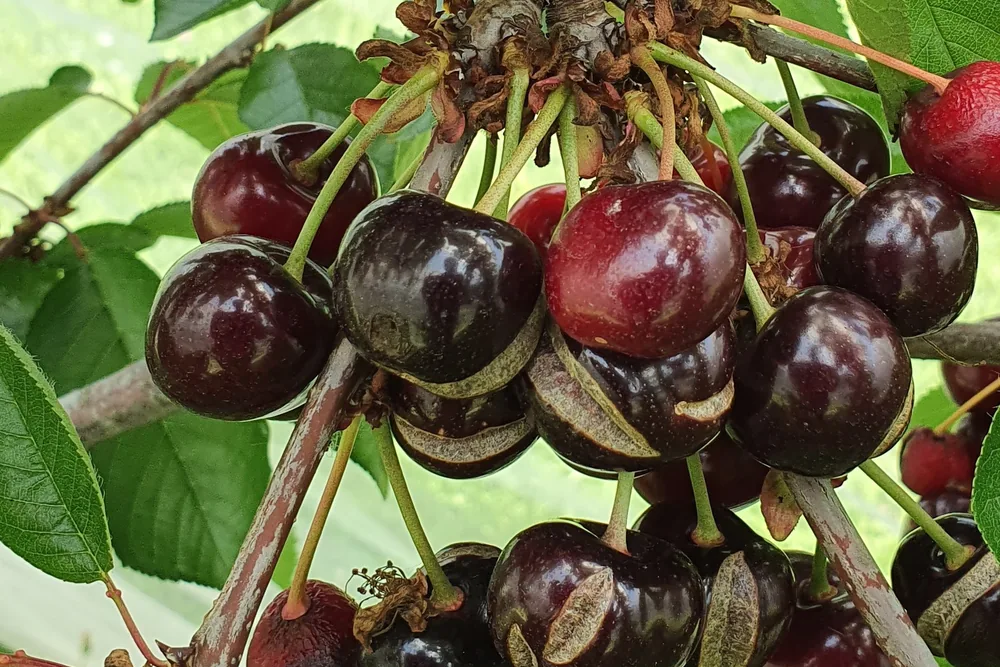
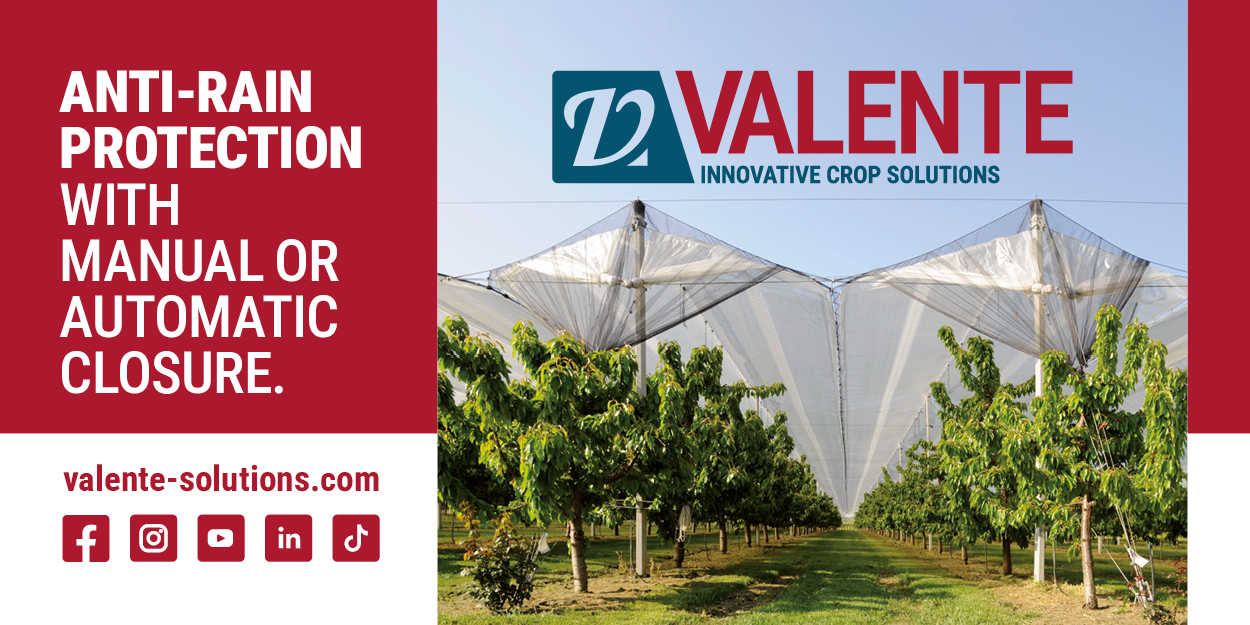
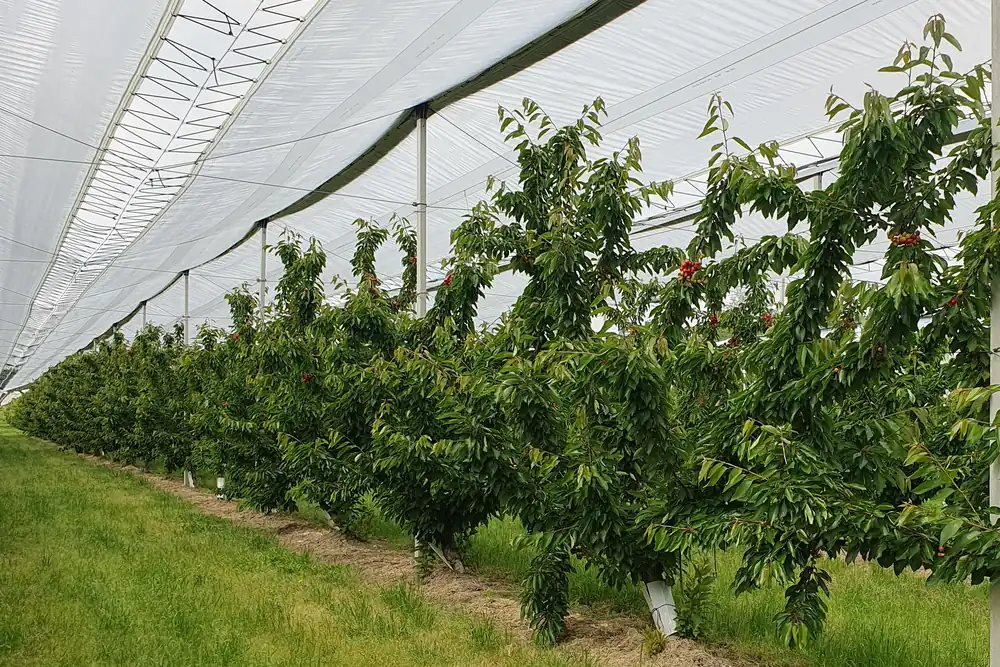
"Covers help prevent cracking, but they also help counter other biotic and abiotic stresses, especially Drosophila.
Covers and microclimate
It has been observed that a certain level of shading, around 20-30% here in Emilia-Romagna, has very positive effects on physiology and therefore, in some way, on the ability to tolerate heat waves or water stress; it therefore helps maintain a very favourable microclimate within the cherry orchard, despite the 20-30% reduction in light, which does not cause problems in terms of production".
"If we could mechanise the covers, or in any case find technical solutions to reduce the workload involved in managing nets and sheets, this would, on the one hand, reduce management costs and, on the other, preserve all those benefits against cracking and Drosophila. Last but not least, it would help us manage abiotic stresses, including heat waves and possible water stress".
But success begins with the right variety selection and rootstock, depending on the environment in which the orchard is to be established.
"First of all, it is necessary to focus on variety selection: the breeding programmes currently available provide a wide range of varieties, with varying levels of resistance to cracking, varying levels of quality and a good harvest window.
Rootstock and resilience
The choice of rootstock is very important because the industry is obviously moving towards super-intensive orchards, but it is also trying to find a balance, since super-intensive orchards may not be optimal under the climate change conditions we are experiencing".
"We therefore need to find a kind of compromise involving a rootstock that is not excessively vigorous, so that the trees have a good vegetative-productive balance and good productivity, while at the same time not being too delicate from a management perspective".
In Emilia-Romagna, Gisela 6 remains one of the most widely used and promising rootstocks, but others are being studied to ensure good resilience and tolerance to abiotic stresses, while also providing an excellent vegetative-productive balance and good canopy management potential".
"After the rootstock," Brunella Morandi continued, "comes the training system, and here too the central leader system, which is suited to highly dwarfing rootstocks, may not be the best choice in a context of climate change".
Training systems
A balance between the rootstock and the correct choice of training system can also result in mechanisable orchards. "In the United States, these aspects are being studied extensively, especially wall-based training systems such as UFO (Upright Fruiting Offshoot), not necessarily at extremely high densities, but with medium-density training systems developed along a fruiting wall.
Mechanised pruning is possible, while machine harvesting remains somewhat of a limiting factor because our consumers want cherries with the stem attached, whereas the mechanisation being developed in the United States is based on shakers that harvest cherries without stems".
But sooner or later, robots will arrive for harvesting cherries with the stem attached as well...
Finally, a brief mention of irrigation: "Physiological research is seeking to understand the mechanisms underlying cracking, and it has been observed that water—not only rainwater that wets the cherry externally, but also water absorbed by the roots—plays a role in cracking. In the future, therefore, we will certainly need to understand how to optimise irrigation to avoid predisposing our orchards and cherries to cracking. This is obviously not easy because the main cause of cracking is normally rain".
Source: freshplaza.it
Image source: Stefano Lugli
Cherry Times - All rights reserved