After a difficult season, the Yakima annual conference shines a spotlight on prices, market dynamics and future strategies
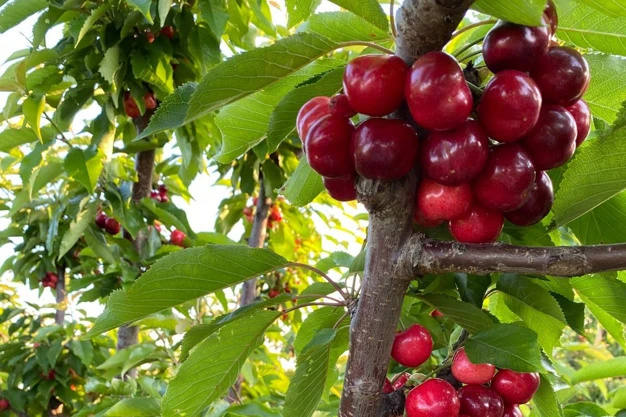
The 2025 cherry season in the Pacific Northwest left many growers with a bitter taste. Despite an excellent harvest in terms of quality, with large, firm fruit and intense flavor, and the absence of extreme weather events or punitive tariffs, returns for growers failed to cover production costs.
With 23.6 million boxes harvested, packed and shipped, it was the third-largest crop in the area’s recent history, but also one of the least profitable. Now the industry is preparing to analyze what went wrong at the Cherry Institute, scheduled for January 7, 2026 in Yakima, Washington.
Prices too high and poor timing
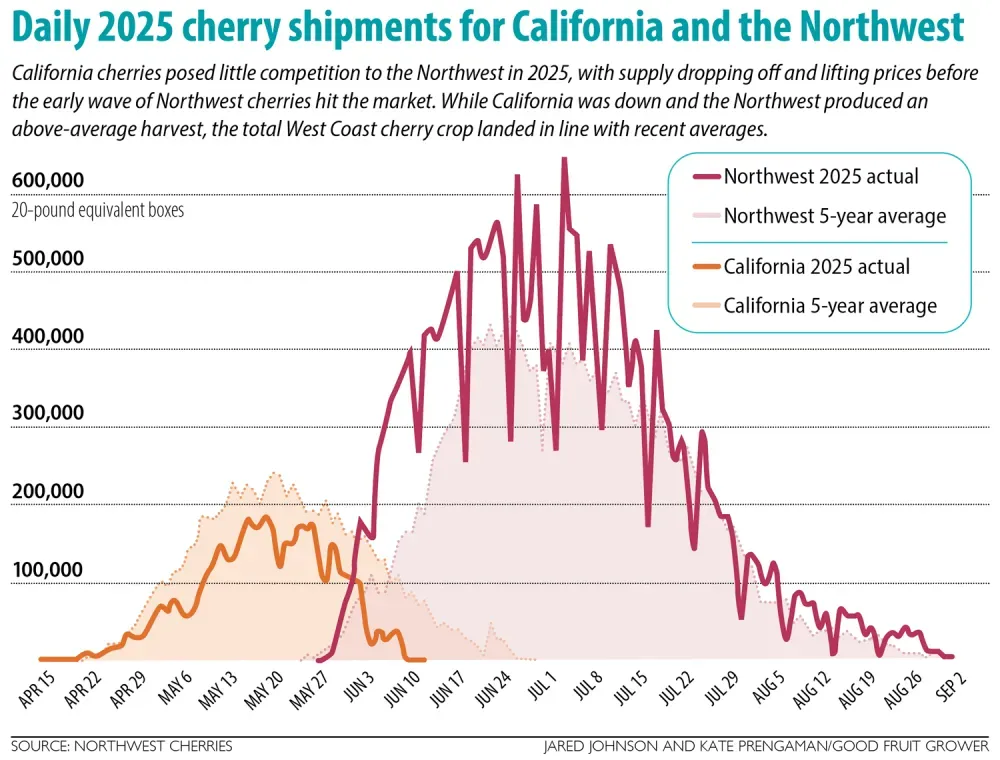
According to key players across the supply chain, including growers, packers and marketers, the main problem was a misalignment between supply and demand in the first weeks of the marketing season. The early arrival of Northwest cherries coincided with a shortage of California fruit, just 4.4 million boxes, prompting retailers to keep prices too high. The result was slow sales right when strong turnover was needed to manage early volumes.
“Retailers and consumers didn’t react in time, and when prices finally came down, it was too late to recover,” explained Karley Lange, domestic promotions director for Northwest Cherries.
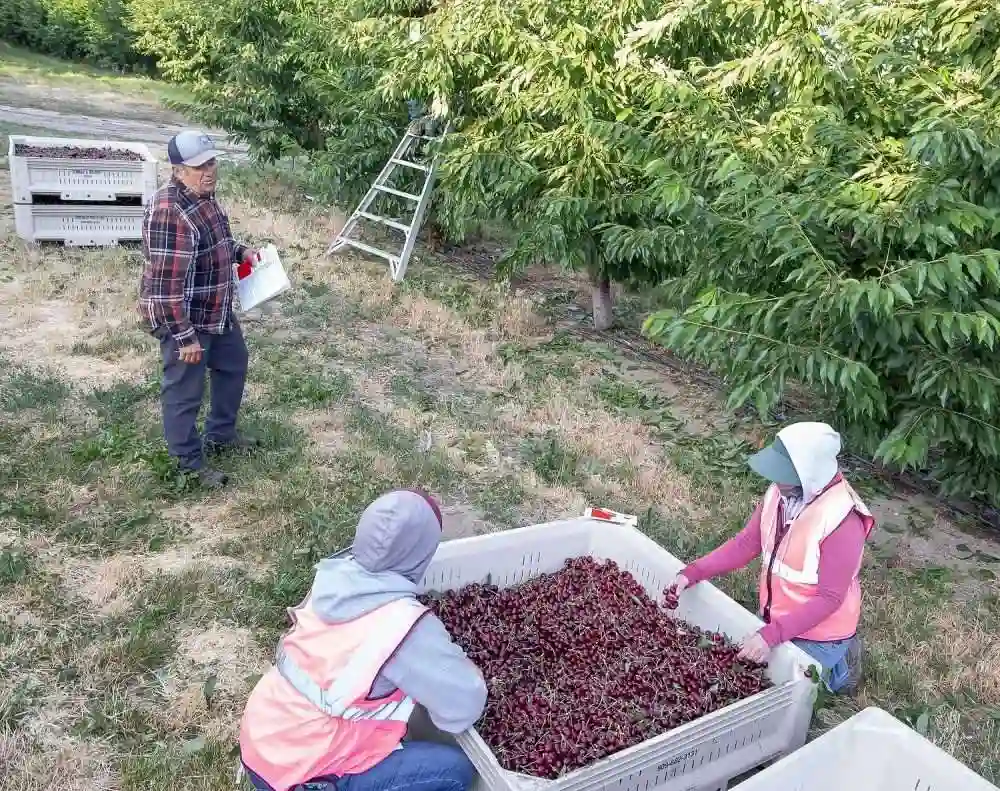
Lupe Muñoz, left, supervises cherry harvest in mid-June for River Valley Fruit near Grandview, Washington. Looking back on the 2025 season, industry leaders say a large volume of fruit at the start of the Northwest season hit the market when prices were still too high, and sales struggled. (Ross Courtney/Good Fruit Grower)
The “pipeline problem” and the power of retail
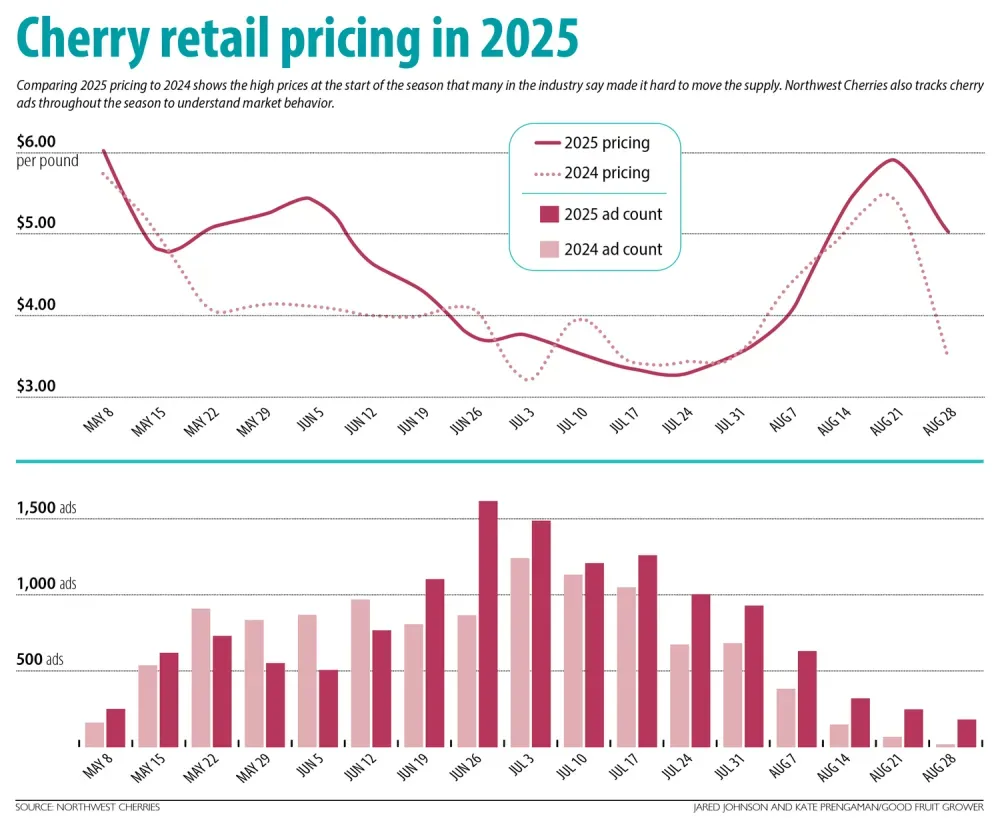
In market jargon it is called a “pipeline problem”. Without a smooth transition between the California and Northwest crops, the system jams. While growers accuse retail chains of keeping shelf prices above $5 per pound, over €10 per kilogram, in early June, large, increasingly concentrated retailers hold the bargaining power to protect their margins.
Promotions also started late, while grower prices were slashed to stimulate sales. A paradox, considering that many growers saw retail prices remain at $3.99 or $3.49, about €7.40 or €6.50, without benefiting from it.
A chart showing daily 2025 cherry shipments for California and the Northwest. (Source: Northwest Cherries; Graphic: Jared Johnson and Kate Prengaman/Good Fruit Grower)
The illusion of “top-end” cherries
“Every year they ask us for bigger fruit, but if we cannot make money on 9-row cherries in a season without California competition, what are we supposed to do?” asked a grower on the Cherry Institute organizing committee.
The reality is that today everyone produces excellent fruit. New breeding lines elevate every cherry, but that is no longer enough. Timing matters. Pushing large volumes into the wrong window, such as the mid-July peak, risks flooding the market. Packers raise quality standards and cut prices, further squeezing growers’ margins.
In British Columbia, growers are now avoiding investment in varieties that ripen in that window, specifically to avoid colliding with Washington’s surplus wave.
A chart showing cherry retail pricing in 2025. (Source: Northwest Cherries; Graphic: Jared Johnson and Kate Prengaman/Good Fruit Grower)
The importance of data and dialogue
At the Cherry Institute, new tools to analyze price movement and market dynamics will also be presented, with contributions from Adam Brohimer of Luminary Insights. Forecasting models are evolving as well, moving beyond simple crop estimates to continuous in-season monitoring, to help sales stay one step ahead.
The stakes are high. Without more refined flow management, even the best cherry risks missing its market.
The conference promises to be a valuable opportunity for dialogue and for charting new paths. As experts keep repeating, “Quality is no longer enough. A shared strategy is needed.”
Discover how Royal Tioga cherries are revolutionizing early-season fruit production in Murcia, Spain, with low chill requirements, high yield potential, and premium quality — attracting international interest.
Prunus avium, known as sweet cherry, is a native tree enriching landscapes with spring blossoms, summer fruits, and vital habitat for wildlife and pollinators. Resilient to climate change, it blends beauty, tradition, and sustainable biodiversity for future ecosystems.
Cherry production is shaped in autumn: irrigation, stored reserves and dormancy affect bud fertility and winter-chill response. Orchard data help estimate crop loads and plan winter pruning, guiding timely decisions on fruit size and next season’s yield in each orchard.
A Ukrainian study tests hydrocooling in three sweet cherry cultivars and one sour cherry cultivar: water at 1°C with organic acids, cooled to 2°C near the pit. It preserved positive indicators and cut negative impact by up to 49.73%, with effects varying by cultivar.