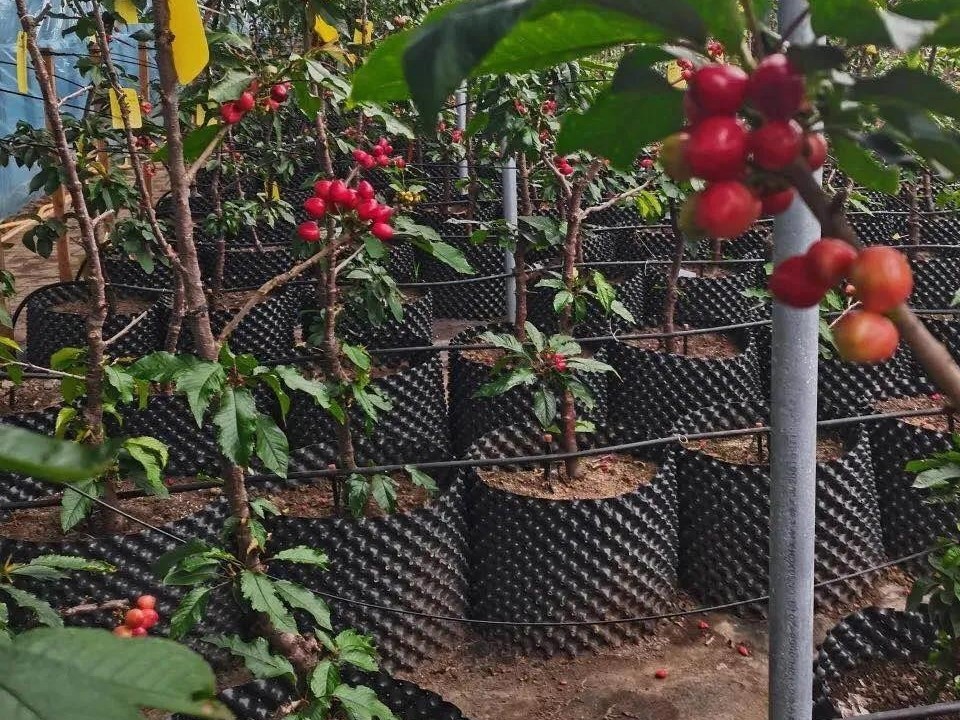
Nutritional management during fruit development is essential for cherry quality. Experts recommend foliar applications and fertigation at critical stages of the production cycle.
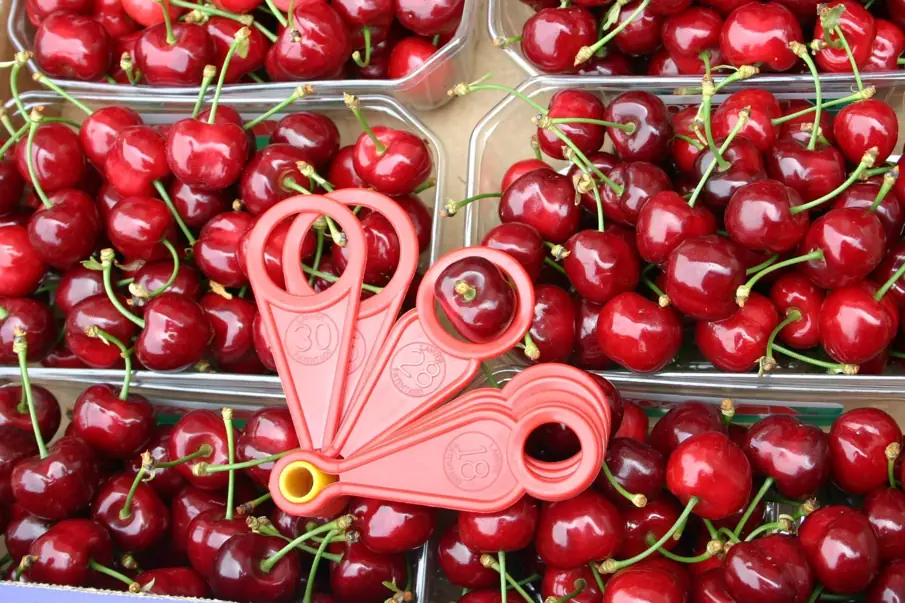
Fruit size and firmness are two decisive attributes for determining cherry quality and price in international markets. To achieve these parameters, nutrition plays a key role throughout the entire fruit development cycle.
The role of nutrients
Calcium is the most relevant nutrient for improving flesh firmness. It strengthens cell walls and reduces cracking issues, while also extending the fruit’s postharvest life. Calcium applications should be carried out from fruit set to shortly before harvest, preferably through foliar sprays with products such as calcium chloride or calcium nitrate.
Potassium is essential for increasing cherry size, as it supports sugar and water accumulation in the fruit. Its application is particularly critical during the pit-hardening stage and the final phase of fruit growth. Fertigation with potassium nitrate or potassium sulfate is one of the most efficient methods for supplying this element.
Boron also plays an important role in fruit quality, promoting pollination, fruit set and early development. A deficiency can lead to deformed and undersized fruit. Foliar boron applications should be carried out before flowering and during fruit set.
Balanced nutrient management
Nitrogen is necessary for vegetative growth and early fruit development, but it must be managed with care: excess nitrogen can reduce firmness and color, and increase the risk of cracking. It is recommended to apply it mainly in early spring and gradually reduce doses as harvest approaches.
Magnesium and zinc are micronutrients that also influence fruit size and overall quality. Magnesium is involved in photosynthesis and sugar production, while zinc plays a role in cell growth and hormone synthesis.
Specialists recommend leaf and soil analyses to accurately determine the nutritional needs of each orchard, taking into account variety, rootstock, soil type and climatic conditions.
Image source: SL Fruit Service
Dominique Barra
Report Agricola
Cherry Times - All rights reserved