After two seasons that have tested the country's leading fresh fruit export sector, Claudia Soler addresses the key issues shaping the next chapter of the Chilean cherry industry: changing Chinese consumer behavior, progress in market diversification, and the decisions that will define the future of a product now called upon to reinvent its formula for success.
Some people seem to feel completely at ease when the road gets tough.
Those who know Claudia Soler say this ability comes to the fore not only when she laces up her running shoes for a marathon.
The marathon of Chilean cherries
New York. Berlin. Chicago. London. Tokyo. Over the years, Claudia has completed some of the world's most demanding courses, convinced that long-distance races are not won by accelerating at the start, but by pacing yourself, learning the course, and maintaining your rhythm when the initial momentum fades.
It is not a bad metaphor for describing the current situation facing the Chilean cherry industry.
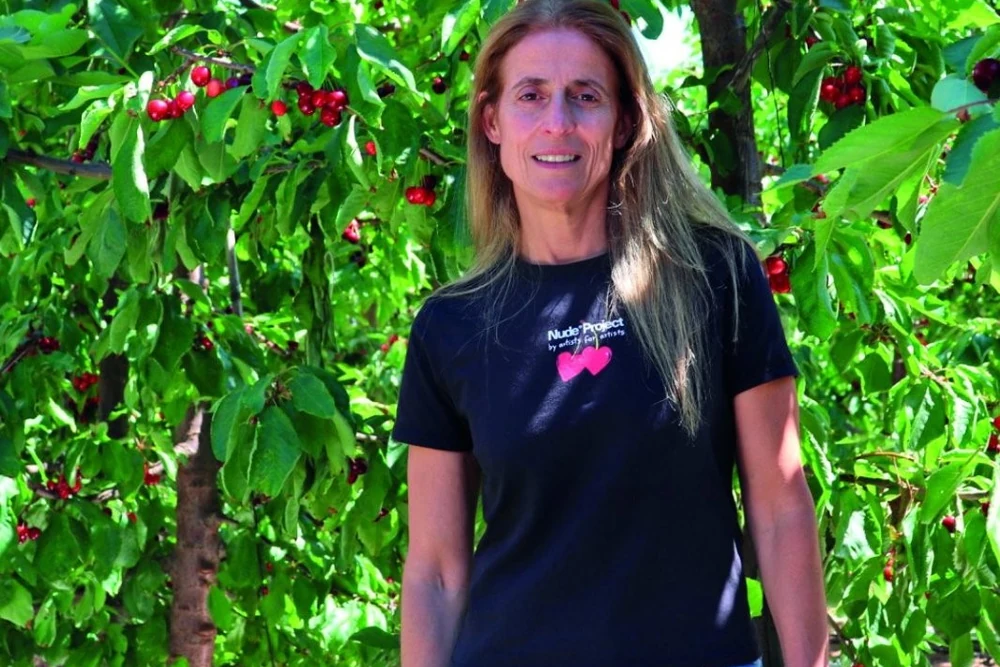
Claudia Soler Bottinelli is undoubtedly one of the most prominent women in the industry. In markets around the world, she is known as the Cherry Queen. To her friends, however, she is simply "Pollo", a nickname that has survived the rise of a professional career that now sees her leading one of the most influential organizations in Chile's export sector.
From this position, she has had to navigate what is probably the most intense period of reflection the industry has experienced since Chilean cherries began conquering the Chinese market more than twenty years ago.
The challenges of a mature industry
The last two seasons have forced the industry to question many long-held assumptions. Rapid growth has given way to a highly demanding environment in which quality, logistics, consumer insights, and coordination among all supply chain stakeholders have become just as important as production itself. Suddenly, success is no longer measured solely in millions of exported boxes.
However, it would be a mistake to interpret this moment as a crisis. Claudia Soler prefers to speak of evolution: an industry that has reached maturity and now faces the challenge confronting all major players in global trade: reinventing itself before its competitors do.
This conversation takes place as the 2026-2027 season begins to take shape. In the orchards, the countdown has already begun. In the markets, especially in China, consumers are changing faster than ever.
And at the Cherry Committee, the work seems never-ending. Market research, meetings with exporters, logistics coordination, commercial analysis, promotional campaigns, and a new strategy to strengthen the premium positioning of Chilean cherries occupy much of an agenda that, according to those who work with her, rarely has any empty spaces.
Opportunities and strategic vision
For Claudia, these have been intense months. Between analyses, coffee, and forecasts, she does not hesitate for a moment to say that the industry continues to offer enormous opportunities, not only for growers and exporters but for the entire supply chain.
She warns, however, that the future will belong to those who best understand consumers, deliver a consistent experience, and create value in every box of cherries.
Despite the bitter aftertaste left by recent seasons, she reiterates the potential that China continues to offer, while recognizing that the market is undergoing a profound transformation. At the same time, destinations such as the United States, South Korea, Taiwan, Brazil, Southeast Asia, India, and Europe are becoming increasingly prominent in the industry's long-term strategic discussions.
In this context, she says, the leadership role of the Committee takes on particular importance. Beyond coordinating promotional campaigns, the organization must now bring together an extraordinarily diverse industry comprising thousands of growers and hundreds of exporting companies.
The value of the supply chain
Every decision made in the orchard, at the packing facility, or at the retail outlet has an impact on the purchasing experience of a consumer on the other side of the world.
After two difficult seasons, is the Chilean cherry industry ready to respond with a long-term strategic vision? Do you think it is possible to turn this situation into an opportunity?
It is always possible to turn a challenge into an opportunity. Consumer demand continues to grow across different export markets, with increasing attention being paid to nutritional value, food safety, and fruit quality.
The industry will continue to have opportunities, but these will be linked to quality, consistency, diversification, logistics efficiency, and category positioning. In this sense, the future of the industry will increasingly depend on its ability to create value, rather than simply increasing volumes.
Emerging stronger from new challenges
Looking at the positive side of this situation, do you think the industry has somehow emerged stronger from these difficult seasons?
Clearly, challenges push industries out of their comfort zones, forcing them to test themselves and become increasingly competitive and better. We are the leaders in the Southern Hemisphere and, as such, we must take responsibility for supporting the industry's future development. If we manage to adapt, the industry should emerge stronger.
We have an excellent product that is aligned with consumer trends, accounts for approximately 40% of the value of Chile's fruit exports, and is synonymous with success, while also serving as an ambassador for our country abroad.
Always premium
Several studies show an increase in so-called "smart shoppers", consumers who are better informed, more demanding, and more conscious of their choices. This undoubtedly presents major challenges for the industry. How are you addressing them?
That is true: we are facing better-informed consumers and more demanding and selective markets, with higher expectations. Added to this is a more difficult economic environment, which has led buyers to place greater importance on quality.
This presents several challenges and requires us to be more competitive and extremely rigorous about the product we sell. At the same time, it represents a major opportunity for our industry: it allows us to explain and demonstrate the value of our fruit and protect its premium positioning.
People who buy cherries are interested in the story behind Chilean cherries, from the orchard to the Chinese consumer's table. Perceptions of food safety and nutritional benefits are among the factors that most strongly influence the decision to purchase cherries at the point of sale.
Quality and premium certification
At the Cherry Committee, we are leading and coordinating these efforts, sharing information and aligning initiatives to win over this new consumer and meet their expectations.
Today, the Committee is promoting several initiatives to strengthen the quality of Chilean cherries, including a certification for premium cherries. What stage have the various projects reached?
We are addressing the industry's various challenges. As I mentioned, we are aligning the actions of growers, consultants, and other supply chain stakeholders to ensure that the promised quality is maintained from the orchard to the point of sale. The goal is to bring to market a fresh, flavorful, firm, and consistently high-quality product capable of delivering an excellent eating experience.
On the production side, proposals for standards covering good export practices already exist, including parameters for firmness and soluble solids. We will now begin working with a technical committee that will involve consultants in identifying critical stages of the production cycle, providing guidance to growers, and contributing to the definition and implementation of specific projects.
A model for the Chilean industry
We will subsequently continue with the development of a certified brand, alongside other initiatives.
Is a "Zespri of cherries" possible, or is that model incompatible with the reality of the Chilean industry?
The cherry industry comprises more than 6,000 growers and 333 exporting companies: it is a large and diversified sector, with different players and business models.
Zespri is an interesting case to examine, particularly in how it addresses issues such as quality, food safety, nutrition, technology, and plant health. We believe its experience can provide valuable lessons and insights to further strengthen our industry.
Competitiveness and exclusivity
However, we do not believe that the path forward for Chilean cherries involves replicating that model. In Chile, we believe in an open and competitive market where each company can develop its own strategy.
Volume growth has eroded one of the most valuable assets of Chilean cherries: their aura of exclusivity. How can a product maintain its premium status when, by definition, it is no longer rare?
Cherries can maintain their premium status not because they are rare, but because of the significance of the occasion on which they are consumed. Studies conducted by the Committee show that, among fruits, cherries remain the preferred gift for Chinese New Year.
This confirms that the emotional and cultural connection does not depend on the quantity available, but on the meaning consumers attach to the fruit on that occasion.
New consumption occasions
It is true, however, that the industry's growth has opened up a new consumption occasion: everyday consumption. The two occasions can coexist without difficulty, provided they are differentiated, for example through different packaging, formats, or fruit sizes.
With a more mature market, do you agree that the industry should move from a single offering to a segmented portfolio, creating sub-brands or differentiated product lines?
The market is indeed maturing. What we are seeing, and will see even more clearly, is a process of product offering specialization. Companies will begin to differentiate themselves according to whom they sell to and how they do so.
Some will establish themselves as strategic suppliers to major retail chains, focusing on volumes, consistency, and logistics capabilities. Others will develop more niche offerings or specific consumption experiences aimed at more demanding markets or channels.
Segmentation and reputation
We will see an increasingly sophisticated industry in terms of market segmentation, with each player finding its place according to its production, commercial, and logistics capabilities.
Episodes of misinformation and viral rumors have seriously damaged consumer confidence. How are you managing the industry's reputation, for example to prevent potential crises caused by fake news?
Two seasons ago, these incidents undermined confidence to some extent. Subsequently, as the Cherry Committee, we began proactively managing the reputation of our fruit. Last season, we engaged a specialized agency to develop a comprehensive reputation management program.
Thanks to this work, during the most recent season we managed to reduce negative news coverage of the category by 14% and increase positive coverage by 14%. The goal was to strengthen trust, raise awareness, and consolidate the product's premium positioning.
An old challenge
Everyone talks about diversifying markets, but the fact remains that China will continue to absorb most exports for a long time. Considering the concrete opportunities you see, what would be a realistic diversification target over the next ten years?
China is an enormous market and will continue to be, by far, our most important destination. There is still considerable growth potential within the country: over the past year, fewer than half of target consumers in second- and third-tier cities purchased Chilean cherries.
Furthermore, the evolution of cherries into a healthy everyday snack opens up new possibilities for diversification within the Chinese market itself.
Today, we are focusing on diversifying our destination markets and working to create the conditions that will allow us to move in that direction. This involves not only ensuring good fruit quality and condition throughout the supply chain, but also facilitating market access, improving logistics, developing demand and marketing channels, and undertaking other initiatives.
Destinations beyond China
Outside China, notable markets include the United States, where demand for Chilean cherries grew by more than 28% this season, as well as Taiwan, South Korea, and ASEAN countries. We also see opportunities in Europe and Latin America, for example in Mexico and Brazil, where the relative presence of Chilean supply is increasing.
A highly successful scenario would be one in which, thanks to greater diversification, China accounted for approximately 80% of our exports by 2035, taking into account the many factors already mentioned that influence this process.
What is the real growth potential for Chilean cherries in the United States?
The United States is a major consumer of cherries during the summer, consuming more than 40 million boxes. Our work focuses on informing American consumers that cherries are also available during the winter and encouraging them to enjoy the fruit throughout the year. During the most recent season, we exported just over 5 million boxes, so we believe there is still room for growth.
The routes to diversification
Market diversification depends heavily on the availability of logistics connections to the destinations the industry wants to develop. What can you tell us about your work with shipping companies?
We are drawing the industry's attention to the importance of faster transit times to other markets and seeking new opportunities to coordinate shared services with other fruit categories. For example, last year, together with blueberries, we managed to organize two express shipping services to the United States ahead of Christmas and New Year.
We expect to offer them again this year. We are also evaluating the possibility of doing something similar for Europe.
Staying on the subject of logistics, perhaps the greatest challenge today lies in the final stage, when the fruit leaves the exporter's control and becomes dependent on the recipient's strategies, distribution speed, storage capacity, and decision to sell or wait. How are you addressing these variables and last-mile logistics?
Managing the last mile
The Cherry Committee is firmly committed to improving the experience of Chinese consumers. More than two seasons ago, as part of this commitment, we developed a best practices guide outlining the proper handling and storage practices for our product.
The guide is distributed to wholesale markets, retailers, and e-commerce platforms in first-, second-, and third-tier cities. Every year, we also organize training activities on the same topic for e-commerce platforms, hypermarkets, supermarkets, and B2B operators.
To explore the issue further, before the start of this season our team met directly with representatives of Chinese ports, wholesale markets, and retailers. The goal is to develop a comprehensive understanding of the cherry supply chain in China and determine how fruit moves from arrival to final sale: the temperatures it is exposed to, how much time it spends at each stage, and what proportion of the volume passes through each segment of the supply chain.
This will help us identify gaps and potential areas for improvement.
Consistent quality
Looking ahead, our promotional activities in the Chinese market are, and will continue to be, closely linked to the supply of high-quality fruit supported by world-class logistics practices. We believe that consistent quality is the foundation for the category's future growth.
Consolidation
Today, the risk concerns not only the market, but also cash flow. How prepared is the industry to operate with narrower margins?
It is a challenge. Fruit that meets high standards and delivers a good consumer experience will continue to enjoy better opportunities.
Conversely, orchards or management practices that fail to achieve adequate levels of productivity, quality, or fruit condition will find it more difficult to remain sustainable over time. This was demonstrated by fruit prices last season, when a price difference emerged between higher- and lower-quality products, reaching, for example, 26% in the case of the Lapins variety.
Specialization and new market dynamics
In such a demanding and competitive environment, is it inevitable that some operators will leave the market? Could production concentration become a concrete trend?
We are witnessing genuine specialization among companies based on their respective competitive advantages.
This season, some companies have decided to export their fruit through third parties rather than doing so directly. This reflects an industry that is maturing and finding a more efficient structure, not a sign of decline. It is a normal process of adaptation for any industry moving from rapid growth into a more mature phase.
The 2026-2027 season
As a phase of consolidation, because today we are focusing on consistency, quality, fruit condition, and real value for consumers, rather than simply the number of boxes shipped.
After two difficult seasons, we are now paying greater attention to detail and every aspect of the supply chain.
The cherry industry will continue to consolidate its position as a key sector within Chile's export industry and maintain a leading role globally. However, the current environment requires greater collaboration among all supply chain stakeholders and a clear sense of shared responsibility. This season indicates that the industry is going through a period of adjustment.
Imagine it is 2035. What would need to have happened for us to say that the Chilean cherry industry has emerged stronger from this decade?
The vision for 2035
I believe we are moving toward a more robust supply chain, with significantly improved cold chain performance in destination markets. This is particularly true for China, which will remain our main market but will demand ever greater consistency and quality.
In the coming years, we are also aiming for a more competitive balance among markets, with a growing share for the United States, Southeast Asia, Europe, and Latin America alongside China, thereby building a more diversified demand base.
Finally, our work aims to build a strong and transparent industry reputation, robust enough to withstand episodes of misinformation and market fluctuations.
If we can make progress on these three fronts, logistics, diversification, and reputation, I see Chilean cherries evolving from a successful product in a growth phase into a mature and resilient industry, with a strong and sustainable position over time.
Danilo Phillipi
Source: Vision Magazine
Image source: DiarioFinanciero
Cherry Times - All rights reserved