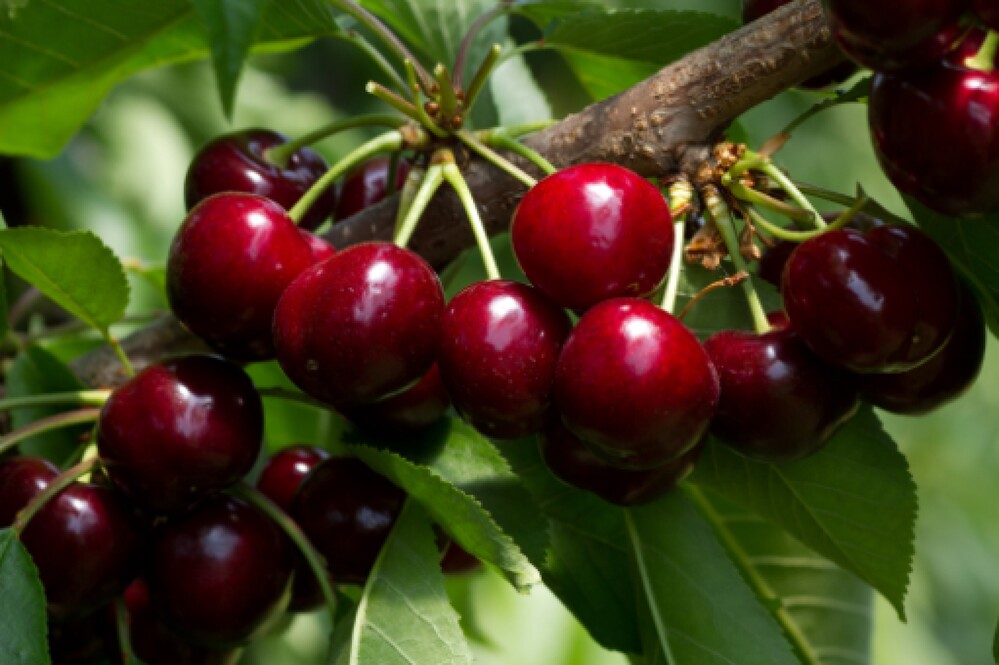
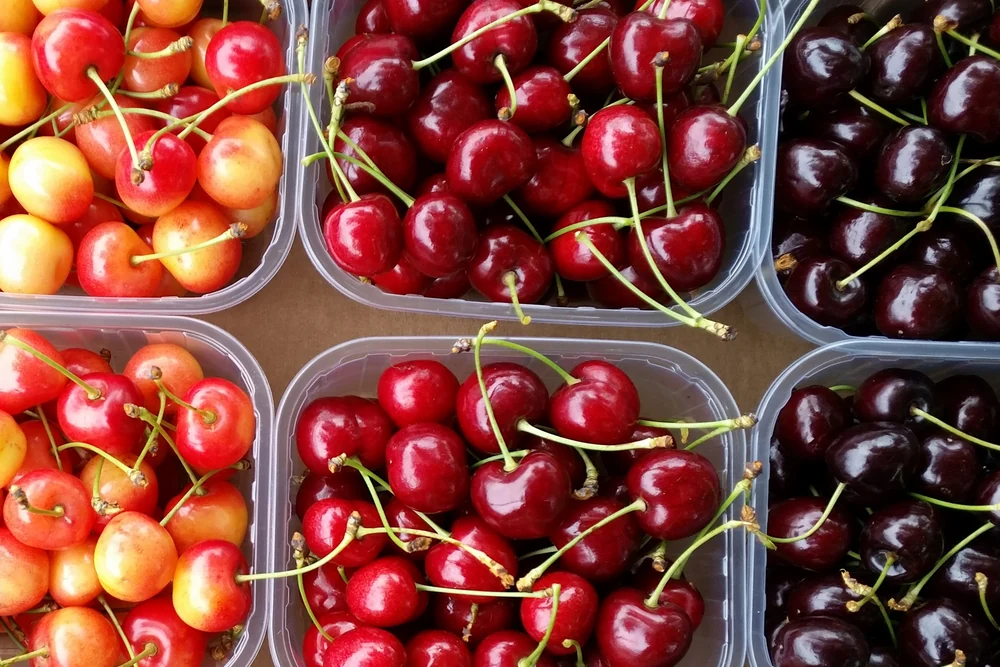
The peak of cherry production is taking place right now. This is good news, as the fruit is made up of 90% water and is therefore ideal for coping with hot weather. The harvest is expected to be abundant, but prices remain high because the fruit is picked by hand and is difficult to store.
Cherry growers expect to harvest more than 30,000 tonnes this year, around one third more than average. “Weather conditions have worked in our favour,” explains Mathilde Chambe, a fruit grower from Bessenay, near Lyon. “More often, we experience years with rain or hail. This year, there have been no adverse weather events.”
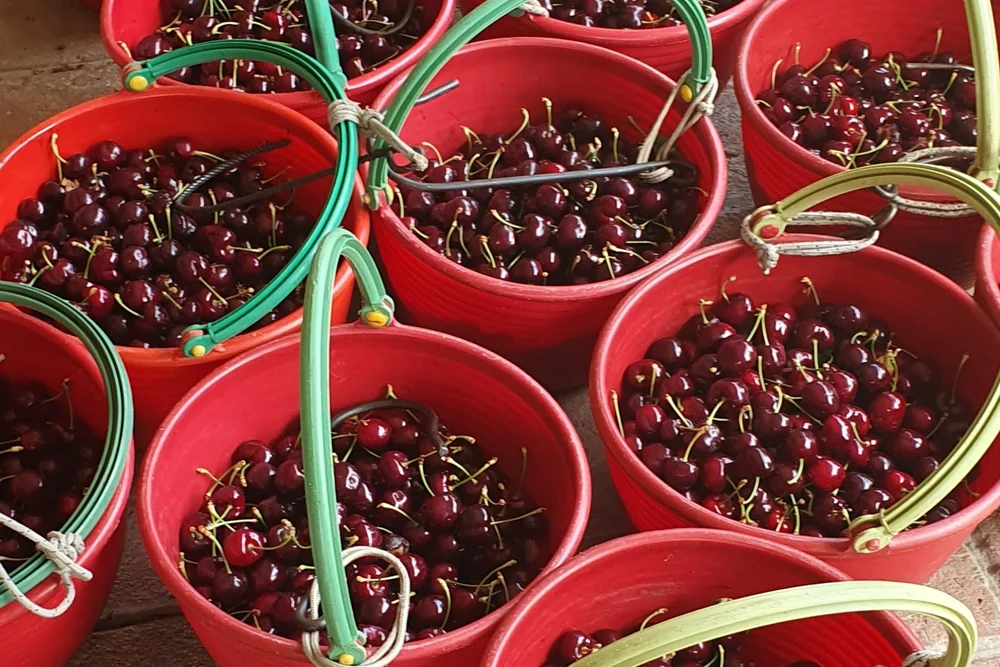
The cherry is the fruit with the shortest season: eleven months of work for just a few weeks of sales. Half of the harvest is consumed during the month of June. “Growers pick the cherries, which are sent to wholesalers in the evening and are already in stores the following day,” Mathilde Chambe explains. “Cherries cannot be stored. Apples store very well, but cherries do not.”
“Costs are rising dramatically”
This partly explains why prices, often considered high by consumers, currently range between €5 and €8 per kilogram. The many production constraints also have an impact. “Cherries are picked by hand,” the fruit grower explains. “There are also harmful insects, and we no longer have access to insecticides, so we have to use systems to cover and protect the orchards. Our costs are rising dramatically.”
Unlike their European counterparts, French growers are not authorised to use acetamiprid, a powerful insecticide effective against Drosophila suzukii, which can cause serious damage to cherry orchards.
Source: Edouard Marguier, Franceinfo
Image source: Stefano Lugli
Cherry Times - All rights reserved