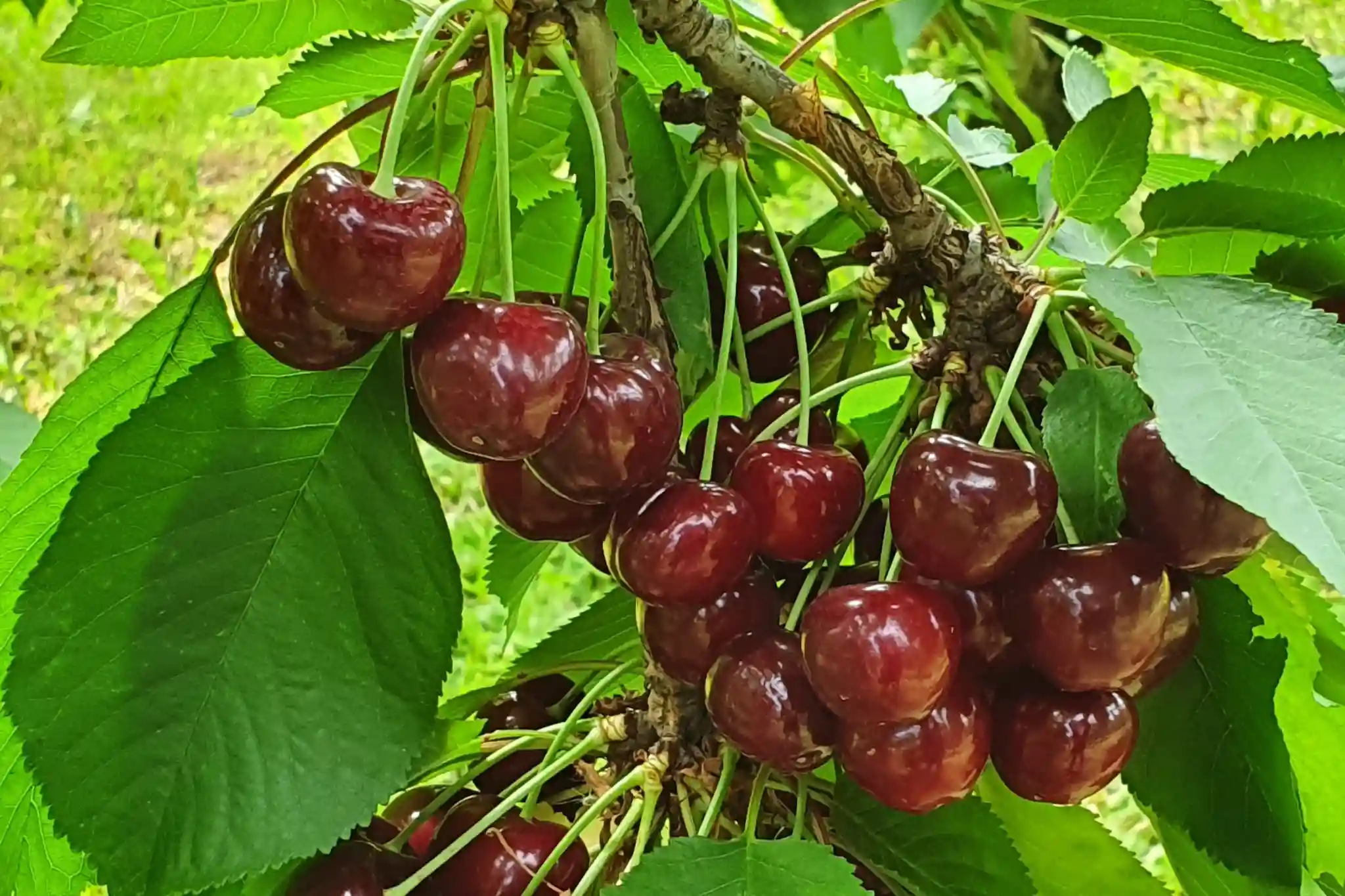
Fruit storability is one of the most critical challenges in the sweet cherry supply chain, as sweet cherries are characterized by high moisture content, a thin skin, and intense metabolic activity, all of which accelerate postharvest deterioration.
Rapid quality loss is manifested by reduced firmness, changes in color and flavor, and increased susceptibility to microbial attack. A recent study evaluated the effectiveness of calcium chloride applications performed both before and after harvest in preserving the quality attributes of sweet cherries during storage at room temperature.
The study was conducted on sweet cherries grown in the Skardu district of Pakistan, comparing five treatments: an untreated control, two pre-harvest foliar sprays with calcium chloride at 0.5% and 1%, and two postharvest dip treatments at the same concentrations.
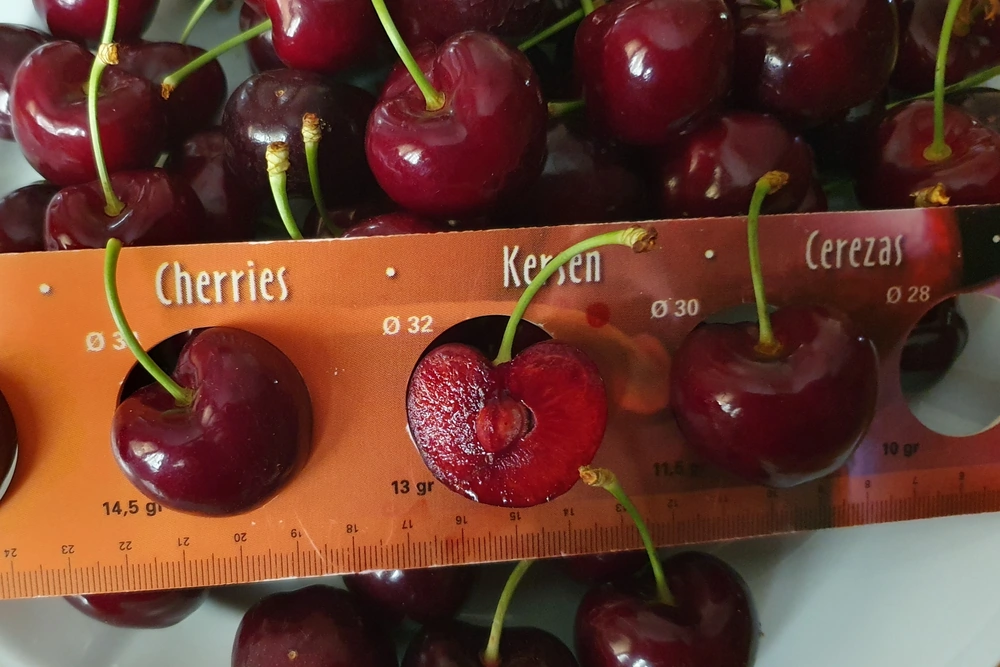
Storage parameters
Following treatment, the fruits were packed in trays and stored for 20 days at temperatures ranging from 20 to 25 °C. Throughout the storage period, physicochemical parameters, microbial quality, and sensory attributes were monitored, with particular attention to color, flavor, texture, and overall acceptability.
The results demonstrated the clear superiority of the 1% postharvest calcium chloride treatment, which preserved the commercial quality of the fruit significantly better than both the pre-harvest treatments and the untreated control.
Although all treatments experienced the expected physiological decline in quality during the 20-day storage period, cherries immersed in the 1% calcium chloride solution exhibited the smallest losses in both color and flavor.
Fruit quality
Fruit texture was also maintained at a substantially higher level, while the reduction in overall acceptability was considerably lower than that observed in untreated fruit.
Microbiological analyses showed that the total microbial population increased progressively during storage across all treatments; however, the increase was markedly lower in fruit treated with calcium chloride, particularly with the 1% postharvest application.
In contrast, the untreated control exhibited the highest microbial proliferation. The researchers attributed this effect to calcium's ability to stabilize cell membranes and strengthen cell walls through the formation of cross-links with pectins in the middle lamella.
This mechanism enhances tissue resistance to enzymatic degradation and limits microbial penetration, while indirectly slowing fruit ripening and senescence.
Role of calcium
From a physiological perspective, calcium therefore plays a dual role. On one hand, it improves the structural integrity of plant tissues, helping maintain flesh firmness; on the other, it slows the metabolic processes responsible for quality deterioration, thereby preserving color, flavor, and overall sensory appeal.
The superior performance of the postharvest treatment compared with foliar applications also suggests that direct contact between the calcium chloride solution and the fruit surface promotes more effective calcium uptake into the outer tissues, where most deterioration processes occur during storage.
Overall, the study demonstrates that postharvest dipping in a 1% calcium chloride solution is a technically effective and economically affordable strategy for reducing postharvest quality losses in sweet cherries.
Benefits for the supply chain
This treatment effectively limits microbial proliferation, preserves sensory attributes for a longer period, and extends fruit shelf life, ultimately improving market quality while reducing postharvest losses throughout the supply chain.
Source: Mazahir, M., Mahmood, T., Ali, W., Begum, N., Zubair, M., Mujtaba, A., Khan, M., & Ibrahim, M. S. (2026). Effect of Pre and Post-Harvest Calcium Chloride Treatments on Microbial and Sensory Attributes of Sweet Cherry. Planta Animalia, 5(1), 237-244. https://doi.org/10.71454/PA.005.01.0348
Image source: Stefano Lugli
Andrea Giovannini
PhD in Agricultural, Environmental and Food Sciences – General Arboriculture and Tree Crops, University of Bologna, Italy
Cherry Times – All rights reserved