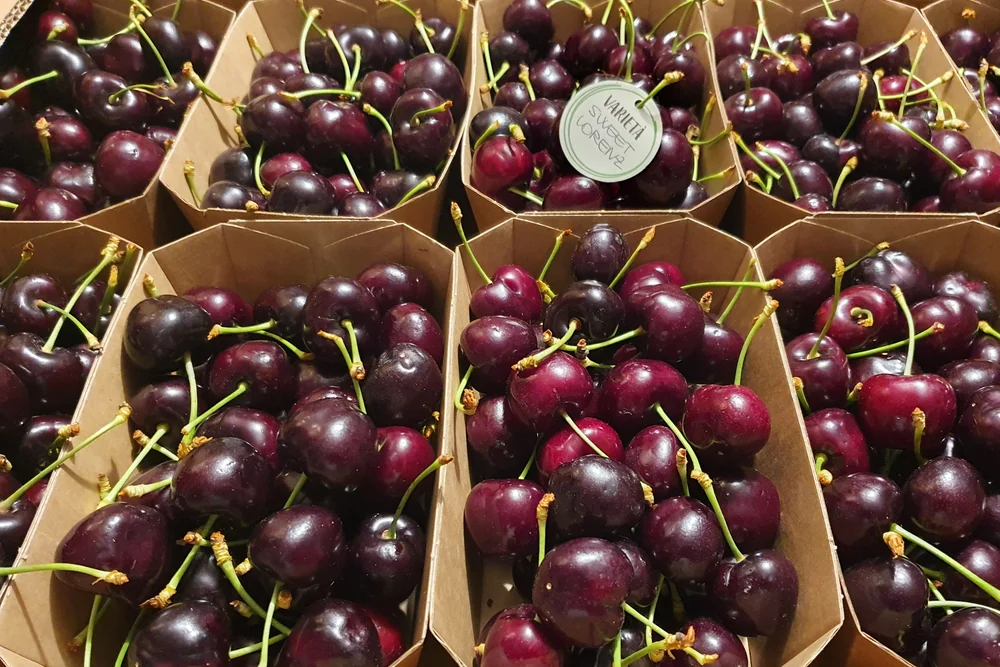
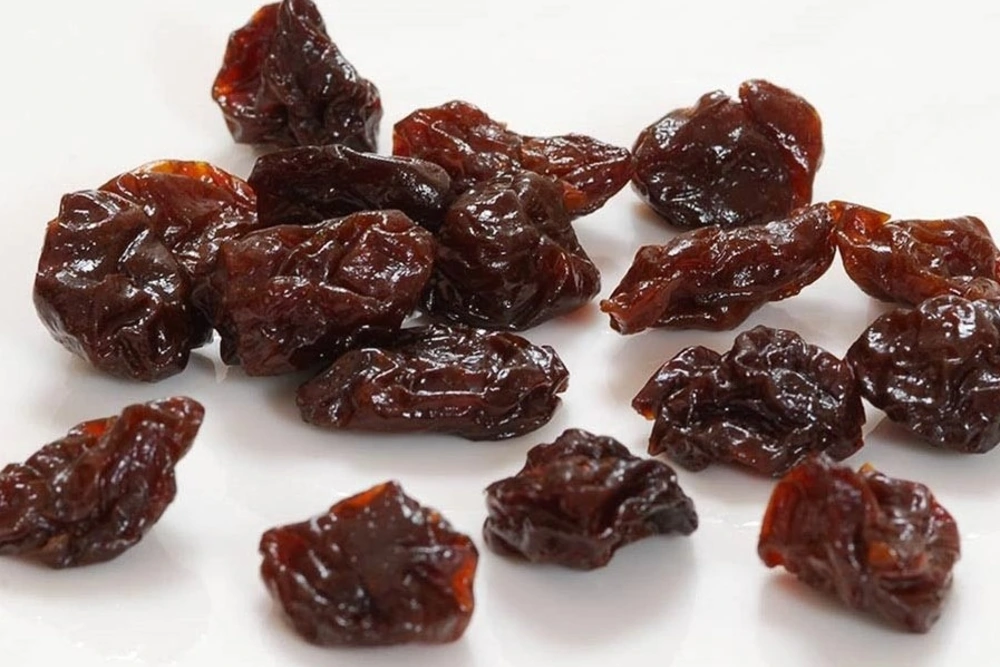
German fruit-growing companies achieved a good cherry harvest in the summer of 2026. According to the German Federal Statistical Office (Destatis), based on final estimates as of August 20, 2026, a total of approximately 48,500 tonnes of sweet and sour cherries were harvested.
Cherry production in 2026 was therefore 7.8% above the average of the past ten years (2016-2025) and also exceeded the previous year by 3.0%, which had likewise been characterized by high yields.
Of the total harvest, 80.2% (38,900 tonnes) consisted of sweet cherries, while 19.8% (9,600 tonnes) consisted of sour cherries.
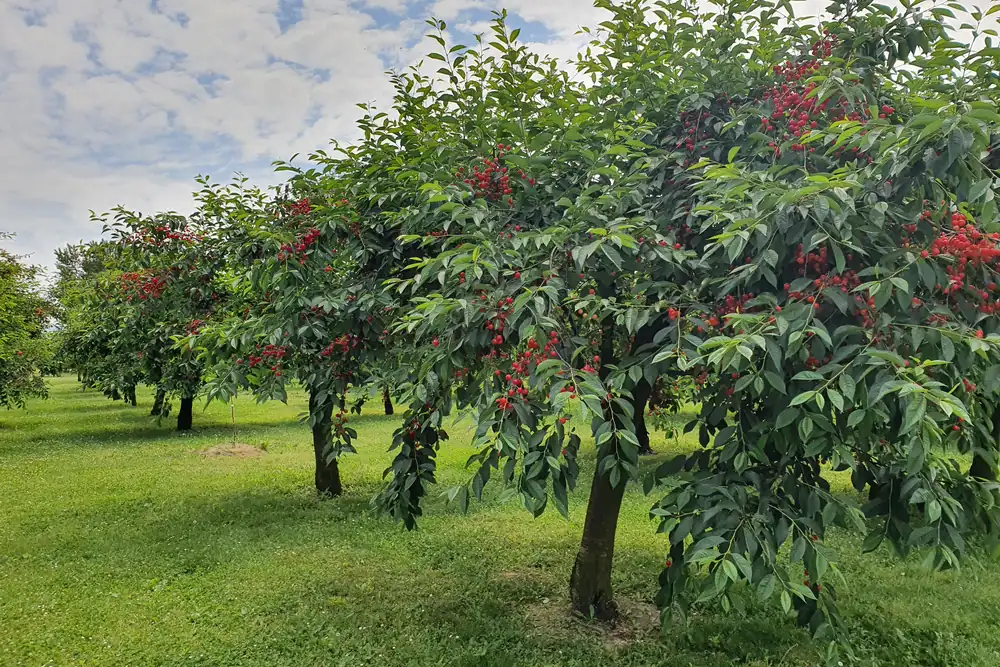
Sweet cherry harvest 16.2% above the ten-year average
The positive production result was mainly due to the harvest of 38,900 tonnes of sweet cherries. Compared with the average of the past ten years, which stands at 33,500 tonnes, this year’s production was 16.2% higher, equivalent to an additional 5,400 tonnes.
Considering a cultivated area of 5,600 hectares, the average yield was 6.9 tonnes of sweet cherries per hectare.
However, the sweet cherry harvest showed significant differences at regional level. Baden-Württemberg, Germany’s leading federal state for sweet cherry cultivation with 2,600 hectares, recorded production of 19,100 tonnes, 16.7% above the average of the past ten years.
In Rhineland-Palatinate, the second-largest region for sweet cherry cultivation area with 660 hectares, production reached just 2,000 tonnes, 37.2% below the ten-year average.
The harvest was particularly abundant in Lower Saxony. Across the 500 hectares cultivated in Germany’s third-largest producing state, 6,700 tonnes of sweet cherries were harvested, representing an increase of 66.0% compared with the average of the past ten years.
Sour cherry harvest 16.8% below the ten-year average
While sweet cherries are grown on around 5,600 hectares in Germany, the country’s sour cherry cultivation, covering approximately 1,500 hectares, is considerably less significant.
Over the past ten years, the area planted with sour cherries has declined from 2,000 to 1,500 hectares, representing a reduction of more than one quarter (-25.8%).
The final estimate for sour cherry production in 2026 stands at 9,600 tonnes, 16.8% below the average of the past ten years. In terms of yield, production reached 6.4 tonnes per hectare, only slightly below the ten-year average (-1.1%).
The federal state with the largest area planted with sour cherries is Rhineland-Palatinate, with 460 hectares, followed by Saxony (300 hectares) and Baden-Württemberg (240 hectares).
This year’s sour cherry harvest also showed regional differences. The highest volume was recorded in Baden-Württemberg, with 2,800 tonnes, representing an increase of 38.1% compared with the ten-year average.
This was followed by Rhineland-Palatinate, with 2,100 tonnes (-46.1%), and Thuringia, with 1,500 tonnes (-7.1%).
Pear production expected to rise 7.7% above the ten-year average
According to initial preliminary estimates, German fruit-growing companies expect a good pear harvest in 2026, amounting to approximately 40,900 tonnes.
This year’s production is therefore expected to be 7.7% above the average of the past ten years. Compared with 2025, a year characterized by high yields, however, a slight decline of 3.3% is expected.
Considering a cultivated area of 2,100 hectares, the expected average yield is 19.8 tonnes of pears per hectare.
The positive forecast is supported in particular by the strong production outlook in Baden-Württemberg, Germany’s leading federal state for pear cultivation. Here, approximately 18,600 tonnes are expected from 860 hectares, equivalent to 45.4% of Germany’s national pear production.
According to the initial estimates, pear production in Baden-Württemberg is expected to be 28.1% above the average of the past ten years and 7.9% higher than the already productive previous year.
In second place among the main pear-producing regions is Bavaria, with 270 hectares and expected production of 2,700 tonnes, 45.8% below the ten-year average.
In third place is Lower Saxony, with a cultivated area of 260 hectares. Pear production here is expected to reach 7,100 tonnes, representing an estimated increase of 14.0% compared with the average of the past ten years.
Methodological notes
To estimate production for the main tree fruit species, those responsible for agricultural surveys report harvested or expected volumes and yields per hectare at various times during the year for apples, pears, plums, mirabelle plums/greengages, sweet cherries and sour cherries.
Significant variations may occur between estimates carried out in June, July, August and November, for example due to weather conditions, diseases or the presence of pests.
The final estimate for the cherry harvest is carried out in August, while estimates for the other main tree fruit species are carried out in November.
Data relating to cultivated areas are based on the latest tree fruit cultivation survey, conducted in 2022, and are updated in some federal states.
Due to the rounding of the figures presented, there may be differences between the sum of the individual figures and the corresponding total.
Image source: Stefano Lugli
Frank Hennig, Destatis
Cherry Times - All rights reserved