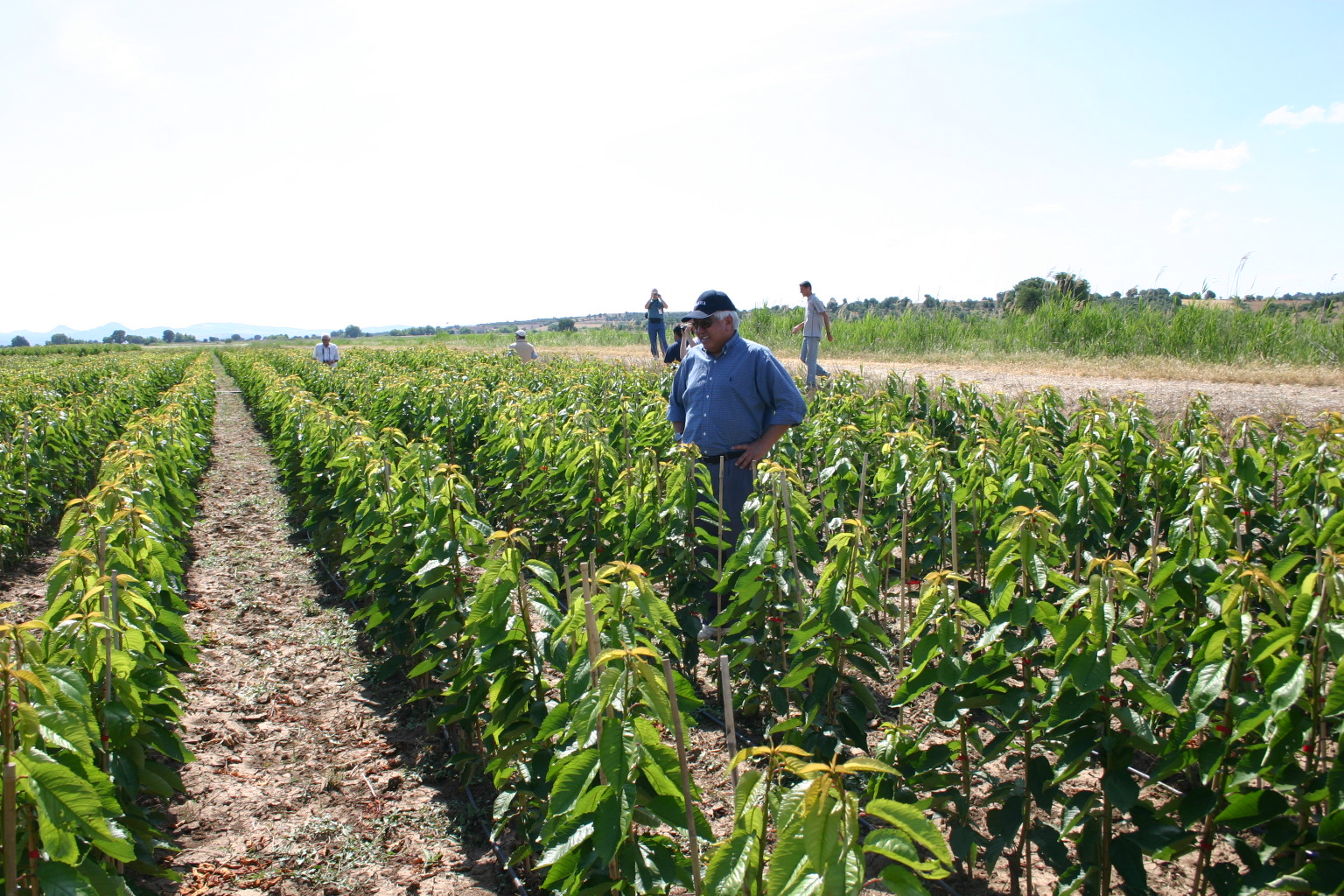
In the Altes Land, cherries are being left on the trees because harvesting them is no longer economically viable.
This is not simply a regional story from northern Germany, nor is it a footnote in agriculture.
It is a sign of a sourcing model that worked well for a long time in German food retail, but which, under new conditions, is becoming increasingly fragile.
The most immediate response is: then the products will simply come from abroad, at a lower price. In the short term, this is often true. In the long term, however, retailers should take a closer look at the issue.
Dependence on imports
Germany has long depended on imports of fruit and vegetables. For fruit, domestic production covers only around one fifth of demand, while for vegetables the share is just under 40%.
At the same time, Edeka, Rewe, Schwarz Group and Aldi account for a predominant share of food retail. Together, they control most of the German food market.
This combination of strong purchasing power in the domestic market and high dependence on external supply sources can be efficient. But it is not automatically resilient.
The cheaper alternative is not automatically safer
The pressure on domestic fruit production is real. Labour costs are rising, harvesting requires a great deal of labour, and extreme weather events are increasing business risk.
Increasingly early flowering makes fruit crops more vulnerable to late frosts. Added to this are heat, drought, heavy rainfall and hail.
Growers are therefore investing in frost-protection systems, irrigation, water storage reservoirs, hail nets and more resistant varieties.
Transferred risks
But the import alternative is not free from these risks. It simply shifts them to other regions and along longer supply chains.
Climate change, water scarcity, crop losses and pest pressure now also affect production areas in southern Europe and non-European countries from which fruit and vegetables destined for Germany originate.
Then there is transport. Fresh produce requires reliable routes, refrigeration and speed.
Geopolitical conflicts, disruptions to shipping routes and rising energy prices are not secondary issues when it comes to perishable products. They can increase freight rates, extend delivery times and suddenly alter economic calculations.
Longer supply chains
The ongoing disruptions in the Red Sea demonstrate how quickly a route considered stable can turn into a risk.
At the same time as these risks are increasing, the EU has significantly scaled back the requirements under the directive on supply chains.
The Omnibus I package limits the new due diligence obligations to very large companies with at least 5,000 employees and global turnover of €1.5 billion. Implementation has been postponed until 2029.
This may initially reduce the burden on the companies concerned. But it does nothing to change the risks themselves.
Transparency and resilience
Climate impacts, political conflicts, water scarcity and transport disruptions do not disappear simply because they will be systematically analysed later or by fewer companies.
For retailers, the question therefore remains the same: how transparent and robust are the supply chains on which the daily availability of fresh produce depends?
Retailers should therefore not only ask: where can we source this product this week at the lowest price? The more important question is: which sourcing structure remains robust even when energy, transport and harvests are no longer predictable?
Market power comes with responsibility
The fact that retailers have a decisive influence on prices and conditions is not an ideological statement. Four retail groups dominate the German market. This concentration considerably strengthens their bargaining power with producers and suppliers.
Naturally, retailers are also under pressure. Consumers compare prices, discounters set market signals and competitors do not stand still.
This explains the logic of price competition. But it does not remove responsibility for its consequences.
Prices and consequences
When regional fruit-growing businesses can barely produce while covering their costs, retailers do not simply lose a supplier.
In the medium term, they lose regional sources of supply, assortment diversity, expertise and a way of protecting themselves against risks closer to their own market.
What appears today to be an optimised purchase price could tomorrow turn out to be a dependency acquired at a high cost.
The problem cannot be solved by pushing it further down the chain
The fruit growers’ open letter also includes a request for an exemption from or relaxation of minimum wage regulations for seasonal workers. The request shows how strong the economic pressure is.
As a solution, however, it is unconvincing. The people who harvest fruit by hand in the heat, in the rain and often under difficult conditions are those with the least bargaining power along the supply chain.
If the response to a structural problem involving prices and supply is precisely to reduce their wages, the pressure is simply shifted even further downwards.
Pressure along the supply chain
Retailers cannot step back from this issue. Anyone claiming to support fair, sustainable or regional supply chains must also take seriously how added value and risks are distributed along those chains.
Otherwise, sustainability remains merely a label applied to an unchanged business model.
Year-round availability is a construct
Retailers tend to refer to consumer demand. Fruit and vegetables should be available at all times, otherwise people will shop elsewhere. That is not untrue. But it is only half the story.
The expectation of permanent availability is also created at the retail shelf. It is not simply met through supply, but continuously reinforced through promotions, positioning and communication.
Anyone who offers certain fruits twelve months a year as a standard part of the assortment helps define what consumers consider normal. Blueberries from Chile, Peru or South Africa in January are not a law of nature.
They are the result of an assortment choice. There are already serious attempts within the retail sector to adopt a different approach.
Assortment choices
Rewe draws attention to seasonal assortments, from rhubarb in spring to cabbages in winter. Edeka works with regional assortments and seasonality calendars.
Discounters also run regional programmes or temporary campaigns focusing on product origin.
The problem is not that these initiatives do not exist. The problem is the role they play in the overall picture. Regionality is often presented as an additional option, while the imported alternative remains the unquestioned norm.
Regional produce is allowed to compete, but year-round availability remains the standard.
Demand already exists
There are also indications that consumers may be more open to a different approach than retailers often assume.
79% of respondents say they pay attention to seasonality when buying fruit and vegetables; 77% also say they consider regional origin.
These figures do not represent an automatic green light for higher prices and do not guarantee that regional products will always be chosen at the retail shelf. But they show one thing: demand does not need to be created from scratch.
Regionality must be more than just a rustic look
The role of retailers is not to educate consumers or remove imported products from shelves. It is, however, to create choices in a more transparent way.
This starts with clear information about product origin and understandable communication about seasonality. In principle, indicating origin is mandatory for fruit and vegetables sold loose.
The key question, however, is whether this information gets lost as a mere mandatory notice or becomes a genuine tool for guidance.
Making seasonality visible
A different presentation is also needed: making regional producers visible, explaining availability rather than hiding scarcity, and not presenting seasonal produce as a second-best solution alongside imported goods available all year round.
Anyone offering blueberries from overseas in January can at the same time clearly explain that the domestic season is in the summer and why this is relevant.
This would not be a moral lesson. It would be good Category Management adapted to changing conditions: providing guidance to consumers, protecting regional supplier relationships and making dependencies more transparent.
Less romanticism, more resilience
Regionality is not a universal solution. Local production is not automatically more environmentally sustainable, not all businesses can or want to sell directly, and not all products can reasonably be sourced from Germany.
Bananas, citrus fruits and many winter products will continue to be imported.
But particularly in the case of fresh fruit and vegetables, regionality should not be treated merely as a communication tool. It is one of the elements that can help build a more resilient sourcing system.
Germany cannot achieve complete self-sufficiency in fruit and vegetables. Precisely for this reason, it is even more important not to further weaken the existing production structures.
Security of supply
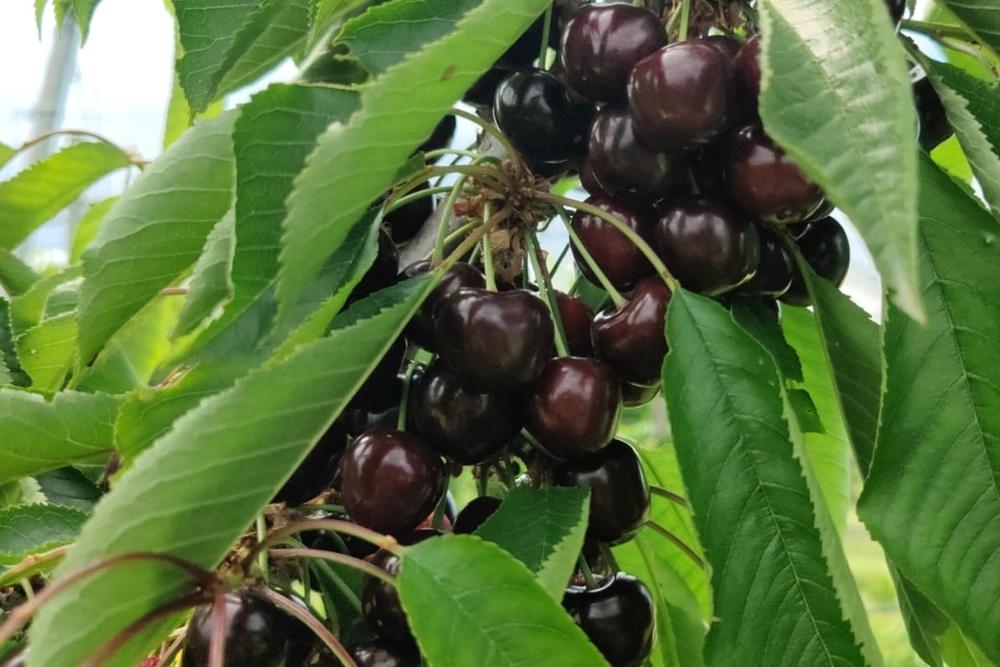
The cherries of the Altes Land therefore represent much more than a price problem.
They show how much an apparently cost-effective system depends on stable harvests, predictable energy prices, functioning transport routes, and on social costs being borne elsewhere or by the weakest actors in the supply chain.
The strategic question for retailers is not whether regional products should be included in the assortment out of solidarity.
The real question is: how much dependence on imports can a highly concentrated market in the fresh produce sector afford while climate, energy and geopolitics are simultaneously becoming increasingly unpredictable?
Those who regard regional production merely as a nice addition to the assortment may later realise that it was, in fact, part of their own security of supply.
Source: zukunftdeseinkaufens.de
Image source: Stefano Lugli
Heike Scholz
Cherry Times - All rights reserved