Indian cherry growing is looking beyond its national borders. Despite a season affected by hailstorms, strong domestic demand and the spread of new premium cultivars are strengthening the sector’s prospects, especially in Jammu and Kashmir. The goal for the coming years is to build a supply chain capable of competing in international markets for high-quality cherries.
A regular season, but affected by hail
The Indian cherry season is drawing to a close after the harvest in Jammu and Kashmir, which took place between late May and late June, in line with the usual production calendar.
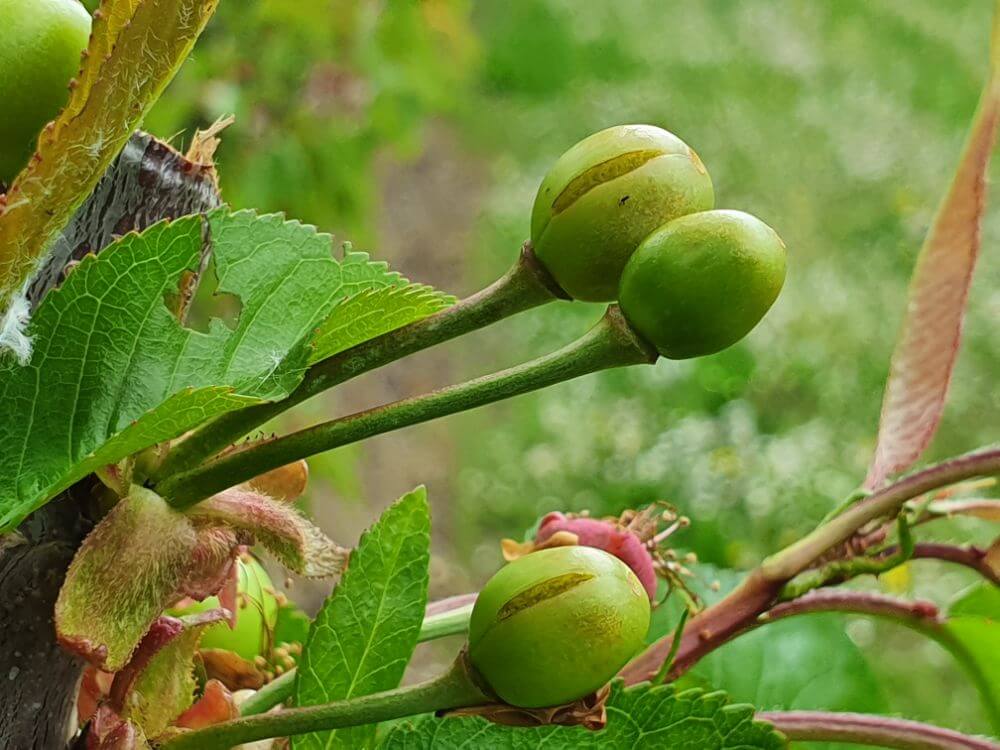
The season began on schedule and overall volumes remained at good levels. However, hailstorms damaged a significant share of production.
According to Izhan Javeed of Fruit Master Agro Fresh, a company operating in the agri-food supply chain, losses in Jammu and Kashmir reached 30-40%, while damage in Himachal Pradesh was even more severe.
The lower availability of fruit meeting export requirements, together with production difficulties in other cherry-growing areas, kept demand for cherries from Kashmir particularly high.
Prices double on the domestic market
Competition among buyers to secure high-quality lots pushed prices up to 400 rupees per kilogram (around €3.63 per kilogram), approximately twice the level recorded in the previous season.
The domestic market therefore continues to absorb almost the entire crop. At present, less than 1% of Indian cherries are exported, mainly because premium varieties are still grown on limited acreage.
However, Javeed expects export volumes to increase in the coming years as new orchards enter production and more fruit suitable for long-distance transport becomes available.
High-density orchards and premium cultivars
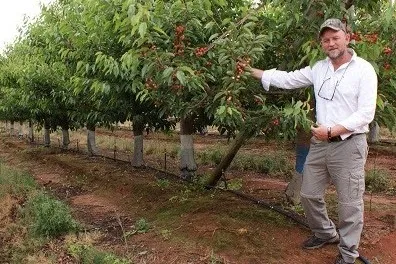
One of the main drivers of this transformation is the establishment of high-density orchards planted with varieties such as Areko, Regina, Kordia and Irena.
Fruit Master Agro Fresh has introduced these cultivars to local growers over the past five years. The genetic material comes from a Dutch breeder and is supported by an evaluation programme covering numerous early-, mid- and late-season varieties.
The trials aim to identify the cultivars best suited to Indian soil and climate conditions.
The availability of genetics with different ripening periods could also extend the harvest calendar, consequently lengthening both the commercial window and the period available for exports.
Size, firmness and shelf life for distant markets
Compared with traditional local cultivars, the new cherries stand out for their larger fruit size, greater firmness and improved storability. These are essential characteristics for withstanding long-distance transport and reaching international markets in optimal condition.
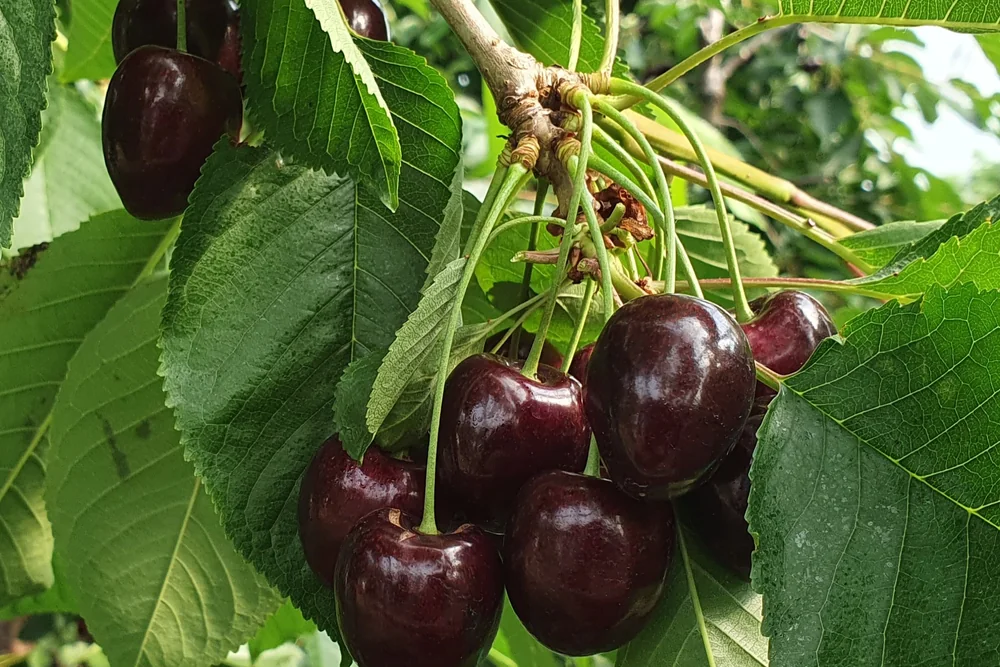
The premium varieties consistently produce fruit larger than 26 millimetres. Some cherries can reach 34 millimetres in size, exceed 18° Brix and develop a thicker skin.
According to Javeed, this combination of size, sweetness and resistance makes the fruit far more suitable for export than the cultivars traditionally grown in the country.
The first Areko cherries reach the United Arab Emirates
The season also marked a significant milestone for the sector: the first commercial export of Areko cherries from India to the United Arab Emirates.
A second shipment, consisting of around one tonne of cherries from three premium varieties, was scheduled to depart for Singapore on 16 July. The initiative was inaugurated by APEDA Chairman Shri Abhishek Dev.
At the same time, opportunities are also emerging in the European market. Belgium is among the destinations that Fruit Master Agro Fresh aims to supply during the next season.
For Javeed, the new cultivars represent the future of Indian cherry growing and are creating tangible opportunities to access new commercial outlets. However, genetics is only one part of the process required to transform India into a competitive exporter.
The challenge involves the entire value chain
The development project includes the supply of high-quality nursery material, agronomic support for growers and the installation of systems to protect orchards from hail and rain.
The next step will involve strengthening post-harvest facilities, with investments in hydrocooling systems, sorting lines and logistics solutions specifically designed for exports.
These infrastructures will be crucial for preserving fruit quality, firmness and shelf life throughout every stage between harvest and arrival in the destination markets.
A competitive sector within five years
Javeed believes that India could develop an export-oriented cherry industry within the next five years.
This development could also be supported by government initiatives aimed at promoting high-density orchards and premium varieties.
According to the operator, Kashmir has the climate and altitude required to produce cherries capable of competing with the best products available worldwide.
Growth and supply chain integration
However, the growth in volumes will need to progress alongside stronger infrastructure and greater professionalisation across the entire supply chain.
Once this integration has been achieved, India could take on a much more significant role in the international premium cherry market.
Source: www.freshplaza.it
Image source: Stefano Lugli
Cherry Times - All rights reserved