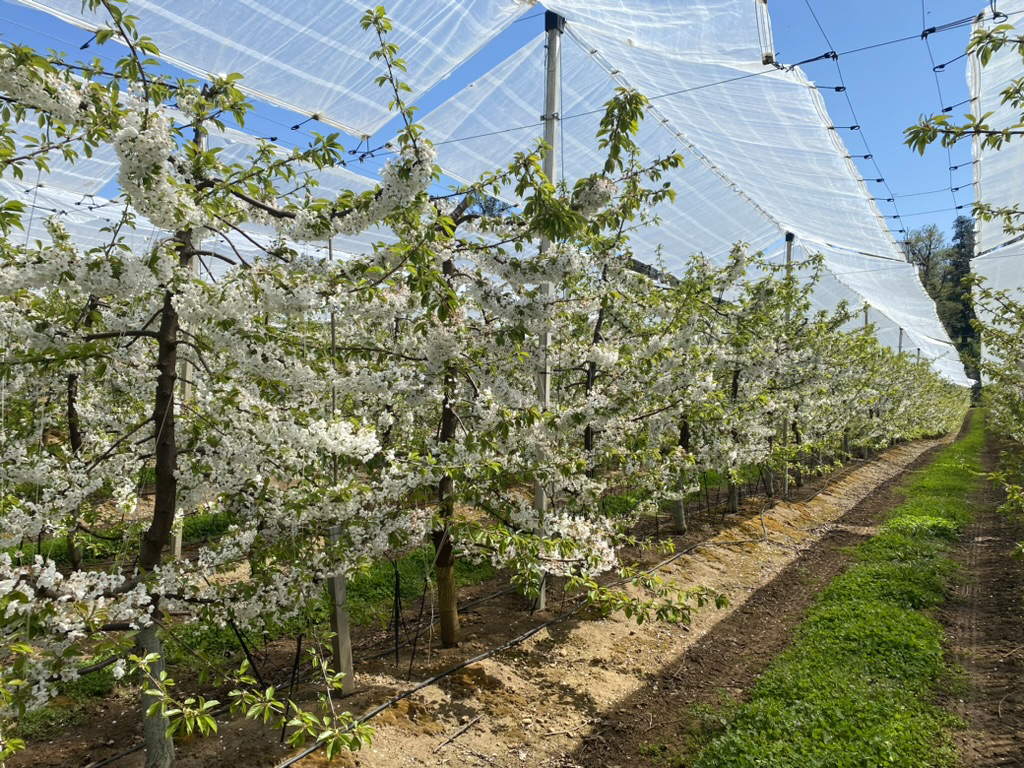
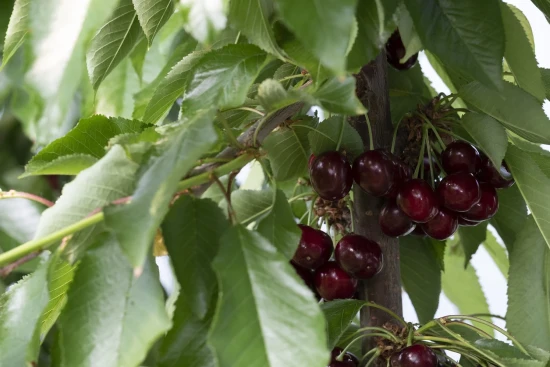
A study conducted at the Liaoning Academy of Agricultural Sciences systematically investigated the influence of different cultivation factors on the quality of sweet cherry (Prunus avium L.) grown in Liaoning Province, located in northeastern China. This region is one of China's major sweet cherry production areas, due to its temperate climate, characterized by pronounced day–night temperature fluctuations, and favorable soil and environmental conditions that support the production of high-quality fruit.
The research examined a wide range of agronomic factors, including harvest time, growing region, greenhouse construction year, greenhouse orientation, the color and thickness of the plastic covering film, cultivation methods, and the level of farm organization. The objective was to determine how each of these factors contributes to fruit quality, thereby providing scientific evidence to optimize cultivation practices and enhance the commercial value of sweet cherries.
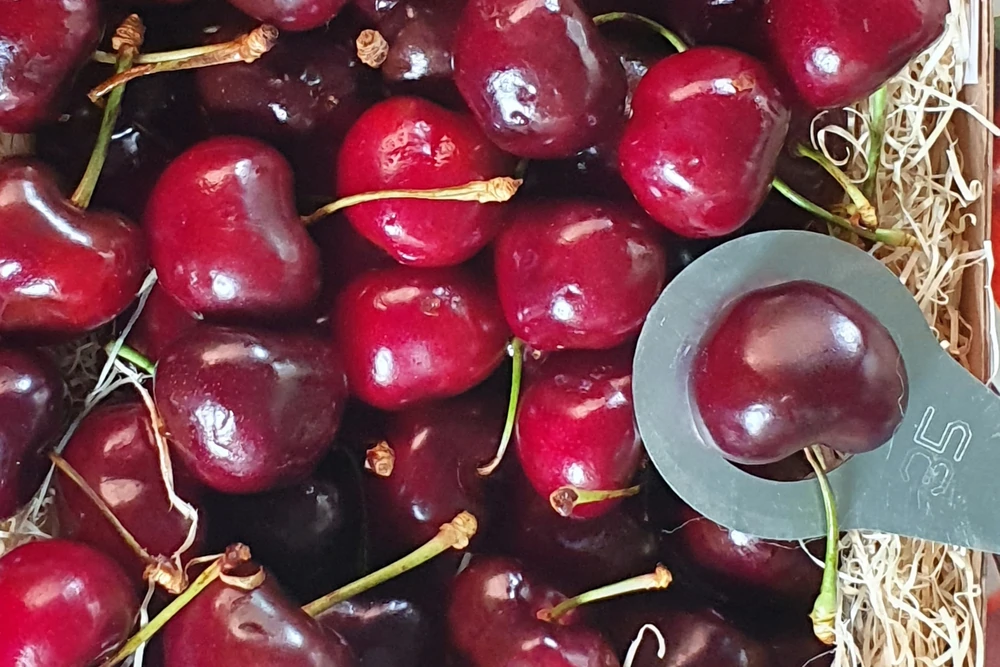
The widely cultivated cultivar 'Hongdeng' was used as the experimental material. Fruit quality was assessed through the analysis of several chemical and physical parameters, including vitamin C content, soluble and reducing sugars, titratable acidity, protein content, pectin content, soluble solids, and fruit firmness.
Harvest timing and growing region
The results demonstrated that harvest timing had a significant impact on fruit quality. Cherries harvested in May exhibited higher sugar content (10.48%) and greater firmness (3.15 kg/cm²), traits that are particularly valued by the fresh fruit market. In contrast, fruit harvested earlier in April contained higher concentrations of vitamin C (7.11 mg/100 g) and protein, making them more attractive from a nutritional standpoint.
The growing region also played a key role in determining fruit quality. The Jinzhou and Zhuanghe production areas stood out for their high sugar content and superior nutritional profile, most likely due to fertile soils and the favorable day–night temperature variations that characterize these locations.
Among the cultivation practices evaluated, the color of the greenhouse plastic film had a marked effect on fruit quality. The use of a 0.1 mm light-blue plastic film increased sugar content by as much as 36.4% compared with the conventional white film, whereas the white film promoted the highest accumulation of vitamin C.
Greenhouses and production strategies
Greenhouse orientation also influenced fruit composition: north–south-oriented structures enhanced vitamin C and protein contents compared with east–west-oriented greenhouses, although they produced fruit with lower sugar concentrations. Based on these findings, the study proposes targeted management strategies to improve sweet cherry quality according to production objectives and market demands.
For early-ripening production areas, greenhouses covered with white plastic film are recommended because they enhance the nutritional value of the fruit. In contrast, light-blue plastic film is more suitable for late-ripening regions, as it promotes greater sugar accumulation and improved fruit firmness.
Harvest timing should also be selected according to the intended market: April harvesting is preferable when nutritional quality is the priority, whereas May harvesting is recommended when sweetness, flavor, and texture are the main commercial objectives.
Optimization and development
Overall, this research fills an important knowledge gap regarding sweet cherry cultivation in Liaoning Province and provides a solid scientific basis for optimizing agronomic practices. The findings offer practical recommendations for developing more precise cultivation strategies, ultimately improving fruit quality, increasing the competitiveness of local growers, and supporting the sustainable development of the regional sweet cherry industry.
Source: https://www.pakbs.org/pjbot/papers/1777039616.pdf
Image source: Stefano Lugli
Melissa Venturi
Ph.D. in Agricultural, Environmental, and Food Sciences and Technologies – Fruit Tree Physiology and Cultivation - Bologna, Italy
Cherry Times – All rights reserved