

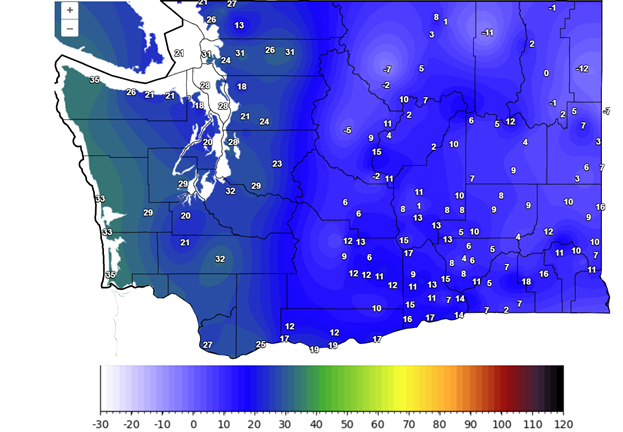
The new cherry cold hardiness model on AgWeatherNet as beta version
25 Feb 2025
Predicting sweet cherry hardiness is crucial for frost management, as early spring development makes them vulnerable to late frosts.


The end of bud dormancy in perennial fruit species is a process strongly dependent on temperature.
Consequently, the flowering of these plants is significantly affected by climate change. In temperate regions, increasingly mild winters often lead to reduced flowering and lower yields, posing a concrete risk of diminished availability of Prunus fruits and nuts in the near future.
To maintain high productivity, it is therefore essential to deepen our understanding of the molecular mechanisms that regulate bud dormancy release.
In sweet cherry, the agrochemical hydrogen cyanamide (HC) is commonly used to compensate for insufficient winter chill and to stimulate flower opening.
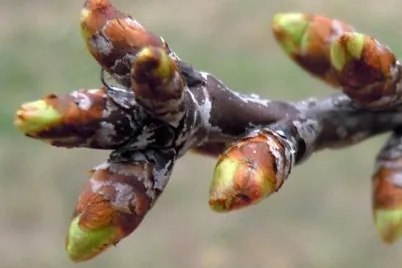
The goal of the study conducted in Jumilla (Spain), in collaboration with four Danish research centers, was to analyze the molecular effects of hydrogen cyanamide, using it as a tool to investigate dormancy release in perennial plants.
Previous studies had focused only on changes in the expression of selected genes, leaving unexplored both the broader spectrum of transcriptional responses and the potential effects of this molecule on phytohormone levels.
Considering the high degree of synteny—i.e., the association of genes controlling different traits on the same chromosome—within the Prunus genus, the results obtained in sweet cherry are likely applicable to other fruit tree species.
During the research, dormant flower buds of sweet cherry were treated with 2% hydrogen cyanamide (Dormex) or with water as a control and sampled at various time points after treatment.
An RNAseq analysis comparing treated and control buds was performed.
Enrichment analysis, clustering, co-expression studies, and qRT-PCR revealed that the jasmonate, cytokinin, and hydrogen cyanide biosynthetic pathways were the most affected.
These findings were further confirmed at the protein level through enzymatic assays and at the metabolite level.
The results provide an in-depth analysis of the metabolic changes associated with controlled endodormancy release in sweet cherry.
They suggest that the mechanism through which hydrogen cyanamide promotes bud break involves the activation of three key pathways: the jasmonate, hydrogen cyanide, and cytokinin pathways.
The role of jasmonates in flower development and opening, the inductive effect of hydrogen cyanide on bud break (potentially mediated by reactive oxygen species, ROS), and the capacity of cytokinins to promote cell wall expansion make these three pathways promising targets for further research on dormancy release in fruit tree buds.
The researchers conclude by emphasizing that, to fully understand the relevance of these pathways, future studies should focus on mutating key genes involved in them.
Another objective will be to assess whether these findings can be applied to naturally occurring endodormancy release in sweet cherry.
It will also be crucial to identify alternatives to hydrogen cyanamide, enabling the agricultural sector to counteract the effects of climate change on flowering phenology in a more sustainable way.
In particular, cytokinins and jasmonates represent promising avenues for exploration.
Source: Ionescu IA, López-Ortega G, Burow M, Bayo-Canha A, Junge A, Gericke O, Møller BL and Sánchez-Pérez R (2017) Transcriptome and Metabolite Changes during Hydrogen Cyanamide-Induced Floral Bud Break in Sweet Cherry. Front. Plant Sci. 8:1233. doi: 10.3389/fpls.2017.01233
Image source: Tecnico Agricola
Melissa Venuturi
University of Bologna (IT)

25 Feb 2025
Predicting sweet cherry hardiness is crucial for frost management, as early spring development makes them vulnerable to late frosts.
19 May 2023
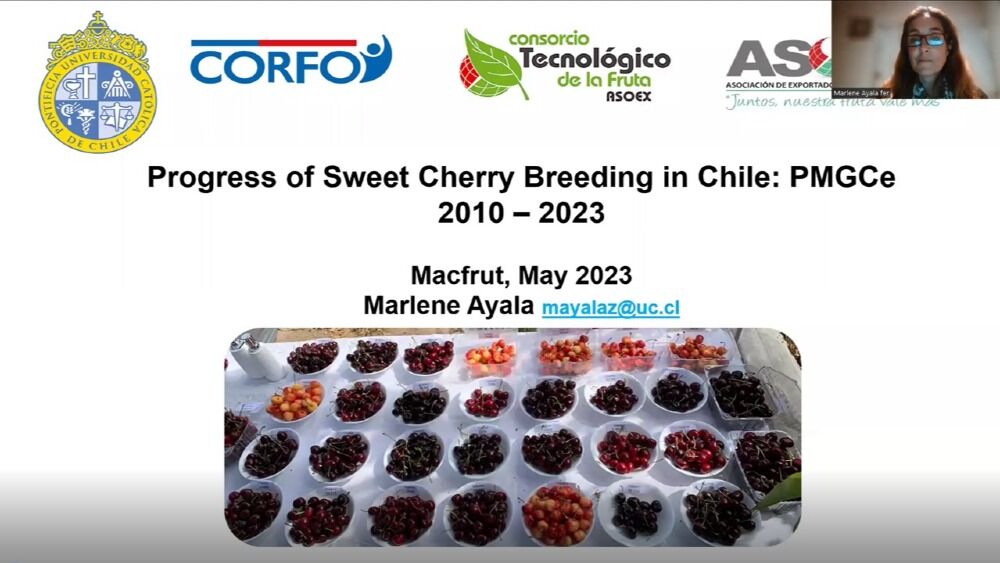
For Macfrut 2023 it was an honour to host Prof. Marlene Ayala of the Catholic University of Chile, the head of the main genetic improvement project for cherries started in 2010 in Chile..






20 Oct 2026
MSC Invernaderos’ Megatúnel protects cherries and berries from rain and hail. According to the company and Frutotech, it brings early cherry harvests forward by about 15 days, using Gothic arches and ventilation to manage growing conditions without energy-heavy heating.

20 Oct 2026
A dynamic predictive model estimates fungal growth in sweet cherries as temperatures change. Validated using experimental temperature profiles, it could support cold chain management and shelf life estimation, although further testing in commercial conditions is needed.