A recent study conducted by the Fruit Pathology Lab at the Instituto de Investigaciones Agropecuarias in Chillán (Chile) reported for the first time the occurrence of the fungus Nectria dematiosa as a causal agent of cankers on sweet cherry (Prunus avium L.) in Chile and, more broadly, in the Southern Hemisphere.
The work, published in 2025, provides an important contribution to the understanding of wood diseases in cherry trees, an area of strategic importance for Chile’s agricultural economy.
With over 444,000 tons exported in 2024, Chile is currently the world’s leading exporter of sweet cherries, but the increasing incidence of fungal trunk diseases threatens the long-term sustainability of production.
New symptoms observed
During the winter of 2023, new symptoms were observed in a commercial orchard near Río Bueno (Los Ríos Region) on several cultivars, including “Sylvia”, “Kordia”, “Regina”, and “Schneider”.
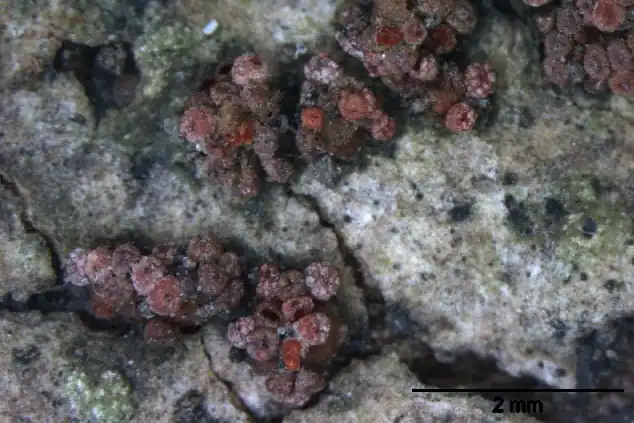
The affected trees exhibited trunk and branch cankers characterized by necrotic tissues, reddish pycnidia, and yellowish sporodochia.
A subsequent survey, carried out between 2023 and 2024 in eight orchards located between the Maule and Los Lagos regions, confirmed the recurring presence of these symptoms in 63 symptomatic samples.
Morphological analyses revealed fungal structures consistent with the description of N. dematiosa: pulvinate, yellow-orange sporodochia; hyaline, cylindrical, aseptate conidia; and globose, reddish perithecia containing asci and one-septate ellipsoidal ascospores.
Pathogen identification
Isolation on PDA culture medium produced whitish colonies with slightly cottony mycelium, typical of the genus Nectria.
Moreover, molecular analyses performed on six representative isolates confirmed the pathogen’s identity: ITS, LSU, tef1-α, and tub2 sequences clustered with N. dematiosa reference strains.
To verify pathogenicity, the fungus was inoculated onto cuttings of six cultivars (“Lapins”, “Sweetheart”, “Regina”, “Kordia”, “Bing”, and “Skeena”) and onto three-year-old nursery plants.
After 60 days of incubation for cuttings and 230 days for potted plants, all cultivars exhibited internal necrosis of varying severity, depending on varietal susceptibility: “Sweetheart” was the most susceptible (lesions up to 25.9 cm), while “Bing” was the least affected (13.3 cm).
Pathogenic role confirmed
In both tests, the fungus was successfully re-isolated from inoculated tissues, fulfilling Koch’s postulates and confirming its pathogenic role.
The study demonstrates that Nectria dematiosa, not previously reported on sweet cherry in Chile, is capable of infecting several commercial cultivars, causing typical wood canker symptoms and potentially contributing to the decline of mature trees.
Observations further suggest that the pathogen may be introduced during the early stages of nursery production, posing a risk of dissemination through infected propagation material.
From a phytosanitary standpoint, this discovery broadens the spectrum of known wood pathogens in cherry trees and calls for new monitoring and prevention measures in Chilean orchards.
Recommendations and future directions
Early detection, the use of certified plant material, and careful management of pruning wounds are key strategies to limit fungal spread.
Finally, the researchers emphasize the need for further studies to deepen the understanding of the pathogen’s biology and epidemiology, as well as cultivar responses under field conditions, with the goal of developing more effective integrated management protocols against this emerging threat to sweet cherry.
Source: Grinbergs, D., Chilian, J., Isla, M., Alfaro, J. F., France, R. A., & Carrasco, J. (2025). Occurrence of Nectria dematiosa causing cankers in sweet cherry in Chile. Plant Disease, ja). https://doi.org/10.1094/PDIS-06-24-1274-PDN
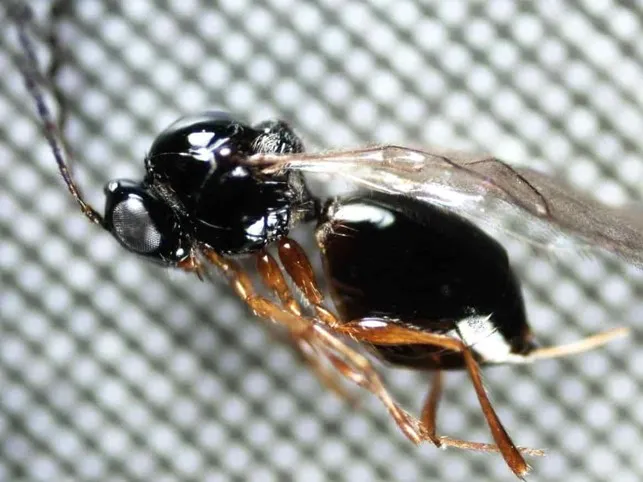
Image source: Museo dell'Università di Tromso
Andrea Giovannini
University of Bologna (IT)
Cherry Times - All rights reserved